
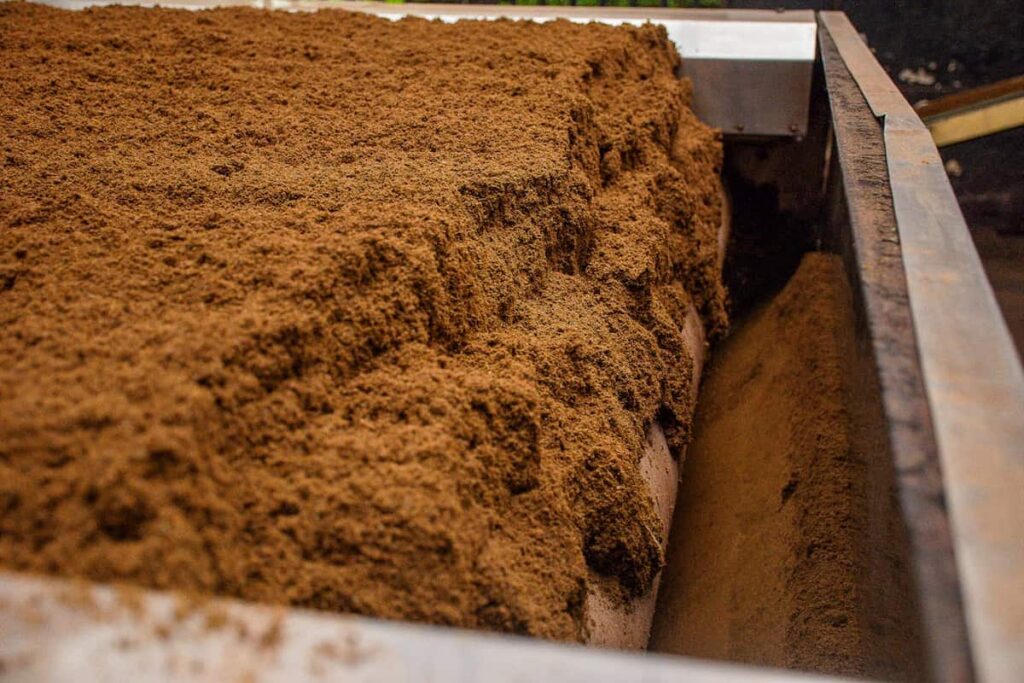
What the biosolids classification system actually requires from your dewatering equipment — and where a screw press fits in the compliance picture.
In reality, municipal wastewater treatment plants do not just treat water — they produce biosolids. And biosolids, unlike industrial sludge, are subject to a formal regulatory classification system that determines how the end product can be used or disposed of. Understanding where a screw press fits into that system — and what it can and cannot do for compliance — is essential for any municipal plant manager making dewatering equipment decisions.
The short answer is that a screw press is an excellent dewatering technology for municipal biosolids, but dewatering alone does not determine biosolids class. Pathogen reduction and vector attraction reduction are the compliance drivers. Consequently, the role of the screw press is to reduce volume and produce cake dry enough for the chosen disposal or beneficial use route — while the upstream treatment process handles the pathogen and stabilisation requirements.
This guide explains the Class A and Class B framework, where screw press dewatering fits into each pathway, what performance to expect from different municipal sludge types, and three field cases where getting the dewatering specification right — or wrong — had direct consequences for compliance and operating cost.
For the authoritative regulatory framework, the US EPA Part 503 Biosolids Rule and the Water Environment Federation (WEF) biosolids management guidance provide the definitive reference for North American and international applications respectively.
Class A vs Class B: What the Classification Actually Means for Dewatering
Notably, the biosolids classification system is often misunderstood as being primarily about dewatering performance. In practice, however, it is almost entirely about pathogen levels and vector attraction. Dewatering equipment — including screw presses — plays an indirect role by enabling the upstream processes that achieve pathogen reduction, and a direct role in meeting vector attraction reduction requirements.
Class B Biosolids
Class B is the baseline standard, and it is also the most common. Biosolids meeting Class B have undergone treatment that significantly reduces pathogens — typically through anaerobic digestion, aerobic digestion, air drying, or lime stabilisation. However, some pathogens remain, which is why Class B biosolids are subject to site restrictions on land application: buffer zones, restricted public access, and limitations on crops that can be grown.
For a screw press in a Class B programme, the role is straightforward. Specifically, the press dewaters aerobically or anaerobically digested sludge to produce cake dry enough for the chosen land application or disposal route. Cake DS of 18–25% is typically adequate for Class B land application — it is handleable, transportable, and dry enough to spread without excessive run-off risk.
Class A Biosolids
Class A, by contrast, is the higher standard, achieved by reducing pathogens to below detectable limits. Consequently, Class A biosolids can be applied to land without site restrictions and can be sold or given away as a soil amendment — a significantly more valuable end product. However, reaching Class A requires more aggressive treatment: thermophilic anaerobic digestion, thermal drying, pasteurisation, or alkaline stabilisation at high pH.
For a screw press in a Class A programme, the configuration question is more nuanced. In some Class A pathways — particularly alkaline stabilisation with lime — the dewatered cake itself undergoes the pathogen reduction treatment after pressing. In others, the sludge is treated before pressing and the press simply produces the final cake. Understanding which pathway applies to your plant determines the correct press specification.
| Parameter | Class B | Class A |
|---|---|---|
| Pathogen requirement | Significant reduction | Below detectable limits |
| Land application restrictions | Yes — buffer zones, crop limits | No restrictions |
| Typical upstream treatment | Anaerobic or aerobic digestion | Thermophilic digestion, thermal drying, lime |
| Target cake DS for land application | 15–25% | 25–35% (higher for bagging/retail) |
| Screw press suitability | Excellent — standard configuration | Good — higher DS target may require centrifuge for some pathways |
| Market value of end product | Low — disposal cost | Higher — compost, soil amendment |
Where a Screw Press Fits in Each Biosolids Pathway
Municipal biosolids programmes follow one of several treatment pathways, each of which places different demands on the dewatering equipment. The screw press fits well into most of them — but the configuration requirements differ significantly between pathways.
Pathway 1: Anaerobic Digestion → Screw Press → Land Application (Class B)
In fact, this is the most common municipal biosolids pathway globally. Sludge is anaerobically digested at mesophilic temperature (35–38°C) for 15–30 days, then dewatered by screw press before land application or landfill disposal.
Digested sludge is generally easier to dewater than raw sludge because the digestion process breaks down the cell walls of biological solids and reduces the volatile solids content. Furthermore, the reduced VSS fraction means less polymer is needed to condition the sludge. Consequently, this is the application where screw presses consistently deliver their best performance figures: 20–28% DS cake with polymer doses of 3–6 kg/t DS.
The key specification consideration for this pathway is that digested sludge can be slightly odorous and may have elevated hydrogen sulphide content if the digester is running at high loading. Therefore, an enclosed press with adequate ventilation connection points is worth specifying for urban plants where odour complaints are a risk.
Pathway 2: Aerobic Digestion → Screw Press → Land Application (Class B)
Similarly, aerobic digestion — extended aeration at long sludge age, or dedicated aerobic digesters — is common at smaller municipal plants where the capital cost of anaerobic digestion cannot be justified. The resulting sludge is well-stabilised and meets Class B pathogen requirements, but it is typically harder to dewater than anaerobically digested sludge.
In practice, aerobically digested sludge often dewaters to 16–22% DS on a screw press — slightly lower than anaerobic digestate. However, polymer demand is also typically lower, and the operational simplicity of aerobic digestion makes this a common and effective combination at plants below 10,000 PE.
Pathway 3: Alkaline Stabilisation → Class A
In this pathway specifically, dewatered cake from the screw press is mixed with quicklime or hydrated lime to raise pH above 12 and maintain it for a defined period, achieving Class A pathogen reduction. Alternatively, lime can be added to the sludge before pressing — producing a thicker, more alkaline feed that often dewaters more readily.
For screw press applications in this pathway, the important consideration is material compatibility. Lime-dosed sludge is highly alkaline, which can accelerate corrosion of wetted components. Specifically, specifying 316L stainless steel for all rings, shaft, and filtrate collection components is important when lime stabilisation is part of the process. Furthermore, the lime addition point — whether before or after pressing — significantly affects press performance and should be confirmed with the process designer before equipment is ordered.
Pathway 4: Thermal Drying → Class A (Screw Press as Pre-Dryer)
Generally, thermal drying systems require dewatered cake as feed — typically above 20% DS and ideally above 25% DS to minimise dryer energy consumption. In this pathway, the screw press performs a critical role as the pre-drying step. Consequently, maximising cake DS at the press is a direct economic priority: every percentage point improvement in press DS reduces dryer energy consumption and operating cost.
For thermal drying pre-dewatering, a screw press is often a competitive choice against belt press but faces direct comparison with decanter centrifuge. At large municipal plants processing digested sludge, a centrifuge can achieve 28–35% DS — higher than the 22–28% typical of a screw press on the same sludge. However, the energy cost difference is significant: a screw press uses 0.01–0.04 kWh/kg DS compared to 0.3–0.8 kWh/kg DS for a centrifuge. Whether the higher cake DS from a centrifuge justifies the energy premium depends on local dryer energy tariffs and disposal costs — and is worth calculating explicitly before specifying equipment.
Performance Benchmarks: Screw Press on Municipal Sludge Types
The following benchmarks, therefore, are based on operating data from municipal installations across Southeast Asia, the Middle East, and Europe. All figures assume correctly specified polymer conditioning and feed concentration within the design range.
| Sludge type | Feed TS (%) | Cake DS (%) | Capture rate | PAM dose (kg/t DS) | Notes |
|---|---|---|---|---|---|
| Raw primary sludge | 2.0–5.0% | 22–30% | 95–99% | 2–5 | Easiest to dewater; low polymer demand |
| Waste activated sludge (WAS) — aerobic | 0.5–1.2% | 16–22% | 93–97% | 4–8 | Standard municipal secondary sludge |
| Mixed sludge (primary + WAS) | 1.5–3.5% | 20–28% | 94–98% | 3–6 | Best overall performance for conventional plants |
| Mesophilic anaerobically digested sludge | 2.0–4.0% | 22–30% | 95–99% | 3–5 | Excellent screw press application |
| Thermophilic anaerobically digested sludge | 2.5–5.0% | 24–32% | 95–99% | 3–6 | Higher DS achievable; less polymer than mesophilic |
| Aerobically digested WAS | 1.0–2.5% | 16–22% | 92–96% | 4–7 | Slightly harder to dewater than anaerobic digestate |
| Lime-stabilised sludge (pre-lime) | 1.5–4.0% | 20–28% | 93–97% | 3–6 | Specify 316L; check lime addition point |
| MBR sludge (high MLSS) | 0.8–1.5% | 16–22% | 92–96% | 4–8 | Fine particles; 0.2 mm gap standard |
These figures represent what is achievable under correct operating conditions — not what every installation achieves on day one. In practice, newly commissioned screw presses on municipal sludge often produce 3–5 percentage points below these benchmarks until polymer conditioning is fully optimised. The benchmarks above represent a well-tuned installation, not a commissioning baseline.
Vector Attraction Reduction: The Direct Compliance Role of the Screw Press
While pathogen reduction is handled upstream of the press, vector attraction reduction (VAR) is one area where dewatering directly affects compliance. Under the US EPA Part 503 rule, one method of meeting VAR requirements is achieving a minimum volatile solids (VS) reduction of 38% during treatment — but another is dewatering the biosolids to a specific dry solids content.
Specifically, US EPA Part 503 allows VAR to be achieved by dewatering biosolids to a minimum of 22% dry solids for land application, provided the biosolids are not re-liquefied prior to use. This gives the screw press a direct compliance role in municipal biosolids programmes — achieving 22%+ DS is not just an operational target, it is a regulatory threshold.
In practice, this means that a screw press producing 20% DS cake on anaerobically digested sludge may require a programme adjustment — either polymer optimisation, increased back pressure, or upstream thickening improvement — to reach the 22% threshold consistently. Furthermore, “consistently” is the operative word: occasional readings above 22% do not satisfy the regulatory requirement if the average is below it.
Under US EPA 40 CFR Part 503, Section 503.33(b)(11): biosolids meet the vector attraction reduction requirement if the dry solids content of the dewatered biosolids is equal to or greater than 22 percent. This pathway is commonly used at plants where the upstream treatment achieves Class B pathogen requirements through digestion, and the press achieves VAR through dryness.
For non-US applications, equivalent standards apply — consult your national environmental regulator for the specific DS threshold applicable to your jurisdiction.
Field Case: Jordan — Municipal Plant, Meeting Class B Through Digestion and Screw Press
To illustrate, a 35,000 PE municipal wastewater treatment plant near Amman, Jordan operated a mesophilic anaerobic digester and was specifying dewatering equipment for a plant upgrade in 2019. The biosolids programme required Class B compliance for agricultural land application — a significant outlet in the water-scarce Jordanian context where biosolids represent a valuable soil amendment.
The original equipment specification called for a belt filter press, based on historical precedent at similar plants in the region. However, the site had no reliable wash water source — a critical requirement for belt press operation — and the available operator staffing was limited to one person per shift.
Why the Screw Press Was Selected
A screw press was ultimately specified for three reasons. First, it required no continuous wash water supply — important given the site constraints. Second, it could operate unattended during night shifts without meaningful performance loss. Third, the projected cake DS of 22–26% on mesophilic digestate was sufficient to meet the Jordanian national VAR equivalent requirement of 20% minimum DS for unrestricted land application.
Commissioning Performance
The press commissioned at 19% DS in the first two weeks — below the regulatory threshold. Consequently, the commissioning engineer adjusted the polymer programme from a medium-charge cationic at 5 kg/t DS to a higher-charge product at 7 kg/t DS, and increased back pressure by 15%. As a result, cake DS stabilised at 23–25% by week four. The plant has subsequently maintained compliance continuously, with an average DS of 24.1% over the first 18 months of operation.
Field Case: Indonesia — Small Municipal Plant, Aerobic Digestion Pathway
As another example, a 5,000 PE extended aeration plant in East Kalimantan was generating approximately 35 kg DS/day of aerobically digested waste activated sludge. The original dewatering solution was a plate-and-frame filter press operated once per week — producing very dry cake at 38–42% DS, but requiring 6–8 hours of operator time per session and generating significant odour during the manual cake discharge.
When the plate press reached end of life in 2021, the plant manager requested an evaluation of alternatives. The evaluation compared the plate press (replacement), a small belt press, and a screw press.
The Decision and Its Rationale
The screw press was selected specifically because of the operator time requirement. The plate press had been consuming one operator’s full day once per week — a significant burden for a small plant. By contrast, the screw press required approximately 20 minutes of daily attention and could process the same weekly DS load by running 2 hours per day rather than 6–8 hours once per week.
The trade-off was cake DS: the screw press achieved 18–20% on this aerobically digested sludge, compared to 38–42% from the plate press. However, the disposal route was a dedicated composting facility that accepted cake above 15% DS. Consequently, the lower DS was acceptable, and the operational simplicity far outweighed the dryness difference for this specific application.
Field Case: South Korea — Large Municipal Plant, Pre-Drying Application
A 120,000 PE municipal plant in Gyeonggi Province operated a two-stage anaerobic digestion system and was feeding dewatered cake to a drum dryer that produced Class A biosolids pellets for sale as fertiliser. The dewatering system consisted of two decanter centrifuges producing 28–30% DS cake.
In 2022, the plant was evaluating whether to replace one ageing centrifuge with a screw press as part of a planned upgrade. The key question was whether a screw press could achieve the minimum 25% DS required by the dryer feed specification — below which the dryer energy consumption increased sharply.
Trial Results
A pilot screw press trial on representative thermophilic digestate produced 25–28% DS — within the dryer feed specification, though at the lower end. Furthermore, the trial confirmed that achieving consistent 25%+ DS required precise polymer dosing at 5–6 kg/t DS, combined with back pressure at 80% of maximum and screw speed at 55% of rated.
The plant ultimately specified one screw press alongside the retained centrifuge — running the centrifuge on peak-load days when maximum cake dryness was critical, and the screw press on lower-load days where the energy saving was the priority. In practice, the screw press handles approximately 60% of the annual throughput and has reduced overall dewatering energy consumption by 34% compared to operating two centrifuges.
“The screw press doesn’t hit the absolute peak dryness of the centrifuge every day. But on most days, 26% DS is enough for the dryer — and the energy difference between the two machines is substantial when you’re running 6,000 hours a year.” — Plant manager, Gyeonggi Province, 2023
Specifying a Screw Press for Municipal Biosolids: Key Decisions
Overall, municipal biosolids applications share many specification requirements with other screw press applications, but several decisions are specific to the compliance and operational context of municipal plants.
Enclosed Design for Urban Plants
In urban settings, municipal wastewater treatment plants face increasing scrutiny over odour emissions. Anaerobically digested sludge, in particular, releases hydrogen sulphide and volatile organic compounds during dewatering. Therefore, specifying a press with an enclosed filtrate chamber and connection points for odour control ventilation ducting is worth the incremental cost at any plant within 500 metres of residential or commercial development.
Redundancy Is Non-Negotiable
As a result, a municipal plant that fails to process biosolids does not simply face an operational inconvenience — it faces a compliance problem. Consequently, N+1 redundancy is mandatory for municipal biosolids applications: if one press goes down for maintenance or an unplanned fault, the second unit must be able to handle the full load. This is specifically important during wet weather events, when sludge production increases sharply and dewatering capacity is most constrained.
Remote Monitoring for Unstaffed Periods
Furthermore, many municipal plants run screw presses during unstaffed periods — overnight or on weekends. A PLC-based control system with remote monitoring and SMS alarm capability is therefore particularly valuable for municipal applications. Additionally, the ability to remotely adjust polymer dose in response to a performance alarm — without requiring an operator to travel to site — significantly reduces the risk of a compliance breach during unstaffed periods.
Document Everything for Regulatory Records
Municipal biosolids programmes require documentation: cake DS measurements, polymer consumption records, and performance verification data. A screw press with data logging capability — recording cake DS trends, polymer dose rates, and operating parameters — significantly simplifies regulatory reporting. Furthermore, trending data is invaluable when a regulatory inspector asks why cake DS dropped below 22% for three days in February.
Screw Press vs Centrifuge for Municipal Biosolids: The Decision Framework
In practice, the screw press versus centrifuge choice comes up repeatedly in municipal biosolids projects. In practice, the right answer depends on four factors specific to the plant and programme.
| Decision factor | Favours screw press | Favours centrifuge |
|---|---|---|
| Target cake DS | 18–28% is sufficient | 28–35% required (e.g. thermal drying pre-drying) |
| Throughput | Under 500 kg DS/h per unit | Above 500 kg DS/h; large municipal plants |
| Energy cost | High energy tariff; energy cost is priority | Low energy cost; dryness premium outweighs energy |
| Operator availability | Limited operators; unstaffed periods | Dedicated maintenance staff available |
| Noise constraints | Noise-sensitive location | Isolated plant building |
| Sludge type | Mesophilic or aerobic digestate | Thermophilic digestate where maximum DS is priority |
| Capital budget | Constrained budget | Higher capital acceptable for operational return |
In most municipal plants below 50,000 PE operating anaerobic or aerobic digestion, a screw press is the stronger choice on a total cost of ownership basis. Above 50,000 PE, particularly where thermal drying or high-value biosolids are involved, a centrifuge or a hybrid approach — as demonstrated in the South Korean case above — is worth evaluating.
Summary
A screw press is well-suited to municipal biosolids dewatering across most Class B pathways and many Class A pathways — but it is important to understand what dewatering does and does not contribute to compliance.
Pathogen reduction is determined by the upstream treatment process: digestion, lime stabilisation, or thermal treatment. The screw press, by contrast, contributes directly to vector attraction reduction by achieving the minimum DS threshold — typically 22% for US EPA Part 503 programmes — and reduces volume to make the downstream disposal or beneficial use route economically viable.
Furthermore, the three field cases in this guide illustrate the range of contexts in which screw presses serve municipal biosolids programmes effectively: a water-scarce Middle Eastern plant where wash water elimination was the deciding factor; a small Indonesian plant where operator time was the binding constraint; and a large South Korean plant where energy optimisation drove the technology mix decision. In each case, the screw press performed within its capability when correctly specified and commissioned.
Consequently, the specification process for municipal biosolids applications should start with the disposal route and its DS requirements, work back through the upstream treatment pathway, and then determine the press configuration — filtration gap, ring material, back pressure range, and polymer system capacity — that will reliably meet those requirements under all operating conditions.
Specifying a Screw Press for a Municipal Biosolids Programme?
We supply CE-certified multi-disk screw press dewatering machines for municipal biosolids applications — with configurations suited to anaerobic digestate, aerobic digestate, and lime stabilisation pathways.
Every municipal quotation includes a review of the biosolids pathway, DS target confirmation, and polymer programme recommendation. Performance is specified in the supply contract, not left to commissioning.
→ Send us your plant capacity, sludge type, and target cake DS — we will provide a technical recommendation and budgetary proposal within 48 hours.
CE certified | 316L rings available | Remote monitoring standard | English O&M documentation