
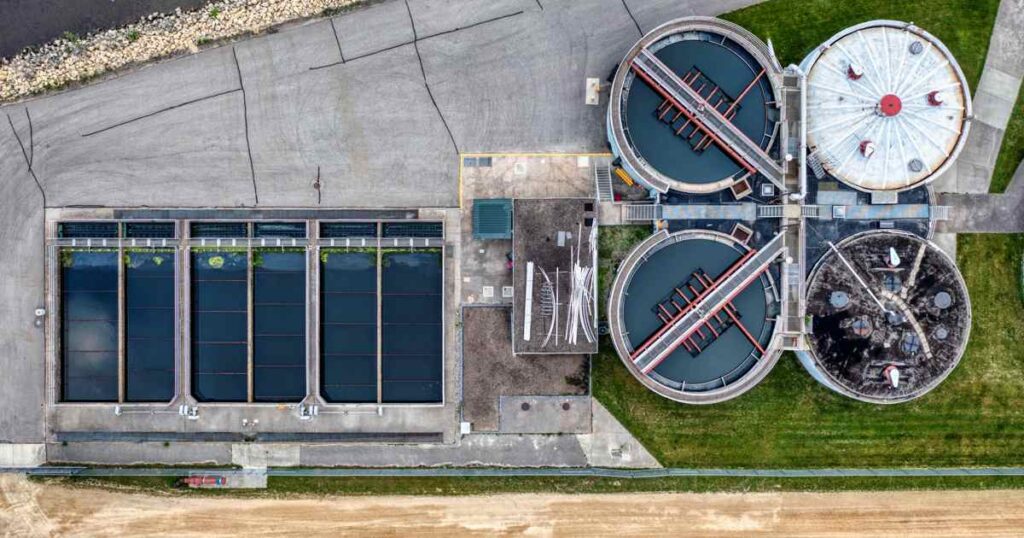
Every wastewater project starts with a question that sounds simple: what equipment do I need?
The honest answer is that there is no universal list. A slaughterhouse running 500 m³/day needs completely different equipment from a municipal plant serving 50,000 people — even if the flow rates are similar. What this guide gives you is not a catalog. It gives you the decision logic behind each equipment category: when each technology actually makes sense, what it costs you when it goes wrong, and where most projects make mistakes.
If you are an engineer designing a new system, this is a working reference. If you are a procurement manager sourcing equipment, the final section covers what actually separates good suppliers from bad ones.
The Right Way to Think About a Treatment Train
Before selecting any individual piece of equipment, it helps to understand the sequencing logic of a treatment plant. Each stage has one job:
- Pretreatment: protect downstream equipment and remove what costs nothing to remove (gravity, screening)
- Primary treatment: reduce organic and solids load before biology
- Biological treatment: degrade dissolved organics — this is where most energy goes
- Tertiary treatment: polish to meet discharge or reuse standards — only add this if the standard requires it
- Sludge handling: reduce volume and stabilize solids — this is where most projects underestimate cost
Every equipment decision should answer the question: does this solve the constraint I have at this stage, without creating a worse problem at the next stage?
Pretreatment Equipment — The Most Underestimated Stage
Headworks design is where a surprising number of plants fail. If your pretreatment is wrong, every downstream process becomes harder and more expensive to operate. It does not matter how well your biological stage is designed if your secondary clarifiers are filling up with grit or your screw press is choking on rags.
Bar Screens
The job of a bar screen is simple: keep large solids out of your pumps, biological tanks, and dewatering equipment. In practice, most facilities need two screens — a coarse screen (25–50 mm) to protect the fine screen, and a fine mechanical screen (3–10 mm) as the actual workhorse.
Where most designs go wrong: undersizing channel width, which drives approach velocity above 1.2 m/s and causes solids to bypass the screen during peak flow. The channel needs to be sized for peak flow, not average flow.
Types of fine mechanical screens:
- Front-raked bar screens: most common for municipal headworks, robust and well-understood
- Step screens: very effective for high-solids influent (combined sewage, food processing)
- Drum/band screens: for finer apertures (0.5–3 mm) where solids carry-over must be minimized
Screenings from fine mechanical screens carry significant organic content. A screenings washer-compactor reduces disposal volume by up to 70% and cuts the organics from ~60% down to under 20% — worth the investment in any facility where disposal cost matters.
Key sizing parameters: channel width (mm), peak hydraulic flow (m³/h), bar spacing (mm), approach velocity (m/s, design for 0.6–1.0 m/s at peak).
Grit Removal — The Equipment People Regret Skipping
Every wastewater engineer has a story about a plant that skipped proper grit removal. The result is always the same: accelerated pump wear, sludge blankets that are 40% sand instead of 40% solids, and very expensive tank cleanouts.
The separation step (grit chamber) is only half the equation. You also need grit washing — a grit classifier or grit screw that removes the organic fraction from collected grit before disposal. Without washing, what you’re disposing of is not grit — it’s grit plus organic material, which is both heavier and more expensive to handle.
Grit removal options:
- Vortex grit chambers: best balance of performance and footprint for most municipal plants. Induced vortex separates grit by density differential.
- Aerated grit chambers: effective, but the added air system complexity is rarely justified unless you already have air infrastructure on site.
- Grit classifiers / grit screw washers : paired with any grit chamber. Receive the grit slurry, wash and dewater it to <3% organics, convey cleaned grit to disposal container.
Key sizing parameters: peak flow (m³/h), grit particle target size (typically >0.2 mm diameter), grit loading in influent (mg/L).
Primary Treatment — Do You Actually Need It?
This is a legitimate question. Primary clarifiers make sense for large municipal plants where reducing biological load upstream has clear economic value. For smaller plants, packaged systems, or MBR configurations, primary clarification adds capital cost and complexity that may not be justified.
Primary Clarifiers
Circular or rectangular sedimentation tanks remove 50–70% of TSS and 25–40% of BOD before biological treatment — primarily by allowing particles denser than water to settle under gravity.
The equipment inside a clarifier (drive mechanism, sludge scrapers, scum skimmer) is relatively simple. What determines performance is hydraulic design: surface overflow rate (target 1.0–2.5 m³/m²/h) and weir loading. Overloading a clarifier does not just reduce efficiency — it can cause sludge blanket rise and carryover that overwhelms downstream processes.
DAF Systems (Dissolved Air Flotation)
DAF is frequently misapplied. It is not a general-purpose clarifier — it is specifically effective when your solids are too light to settle or your wastewater contains significant fat, oil, and grease (FOG).
Use DAF when:
- Influent FOG > 50–100 mg/L (slaughterhouses, dairy, seafood processing, rendering)
- Solids specific gravity is close to 1.0 — they float or stay suspended rather than settling
- You need faster hydraulic loading than a clarifier can handle (DAF: 3–8 m³/m²/h vs clarifier: 1–2.5 m³/m²/h)
Do not use DAF just because the water looks difficult. DAF performance is 70% chemistry and 30% equipment. Under-dosed or wrong coagulant/flocculant means a DAF unit produces clean float and dirty effluent regardless of how well the tank is built. Size the chemical dosing system properly and test the coagulant dose at bench scale before commissioning.
Key sizing parameters: hydraulic loading rate (m³/m²/h), recycle ratio (typically 15–30% of influent flow), saturator pressure (400–600 kPa), air-to-solids ratio (0.005–0.06 mL/mg).
Secondary (Biological) Treatment Equipment
Biological treatment is where most of a plant’s energy is consumed and where the most complex process interactions occur. The equipment here — aeration systems, clarifiers, membranes — supports the biological community rather than doing the treatment itself.
Aeration Systems
Fine bubble membrane diffusers are the standard for energy efficiency, achieving standard oxygen transfer efficiency (SOTE) of 20–35%. The main trade-off is fouling sensitivity: if your influent contains oils, silicone-based defoamers, or high-surfactant loads, diffuser fouling can reduce SOTE significantly within months.
An underappreciated leverage point: blower selection typically has a higher ROI than diffuser selection in plants with variable daily flow. Turbo blowers with variable speed drives can reduce aeration energy by 15–25% compared to fixed-speed rotary blowers, simply by matching airflow to actual oxygen demand rather than design peak demand.
Secondary Clarifiers
Secondary clarifiers are the most common single point of failure in activated sludge plants. Failure mode: the sludge blanket rises, carries over into the effluent, and the entire plant violates its discharge permit — regardless of how well the biological stage was performing.
Critical design consideration: secondary clarifiers must be sized for the peak flow condition with some margin. A clarifier that works well at average daily flow may fail during wet weather peaks. Solids flux analysis (not just surface overflow rate) is the correct sizing method for secondary clarifiers handling biological sludge.
MBR Membranes
MBR replaces the secondary clarifier with ultrafiltration membranes, producing effluent with TSS <1 mg/L directly from the biological stage. The trade-off is higher capital cost, higher energy consumption (for membrane scour aeration), and a critical dependence on membrane fouling management.
MBR is not plug-and-play. In projects where operational expertise is limited, membrane fouling is the dominant operational challenge. If the client cannot commit to proper membrane maintenance protocols, a conventional activated sludge + secondary clarifier system will typically run more reliably.
Tertiary Treatment Equipment
Add tertiary treatment only when your discharge standard or reuse application requires it. Over-specifying tertiary treatment is one of the more common ways to overspend on a wastewater project.
Drum Micro-Screens
Rotating drum or disc screens with apertures of 10–300 µm remove residual TSS from secondary effluent — effective for tertiary polishing, aquaculture recirculation (RAS), and effluent reuse pretreatment. Self-cleaning via continuous backwash spray. Compact footprint and low operator requirement make drum screens a practical first choice for tertiary polishing when the secondary effluent is generally clean (TSS 10–30 mg/L).
Sand Filters
More robust than drum screens for variable-quality secondary effluent. Rapid sand filtration (dual-media: anthracite + sand) achieves effluent TSS of 2–5 mg/L. Larger footprint and backwash water requirement compared to drum screens, but better performance when secondary TSS is inconsistent.
UV Disinfection
UV inactivates pathogens without adding chemicals or creating disinfection byproducts. Performance depends heavily on upstream turbidity — UV dose is reduced if TSS or iron/manganese interfere with UV transmission. If secondary effluent TSS is unstable, UV performance will be unstable. Solve the clarifier/filter performance first.
Sludge Treatment Equipment — The Actual Cost Driver
Most project budgets underestimate sludge handling. In many industrial and food processing facilities, sludge transportation and disposal represents the largest single line item in operating cost — larger than energy, larger than chemicals. The dryer and more stable the sludge leaving your plant, the lower that cost.
Thickening
Thickening increases sludge solids from 0.5–1% (as wasted) to 3–8% before dewatering — dramatically reducing the volume and therefore the size and cost of dewatering equipment.
- Gravity thickeners: effective and cheap for primary sludge; poor for waste activated sludge (WAS), which does not settle well under gravity alone
- Gravity belt thickeners / rotary drum thickeners: effective for WAS. Rotary drum units are more enclosed and better suited to facilities with odor constraints.
- DAF thickeners: DAF configured for thickening rather than clarification — effective for very light biological sludge
Dewatering Equipment — Where the Decision Really Matters
Screw press dewaterers
The fastest-growing dewatering technology for municipal and food/industrial plants in the 5–500 kg DS/h range. Multi-disk lamella design with self-cleaning filter surface, operating at 1–5 RPM. Very low energy consumption (0.01–0.04 kWh/kg DS removed), minimal operator requirement, no continuous wash water needed.
When it makes sense: plants without dedicated dewatering operators, food processing facilities where enclosed operation matters, any application where energy cost is a priority.
Limitation: lower maximum cake dryness than centrifuge (typical 15–28% DS vs 20–35% DS for decanter centrifuge). If disposal cost is driven primarily by weight (e.g., landfill cost per tonne), the lower dryness means higher disposal cost — worth calculating before deciding.
Belt filter presses
The traditional workhorse. Still widely used where labor is available and wash water is cheap. Throughput per unit is higher than screw press. Main operational requirement: continuous belt washing (5–15 m³/h per press) and operator monitoring to adjust belt tension and polymer dose.
Decanter centrifuges
Best cake dryness (20–35% DS), highest throughput per unit, highest capital and energy cost. Justified at large municipal plants (>1,000 kg DS/h) or where the value of dry cake (e.g., fertilizer use, energy from incineration) outweighs the higher operating cost. Noise and vibration require appropriate installation design.
Plate and frame filter presses
Batch process producing the driest cake (30–45% DS). Standard for industrial chemical sludge where maximum dryness is required and continuous operation is not needed. High labor requirement for plate opening and cake discharge.
Chemical Dosing Systems — Small Equipment, Outsized Impact
Chemical systems are often treated as minor accessories, but they control the stability of every major process: coagulation, flocculation, pH balance, polymer conditioning for dewatering, disinfection.
Dosing Tanks and Chemical Storage
Polyethylene (PE) tanks are standard for most chemicals. Fiberglass (FRP) for concentrated acids and alkalis where PE does not have adequate chemical resistance. Tank sizing should account for delivery frequency and a minimum of 7–14 days’ storage at maximum dose rate — smaller tanks mean more deliveries and more operational risk from running out.
Dosing Pumps
- Diaphragm metering pumps: ±1% accuracy, handle most corrosive chemicals — standard choice
- Peristaltic pumps: fluid contacts only the tube — right choice for abrasive slurries (polymer solution, ferric hydroxide)
- Progressive cavity pumps: for high-viscosity fluids and thick slurries where diaphragm pumps struggle
The most common chemical dosing design mistake: undersizing the dosing system based on average dose rate, then discovering that maximum dose rate (needed during peak load or upset conditions) exceeds pump capacity. Size for maximum dose rate with a 20% margin.
Polymer Make-Down Units
Dry polymer (PAM) must be properly dissolved and aged before use — typically 30–60 minutes at the correct concentration for full viscosity development. Under-dissolved polymer is one of the most common causes of poor dewatering performance in plants that otherwise have correctly specified dewatering equipment.
Equipment Selection by Application Type
Rather than a generic list, here is how equipment selection actually differs by influent type:
| Application | Typical equipment train |
|---|---|
| Municipal sewage (small, <5,000 PE) | Fine bar screen → vortex grit + classifier → activated sludge → secondary clarifier → screw press |
| Municipal sewage (medium, 5,000–50,000 PE) | Bar screen + grit → primary clarifier → activated sludge → secondary clarifier → gravity thickener → screw press or belt press |
| Slaughterhouse / meat processing | Fine bar screen → DAF (primary) → biological → secondary clarifier → screw press |
| Dairy / food processing | Bar screen → DAF → biological → DAF or drum filter (tertiary) → screw press |
| Aquaculture (RAS) | Drum micro-screen → biological filter → UV → screw press for sludge |
| Paper mill | Drum screen → DAF → biological → secondary clarifier → screw press |
For Procurement Teams: What Actually Separates Suppliers
Equipment catalogs all look similar. What matters in practice:
Operating references at comparable scale and influent type. Ask for two or three contacts at plants running the same equipment on similar wastewater. Call them. Ask whether the equipment performs to spec and whether after-sales support is responsive.
Spare parts availability. For wear parts (screw press rings, belt press belts, drum screen panels), ask what the lead time is for replacement. Two weeks is acceptable. Twelve weeks for a critical wear part means your plant is down for twelve weeks when it fails.
Honest performance guarantees. A supplier willing to commit to specific performance figures (cake DS%, effluent TSS, capture rate) in the contract has confidence in their equipment. A supplier who qualifies every performance statement with “depending on conditions” is telling you something.
After-sales engineering support. Can you reach an engineer (not just a sales representative) when you have a commissioning problem? In the first three months of operation, this matters more than almost anything else.
Summary
A wastewater treatment plant is a sequence of decisions, not a list of equipment. Get pretreatment right and the rest becomes manageable. Underestimate sludge handling and you will spend the life of the plant correcting it. The equipment categories covered here — screens, grit removal, DAF, biological treatment, drum filters, screw presses, chemical dosing — cover the full range of what most municipal and industrial plants require. The right selection depends on your specific influent, your effluent target, your available footprint, and the operational capability of whoever runs the plant.
We manufacture and export bar screens, grit classifiers, DAF systems, screw press dewaterers, drum micro-screens, and chemical dosing equipment for municipal and industrial projects worldwide. Contact us with your project parameters for equipment recommendations and a budgetary proposal.