
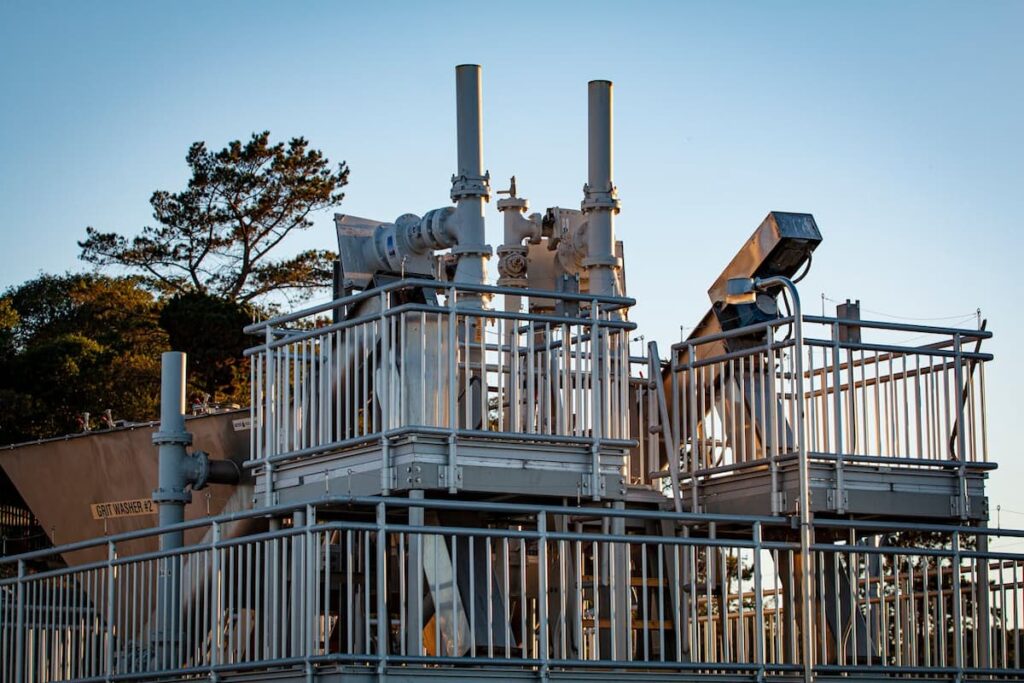
Screw press dewatering machines are reliable by design — slow-moving, self-cleaning, and mechanically simple compared to centrifuges or belt presses. In practice, however, every installation eventually encounters performance problems. The question is not whether issues will occur, but whether the operators on site know how to read the symptoms and trace them to the right cause.
Most screw press problems are not caused by the press itself. Consequently, adjusting press parameters — back pressure, screw speed, filtration gap — without first understanding where the problem originates will either fail to fix anything or create new problems downstream. The ten issues covered in this guide account for the majority of troubleshooting calls we receive across municipal and industrial installations. For each problem, therefore, this guide works through the symptoms, the most likely causes in order of probability, and the corrective steps that resolve it.
For reference on biosolids dewatering standards, the Water Environment Federation (WEF) Manual of Practice No. 8 remains the authoritative source for performance benchmarks and operational guidance.
Quick Reference: The 10 Problems at a Glance
The table below summarises all ten problems covered in this guide. Use it to identify your symptom quickly, then go directly to the relevant section for the full diagnostic and fix.
| # | Symptom | Most Likely Cause | First Action | Urgency |
| 1 | Wet cake — DS below target | Polymer under-dose or wrong product | Jar test polymer; check make-down | High |
| 2 | Solids in filtrate — poor capture rate | Filtration gap too large; polymer under-dose | Check gap spec; increase dose | High |
| 3 | Motor overload / torque fault | Feed TS too high; foreign objects in drum | Reduce feed rate; inspect drum | High |
| 4 | Accelerated ring wear | Grit or abrasives bypassing headworks | Verify grit removal upstream | Medium |
| 5 | Polymer consumption suddenly increased | Sludge composition change; dilution water issue | Check VSS%, feed temp, dilution water hardness | Medium |
| 6 | Cake sticking or bridging at discharge | Cake too dry; back pressure too high for sludge type | Reduce back pressure; check DS vs target | Medium |
| 7 | Foam forming in conditioning tank | Over-dosed polymer; surfactants in sludge | Reduce dose; check influent for detergents | Medium |
| 8 | Odour from press or filtrate | Septic sludge; inadequate ventilation | Check sludge retention time upstream | Low |
| 9 | Spray wash system not cleaning effectively | Nozzle blockage; low water pressure | Inspect nozzles; check inlet pressure | Low |
| 10 | Seasonal drop in performance (winter) | Cold sludge slowing polymer hydration | Extend aging time; increase dose 10–15% | Low |
| Problem 1: Wet Cake — Dry Solids Below Target | Urgency: High |
Symptoms
Cake DS content is consistently below the target — typically more than 3 percentage points below specification. The cake appears visibly wet, sticks to the discharge conveyor, and may slump rather than breaking cleanly at the outlet.
Causes in Order of Probability
- Polymer under-dose: the most common cause by far. Before checking anything else on the press, verify that the active PAM dose rate is within the design range for your sludge type.
- Wrong polymer product: a polymer with incorrect charge density or molecular weight for the sludge will produce weak floc regardless of dose rate.
- Under-aged or over-concentrated polymer solution: dry powder PAM requires 30–60 minutes of aging at 0.1–0.3% active concentration. An under-aged solution behaves like a lower molecular weight product.
- Back pressure plate set too low: insufficient outlet resistance allows cake to discharge before compression is complete.
- Feed concentration too low (below 0.3% TS): very dilute feed produces a high water-to-solids ratio that mechanical pressure alone cannot overcome.
Corrective Steps
First, run a jar test on representative sludge to confirm the polymer product and optimal dose rate. Do not adjust the press until polymer conditioning is confirmed correct — this step resolves the problem in approximately 60% of cases. Next, if the polymer is correctly specified, check make-down unit aging time and solution concentration. Then, if both polymer and make-down are correct, increase back pressure incrementally by one adjustment at a time and measure cake DS after each change. If feed concentration is below 0.5% TS, consider upstream thickening before adjusting press parameters.
| Field case — Philippines, 2022: A 6,000 m³/day municipal plant reported cake DS dropping from 21% to 14% over three weeks. The press settings had not changed. Investigation found that the make-down unit pump seal had partially failed, reducing polymer solution output by 40%. Replacing the pump seal and returning dose rate to 7 kg/t DS restored cake DS to 20% within 48 hours — without any press adjustment. |
| Problem 2: Solids in Filtrate — Poor Capture Rate | Urgency: High |
Symptoms
The filtrate stream is visibly cloudy or turbid. Measured filtrate TSS exceeds 200–500 mg/L. Solids capture rate falls below 90%, meaning a significant fraction of dry solids is being lost to the filtrate rather than collected in the cake.
Causes in Order of Probability
- Polymer under-dose causing fine particles to escape through filter gaps rather than aggregating into capturable floc.
- Filtration gap too large for the sludge particle size: a 0.5 mm gap on fine municipal WAS or food processing sludge will pass fines that a 0.2 mm gap would retain.
- Ring damage or misalignment: worn or bent fixed rings create local gaps larger than the nominal specification.
- Hydraulic overload: feed flow rate exceeding the press’s rated hydraulic capacity forces filtrate through at higher velocity, carrying fine particles with it.
Corrective Steps
First, increase polymer dose and observe whether filtrate clarity improves within 30–60 minutes — this confirms or rules out conditioning as the cause. If polymer is correct, verify the installed filtration gap against the original specification for your sludge type. Then, if gap is correct, inspect the filter body for worn or misaligned rings; even one damaged ring section creates a preferential bypass path for fines. Finally, check that the volumetric feed flow rate does not exceed 80% of the press’s rated hydraulic capacity.
| Problem 3: Motor Overload or Torque Fault | Urgency: High |
Symptoms
The drive motor trips on overload protection, or the control panel displays a torque fault alarm. In some cases the screw slows progressively before tripping. The fault may be intermittent at first, occurring only during peak feed periods, before becoming persistent.
Causes in Order of Probability
- Feed TS concentration too high: sludge above 4–5% TS exceeds the mechanical resistance the screw can handle at normal speed. This is particularly common in plants that have recently improved upstream thickening without adjusting press feed rate.
- Foreign objects in the drum: rags, plastic fragments, or hard debris that bypassed the bar screen can jam between rings and create sudden torque spikes.
- Over-dosed polymer causing over-thickened floc that builds up and compacts in the dewatering zone.
- Back pressure plate setting too high for the current sludge type and feed concentration.
- Bearing wear: gradual increase in mechanical friction over time, typically appearing after 3–5 years of operation without bearing inspection.
Corrective Steps
Stop the press immediately if the fault is persistent — running through a torque fault risks screw shaft damage. First, reduce feed flow rate by 20–30% and attempt a restart. If the press runs successfully at reduced load, the cause is almost certainly feed concentration or hydraulic overload. Next, open the drum access panel and inspect for foreign objects — even small items caught between rings can cause disproportionate torque resistance. Then, reduce back pressure by one increment and observe whether torque stabilises. If none of these steps resolves the fault, check bearing condition and lubrication.
| Field case — Indonesia, 2021: A food processing plant in West Java experienced repeated motor trips every 2–3 days. Each time, the press restarted successfully after a manual reset. The root cause was a batch of sludge arriving at 6.2% TS following a change in upstream DAF polymer dose that inadvertently increased thickening efficiency. Reducing the feed pump speed by 25% to bring feed TS back to 3.5% eliminated the fault entirely. |
| Problem 4: Accelerated Ring Wear | Urgency: Medium |
Symptoms
Filtrate clarity deteriorates over weeks or months. Inspection of the filter rings reveals scoring, pitting, or thinning of ring edges significantly faster than the expected 5–8 year service life. In severe cases, ring-to-ring contact leaves visible wear marks on the ring faces.
Causes in Order of Probability
- Grit and abrasive particles in the sludge: sand, gravel, silica, or eggshell fragments that pass through inadequate grit removal at the headworks are the primary cause of premature ring wear.
- High inorganic solids content in the feed: industrial sludge containing metal oxides, ceramic fines, or mineral precipitates accelerates ring wear even when grit removal is functioning correctly.
- Incorrect ring material for the sludge chemistry: 304 stainless in aggressive acidic or chloride-rich sludge will pit faster than 316L.
Corrective Steps
The most important corrective step is upstream, not on the press: verify that the grit removal system is removing particles above 0.2 mm effectively. Consequently, if the grit classifier or grit chamber is not performing to specification, improving it will extend ring life far more than any press-side adjustment. For industrial sludge with inherently high inorganic content, specify 316L rings on replacement and consider increasing the inspection frequency from annual to every six months.
| Problem 5: Polymer Consumption Suddenly Increased | Urgency: Medium |
Symptoms
The dose rate required to maintain target cake DS increases significantly — typically more than 30% above the established normal — without any change in press settings. Polymer stock depletes faster than expected. In some cases the problem appears gradually over several weeks; in others it occurs abruptly following a process change upstream.
Causes in Order of Probability
- Sludge composition change: an increase in VSS/TSS ratio (more organic content) raises polymer demand. This commonly occurs when the biological stage shifts — for example, a change in aeration tank SRT or the addition of an industrial discharge to a municipal catchment.
- Dilution water hardness increase: elevated calcium or magnesium in the dilution water interferes with polymer hydration, effectively reducing the active dose reaching the sludge.
- Cold weather: sludge temperature below 12°C slows polymer hydration significantly. Consequently, demand typically increases 10–20% each winter in temperate climates.
- Make-down unit degradation: a failing pump, worn agitator, or partially blocked dilution line can reduce actual solution output below the displayed set point.
Corrective Steps
First, measure current sludge VSS/TSS and compare to the baseline established at commissioning. If VSS has increased substantially, the higher polymer demand is justified — adjust the dose set point accordingly and document the change. Next, check dilution water total hardness; if above 200 mg/L, switch to a softer water source or increase dilution ratio. Furthermore, verify make-down unit output by sampling the polymer solution at the press inlet and checking concentration independently.
| Problem 6: Cake Sticking or Bridging at Discharge | Urgency: Medium |
Symptoms
Dewatered cake does not drop cleanly from the outlet. Instead, it sticks to the discharge chute, bridges across the opening, or builds up in clumps that require manual intervention to clear. Cake is typically very dry — often above 30% DS — and crumbles rather than flowing.
Causes in Order of Probability
- Back pressure plate set too high for the sludge type: some sludges — particularly those with high fibre or grit content — produce extremely dry, rigid cake that cannot extrude smoothly at high back pressure settings.
- Discharge chute geometry incompatible with cake characteristics: a steep chute works well for sticky, moist cake but fails for crumbly, dry cake that arches across the opening.
- Insufficient discharge conveyor capacity relative to press output.
Corrective Steps
Reduce back pressure by one or two increments and observe whether cake begins to discharge smoothly. In most cases, a small reduction in back pressure — which may reduce DS by only 1–2 percentage points — resolves the bridging problem. If the discharge chute geometry is the issue, adding a vibrating pad or a short ribbon conveyor at the outlet is a straightforward mechanical modification. Additionally, ensure the cake conveyor speed matches the press throughput; a slow conveyor allows cake to accumulate and eventually bridge back into the outlet.
| Problem 7: Foam Forming in the Conditioning Tank | Urgency: Medium |
Symptoms
Foam accumulates in the polymer conditioning tank and may overflow onto the floor around the press. The foam is typically white or cream-coloured and persists even when agitation is reduced.
Causes in Order of Probability
- Polymer over-dose: excess PAM that has not been consumed by sludge particles creates free polymer that foams under agitation.
- Surfactants or detergents in the sludge: food processing sludge — particularly from dairy or cleaning-in-place (CIP) operations — often contains residual detergents that foam when mixed with polymer.
- Agitator speed too high: excessive mixing energy incorporates air into the polymer solution.
Corrective Steps
First, reduce polymer dose by 10–15% and observe whether foam subsides within one to two hours. If foam persists after reducing dose, check whether the sludge source has changed — specifically, whether any upstream process is discharging detergents or cleaning chemicals. Furthermore, reduce agitator speed to the minimum required for even polymer distribution. As a short-term measure, a silicone-based defoamer can be used; however, this treats the symptom rather than the cause.
| Problem 8: Odour from the Press or Filtrate | Urgency: Low |
Symptoms
Strong sulphide odour (H₂S) is detectable around the press, in the filtrate channel, or in the cake storage area. The odour may be constant or appear only during peak sludge processing periods.
Causes in Order of Probability
- Septic sludge reaching the press: sludge held in thickeners or storage tanks for extended periods — particularly in warm climates — goes anaerobic and produces H₂S. The press itself does not create the odour; it simply releases it when the sludge is agitated.
- Long sludge retention time in the conditioning tank: polymer conditioning adds mixing time during which septic sludge releases additional gas.
- Inadequate ventilation in the dewatering room: even non-septic sludge releases some volatile compounds during dewatering; poor air exchange concentrates them to noticeable levels.
Corrective Steps
The key corrective step is upstream: reduce sludge retention time in thickeners and storage tanks, particularly during warmer months. Specifically, increasing withdrawal frequency from the secondary clarifier or thickener — even by a few hours — significantly reduces the degree of septicity reaching the press. Additionally, ensure the dewatering room has adequate forced ventilation and that the filtrate channel is covered where possible. If odour is a persistent community concern, connecting the press enclosure to the plant odour control system is the definitive solution.
| Problem 9: Spray Wash System Not Cleaning Effectively | Urgency: Low |
Symptoms
Ring blinding increases over time — filtrate clarity deteriorates gradually between cleaning cycles. Visual inspection shows polymer or sludge residue remaining on ring surfaces after the spray wash cycle completes. Wash water consumption appears normal, but cleaning effectiveness has dropped.
Causes in Order of Probability
- Nozzle blockage: spray nozzles are small-diameter orifices that are susceptible to scaling from hard water or blockage from fine solids in the wash water supply.
- Low wash water inlet pressure: most screw press spray systems require 2–4 bar at the nozzle manifold. Pressure drops due to supply system issues, partially closed valves, or shared supply lines reduce nozzle velocity below the effective cleaning threshold.
- Worn nozzles: nozzle orifices gradually enlarge through erosion, which reduces jet velocity and consequently cleaning effectiveness even when pressure appears normal.
Corrective Steps
First, check wash water inlet pressure at the manifold — not at the supply header — using a gauge. If pressure is below 2 bar, trace the supply line for partially closed valves or restrictions. Next, remove and inspect nozzles individually; blocked nozzles can often be cleared with a fine wire or by soaking in a weak citric acid solution. Furthermore, replace nozzles if the orifice diameter has increased visibly through wear. On a preventive basis, install a 50-micron strainer on the wash water supply to reduce nozzle blockage frequency.
| Problem 10: Seasonal Drop in Performance — Winter | Urgency: Low |
Symptoms
Cake DS drops by 2–5 percentage points during colder months without any other apparent change in operation. Polymer consumption increases. The problem resolves itself each spring without intervention.
Causes in Order of Probability
- Cold sludge temperature reduces polymer hydration rate: PAM polymer requires time and energy to reach full molecular extension. Consequently, at sludge temperatures below 12°C, the same aging time that produced well-conditioned sludge at 20°C now produces under-hydrated polymer.
- Cold dilution water further slows make-down: if dilution water is drawn from an unheated supply, both the polymer solution and the sludge enter the conditioning tank cold.
- Sludge settleability changes: biological sludge in winter is sometimes harder to dewater because the microbial community shifts in ways that affect floc structure.
Corrective Steps
First, extend the polymer aging time in the make-down unit by 10–15 minutes during winter months. In practice, this single adjustment resolves the seasonal drop in the majority of installations. Additionally, increase the active PAM dose by 10–15% as a winter operating protocol. Furthermore, if the make-down unit has a heating element or heat trace option, activate it to maintain dilution water temperature above 15°C. Finally, document the seasonal adjustment as a formal operating procedure so it is applied consistently each year rather than discovered afresh by each shift team.
How These Problems Relate to Each Other
It is worth noting that several of the ten problems above share a common root cause — and addressing one often reveals or triggers another. The two most common cascades are:
The Polymer Cascade
Under-dose polymer (Problem 1) → solids escape through filter gaps (Problem 2) → operators increase back pressure to compensate → cake bridges at discharge (Problem 6) → operators increase dose → foam appears in conditioning tank (Problem 7). Each step in this cascade appears to be a new problem, but in reality each is a consequence of not fixing the original polymer conditioning issue.
The Upstream Neglect Cascade
Inadequate grit removal upstream → abrasive particles reach the press → accelerated ring wear (Problem 4) → filtration gap gradually increases beyond specification → solids in filtrate (Problem 2) → operators increase polymer dose to compensate → polymer consumption rises (Problem 5). Again, this entire cascade is preventable by maintaining grit removal performance at the headworks.
Understanding these relationships is why the diagnostic sequence always starts upstream — at the sludge source and the conditioning system — before examining the press mechanics. In most cases, therefore, the press is the last place the problem actually originates.
Field Case: South Korea — Municipal Plant, Multiple Simultaneous Problems
In 2023, a 15,000 m³/day municipal plant in Gyeonggi Province contacted us reporting three simultaneous problems: cake DS below target, occasional motor overloads, and increasing polymer consumption. The combination of symptoms had led the operations team to assume the press itself was failing.
Diagnosis
- Cake DS: 16% against a target of 21%. Polymer dose had been progressively increased from 6 to 11 kg/t DS over three months without improvement.
- Motor overloads: occurring 2–3 times per week, always during the morning peak feed period.
- Polymer consumption: 83% above baseline, at significant cost.
Consequently, we requested a full operational review rather than addressing symptoms individually. The investigation revealed three separate contributing factors:
- The grit classifier had a broken washing screw, meaning abrasive grit was reaching the press for approximately six months. Ring inspection confirmed accelerated wear, with the effective filtration gap having increased from 0.2 mm to approximately 0.35 mm. Fine biological floc was escaping through the enlarged gap, reducing both cake DS and capture rate.
- The make-down unit aging time had been reduced from 45 to 20 minutes during a maintenance intervention that inadvertently changed the make-down programme settings. As a result, operators had been compensating for under-hydrated polymer by increasing dose — making the polymer consumption problem worse rather than better.
- The morning peak feed was pushing hydraulic load to 95% of rated capacity, which was exacerbating both the ring wear and the motor overload problems.
Resolution
Three parallel actions resolved all three problems within four weeks: the grit classifier washing screw was repaired; the make-down unit aging time was restored to 45 minutes; and the feed pump speed was limited to 80% of maximum during the morning peak to reduce hydraulic loading. As a result, cake DS returned to 20–22%, polymer dose dropped back to 6.5 kg/t DS, and motor overloads ceased entirely. The total cost of the fixes was under $3,000. By comparison, the three months of excess polymer consumption alone had cost approximately $18,000.
Diagnostic Decision Table: Where to Start
When confronted with a screw press problem, the most effective diagnostic approach follows a consistent sequence: start upstream, check conditioning, then check press mechanics. The table below maps the most common symptoms to their most productive first diagnostic step.
| Symptom | Start Your Diagnosis Here | If That Checks Out, Then Check | Rarely the Cause |
| Wet cake | Polymer dose and make-down quality | Back pressure setting; feed concentration | Press mechanics |
| Turbid filtrate | Polymer dose rate | Filtration gap; ring condition | Back pressure |
| Motor overload | Feed TS concentration; feed rate | Foreign objects in drum; back pressure | Polymer dose |
| High polymer cost | Sludge VSS%; dilution water hardness | Make-down aging time and output | Press gap or speed |
| Ring wear | Grit removal performance upstream | Sludge inorganic content; ring material | Polymer type |
| Discharge bridging | Back pressure setting | Discharge chute geometry; conveyor speed | Polymer dose |
| Seasonal DS drop | Sludge and dilution water temperature | Make-down aging time | Press mechanics |
Summary
The ten screw press troubleshooting problems covered in this guide share a common theme: in the majority of cases, the press itself is not the source of the fault. Consequently, the diagnostic sequence that works most reliably in practice is always the same — start upstream at the sludge source, then check polymer conditioning, and only then examine press mechanics.
Of the ten problems, Problems 1 and 2 — wet cake and solids in filtrate — account for the largest proportion of troubleshooting calls. Furthermore, both are resolved in most cases by correcting polymer conditioning rather than adjusting press parameters. Problems 3, 4, and 5 — motor overload, ring wear, and high polymer consumption — are typically rooted in upstream issues: feed concentration, grit removal, and sludge composition respectively.
The field case from South Korea illustrates the most important practical lesson: apparent press problems are frequently the downstream consequence of upstream process changes that went unnoticed. Therefore, maintaining good records of upstream parameters — feed concentration, VSS%, dilution water quality, grit removal performance — is the most effective preventive measure available to operators managing screw press installations.
About the Author
Marcus Webb, P.E. is a Senior Process Engineer specialising in sludge handling and dewatering systems with over 20 years of experience across municipal and industrial wastewater treatment projects in Southeast Asia, the Middle East, and Europe. He has diagnosed and resolved dewatering performance problems at more than 50 installations ranging from 500 m³/day package plants to 150,000 m³/day regional treatment works.
Persistent Screw Press Problems You Cannot Diagnose?
We provide remote and on-site screw press troubleshooting support for operators and plant engineers worldwide.
Send us your symptoms, sludge type, feed concentration, and current polymer programme — we will identify the likely cause and recommend corrective steps within 48 hours.
CE certified equipment | Spare parts stock | English O&M documentation | Global shipping
→ Contact our technical support team