
A working engineer’s take — not a vendor-neutral overview. Includes the cases where each technology quietly disappoints, and the one question procurement always gets wrong.
I’ll be upfront: I have a bias here. For most of the projects I’ve worked on over the past twenty years — small to medium plants, biological sludge, operators who have about four other things to manage at the same time — screw presses end up being the right answer. Not always. But more often than the initial spec sheet suggests.
That’s not a sales pitch for one manufacturer over another. It’s just where the evidence keeps pointing when you add up polymer, energy, maintenance, and what actually happens at 2 a.m. when something needs adjusting.
That said — centrifuges are genuinely the better tool in some situations, and belt presses have a real niche that doesn’t get discussed fairly. I’ll try to give all three an honest treatment here, including where each one tends to underperform. For a process-neutral framing of dewatering equipment selection, the Water Environment Federation publishes solid reference material; what follows is less neutral and more opinionated.
How the Three Technologies Work — Briefly
I’m going to assume most readers have at least a rough idea of how these machines function. But the physical mechanism matters, because it explains almost every performance difference you’ll see in the field. So — briefly.
Screw Press
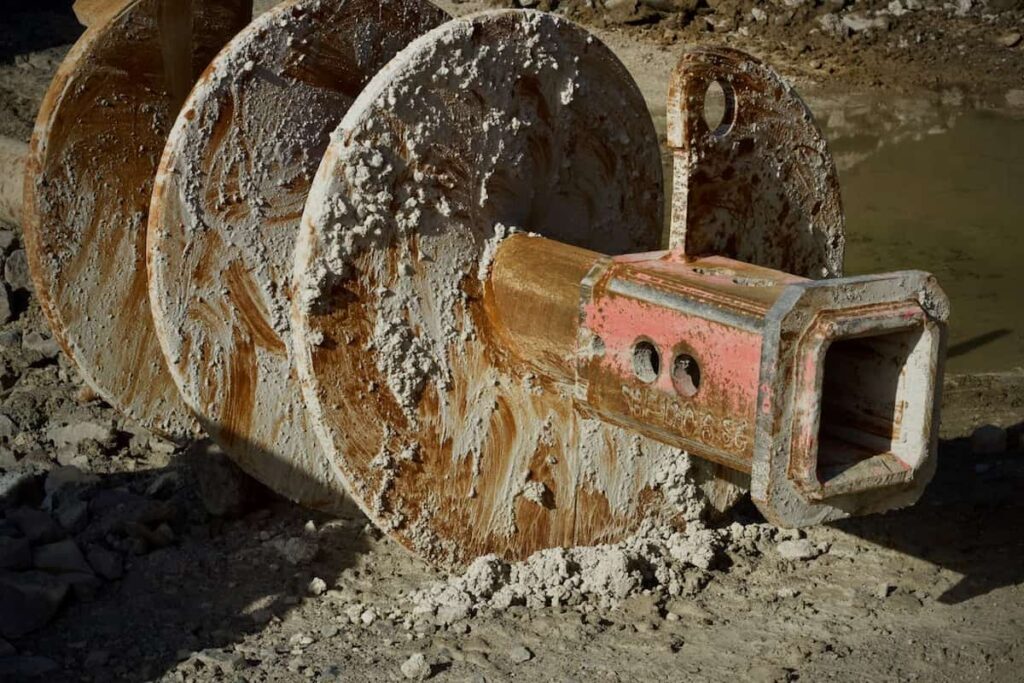
Conditioned sludge enters a cylindrical screen assembly and gets conveyed forward by a rotating helical screw — typically 2–5 RPM. As it moves along the shaft, it’s progressively squeezed between a series of fixed and moving rings. Filtrate passes through the gaps; solids compact toward the discharge end, where back-pressure is controlled by an adjustable cone or plate.
The key is that dewatering is gradual. There’s no single high-pressure event. Low rotational speed means low shear — and low shear means floc structure stays intact. That’s why screw presses handle gelatinous biological sludge well. It’s also why they struggle on sludges that genuinely need mechanical force to release bound water.
Belt Filter Press
Three zones: gravity drainage first, then a wedge zone where two belts converge, then a compression zone where the sludge gets squeezed around a series of rollers under belt tension. The gravity drainage zone is where most of the work happens — or should happen. On fibrous sludge with good free-drainage characteristics, it removes 50–70% of available water before any mechanical pressure is applied. On fine biological solids, it doesn’t work nearly as well. And if the gravity zone underperforms, the downstream compression zones don’t compensate for it. That’s the belt press in a nutshell: powerful when the sludge cooperates, frustrating when it doesn’t.
Decanter Centrifuge
High centrifugal force — typically 1,500 to 4,000 G — separates solids from liquid inside a spinning bowl. A helical scroll running at a slightly different speed continuously conveys settled solids to the discharge end. Versatile, high-throughput, high cake dryness on most sludge types. Also: high energy, significant mechanical complexity, and structural requirements that tend to surprise people who haven’t done a centrifuge installation before.
Cake Dryness: The Number Everyone Argues About
Dryness — expressed as percent total solids (% TS) — determines disposal cost. A 5-point difference in cake dryness on a 10,000 kg/day solids stream is roughly 500 additional kilograms of wet cake per day going to landfill. It adds up fast. So the pressure to specify high dryness targets is understandable.
The problem — or at least the problem I keep running into — is that dryness specs often get written early in the process, before anyone has actually tested the site sludge. Vendors agree to numbers that look reasonable on paper. Then commissioning arrives and the sludge turns out to behave differently than assumed. The ranges below are real-world performance, not best-case lab conditions:
| Sludge Type | Screw Press % TS | Belt Press % TS | Centrifuge % TS |
|---|---|---|---|
| Municipal WAS | 18–22% | 15–20% | 20–28% |
| Municipal mixed (primary + WAS) | 20–26% | 18–24% | 24–30% |
| Anaerobically digested biosolids | 18–23% | 18–22% | 24–30% |
| Food processing (high FOG) | 22–28% | 18–23% | 20–26% |
| Industrial fibrous (paper/pulp) | 28–38% | 30–42% | 18–24% |
| Chemical / mineral sludge | 15–20% | 18–22% | 25–35% |
Reading the Numbers: What the Ranges Actually Mean
On municipal biological sludge, centrifuges generally produce the driest cake. That’s real and I’m not going to pretend otherwise. But the actual gap between centrifuge and screw press on pre-thickened WAS is often 2–4 percentage points — not 10. Whether that increment of dryness justifies the capital cost, energy penalty, and maintenance complexity is a calculation that has to be run for each specific project.
Belt presses on fine municipal WAS are where I’d be most cautious. The 15–20% TS range is what happens when the gravity drainage zone underperforms — and on gelatinous activated sludge, it often does. I’ve seen installations where the belt presses were producing 16% TS cake against a specification of 20%, with the vendor arguing the sludge “didn’t match the design basis.” That argument is almost always technically defensible. It is also, from the plant operator’s perspective, completely useless.
⚠ On dryness specifications: Vendors will sign off on optimistic dryness targets — right up until commissioning, when suddenly the sludge “doesn’t match the design basis.” The only real protection is a pilot test on your actual sludge before the purchase order goes out. If a vendor is reluctant to support a pilot test, that reluctance is informative.
45,000 m³/day plant, WAS dewatering. Belt presses were in the original pre-design at a 20% TS guarantee. The engineer who wrote the spec had good results with belt presses on a different project and, honestly, probably didn’t question it too hard — the sludge characteristics on that previous job were just different enough to matter. Pilot testing on this one came back at 15–17% TS. We recommended switching to screw presses. The client’s first question was about the capital cost delta — around $180,000 USD. We ran the disposal numbers: the dryness improvement was saving roughly $95,000 a year on cake disposal at local rates. They approved the change. Screw presses have run at 20–22% TS since commissioning, with about a third less polymer than the belt press design would have required.
Polymer: The Cost Nobody Puts in the Right Column
I find myself explaining this in almost every pre-design meeting. Polymer isn’t a capital cost. It’s an operating cost that runs every day for the life of the plant. And the difference between technologies is significant enough that it should appear prominently in any lifecycle cost comparison — which, in my experience, it often doesn’t.
Typical active polymer dosages, expressed as grams per kilogram of dry solids processed:
| Technology | Typical Dose (g/kg DS) | Challenging sludge |
|---|---|---|
| Screw Press | 3–7 | 5–12 |
| Belt Filter Press | 4–10 | 8–18 |
| Decanter Centrifuge | 4–12 | 10–20 |
Why does the screw press use less? Because the low-shear mechanism preserves polymer-floc bonds rather than breaking them down. Centrifugal shear tears those bonds apart — so you need more polymer just to rebuild stable floc, and some of the excess leaves with the centrate rather than staying in the cake. Belt presses fall in the middle, though wash-water spray systems add shear that most polymer consumption models don’t fully account for.
One caveat: on inconsistently conditioned sludge — or plants where pre-thickening is unreliable — the screw press polymer advantage narrows. If your feed variability is high, the dose difference shrinks.
The math, for a medium plant: 2,000 kg DS/day, 4 g/kg DS difference between technologies = 8 kg active polymer/day. At $3/kg, that’s roughly $8,700/year. Over 20 years, $174,000 on polymer alone — before touching energy. It’s not complicated arithmetic. It just needs to appear in the right column of the cost model.
Energy: The Centrifuge Penalty That Doesn’t Go Away
Energy figures are most usefully compared as kWh per tonne of dry solids (kWh/t DS). Drive energy from vendor datasheets alone is misleading — belt presses carry wash-water pump loads that rarely show up in equipment energy specs. Ask specifically.
| Technology | Drive Energy (kWh/t DS) | Ancillary loads | Total realistic (kWh/t DS) |
|---|---|---|---|
| Screw Press | 15–40 | Minimal | 20–50 |
| Belt Filter Press | 20–50 | Medium–high (belt wash pumps) | 35–80 |
| Decanter Centrifuge | 60–120 | Low–medium | 65–130 |
The centrifuge energy penalty is structural — you’re spinning a heavy bowl continuously at 2,000–3,000 RPM. It doesn’t really go away even if you optimize everything else. Whether that energy cost changes the technology decision depends on electricity pricing at the site and annual throughput. On its own, it rarely tips the balance. But stacked on top of polymer differences and capital cost, it consistently reinforces the same direction.
About 8,000 kg DS/day. The client had two existing centrifuges — they’d had good experience with them elsewhere and frankly hadn’t questioned the choice. We were brought in to design an expansion, and the energy audit was almost an afterthought initially. The two centrifuges were pulling around 340 kWh/day in drive energy. Not unusual for centrifuges of that size, but nobody had connected it to a dollar figure. As part of the expansion, we specified four screw press units to handle the combined old and new load. New dewatering energy came out around 95 kWh/day. At local electricity rates, that was roughly $28,000/year in savings. The four screw presses cost more than replacing the centrifuges would have, but the client recovered the premium within three years on energy alone. That’s before you count polymer.
Maintenance: This Is the Part That Gets Underestimated Most Consistently
I’ve started thinking of maintenance burden as the most underweighted variable in dewatering technology selection. Capital cost is easy to put in a spreadsheet. Ongoing maintenance — the actual daily and weekly and monthly reality of keeping these machines running — is harder to quantify and often not seriously evaluated until the plant is operating and the operations team starts giving feedback that should have been anticipated at the design stage.
Screw Press
The main wear items are the fixed and moving rings that form the screen body. Because the machine runs at 2–5 RPM, wear is slow. Ring replacement typically falls on a 3–5 year cycle under normal conditions. The screw shaft itself is robust and rarely needs attention between those intervals.
Daily operation is mostly: check filtrate clarity, adjust back-pressure, confirm polymer dosing is stable. On well-tuned installations, operators describe it as close to set-and-forget after the initial commissioning period. That matters — a lot — in applications where skilled operator attention is genuinely limited, or where night operation without full staffing is part of the design. Which describes a significant portion of the market.
There’s no wash water demand, no fast-spinning components generating dangerous vibration, and most maintenance work can be handled in-house without OEM involvement. These aren’t minor advantages; they’re the kind of operational reality that shapes whether a plant actually runs reliably over a 15-year horizon.
Belt Filter Press
This is where I’d push back hardest against the cheerful picture that sometimes gets painted in pre-design reports.
Belt presses need daily attention. Tracking, tension, roller alignment, spray nozzle condition — not occasional checks, routine tasks. Nozzle blockages in particular have a failure cascade that’s disproportionate to the trigger: one partially blocked nozzle creates uneven belt washing, belt blinding follows, dryness drops, polymer gets increased to compensate, which worsens the blinding. I’ve seen operators spend most of a shift chasing a dryness problem that traced back to a single blocked nozzle in a spray bar with 48 of them. That’s not an unusual situation; it’s how belt presses actually behave when they’re not being actively managed.
Belt Wear, Wash Water, and Odor Control
Belts need replacing every 6–24 months depending on sludge abrasiveness — and they’re not cheap. Wash water demand runs 3–6 m³/hour per meter of belt width. That water has to come from somewhere and be treated afterward. In plants with tight water balance, this becomes a genuine constraint.
And if the belt press is in an odor-control enclosure — which biological sludge usually requires — maintenance tasks get significantly more unpleasant. Tracking adjustments and roller inspections inside a negative-pressure enclosure in full PPE are a different experience from doing the same job in open air. This affects how diligently the maintenance gets done in practice. Operators know this. It doesn’t always make it into the design basis.
Decanter Centrifuge
High performance, high-skill dependency. That’s the short version.
Bearing wear is the primary concern. Replacement requires precision alignment and dynamic balancing — most in-house maintenance teams can’t do this, which means OEM service contracts, scheduling, and lead times. Scroll wear depends heavily on sludge abrasiveness: clean digested biosolids might go 8–10 years; gritty or high-silica industrial sludge can wear scroll flights in 2–3. Vibration monitoring isn’t optional — an unbalanced centrifuge at 2,500 RPM damages its own bearings progressively and can cause structural damage if the problem isn’t caught early.
All of this is manageable with the right instrumentation, the right service agreements, and a maintenance culture that takes rotating equipment seriously. It’s less manageable when OEM service in the region is slow, when spare parts have long lead times, or when the operational discipline required is hard to sustain consistently. In those contexts — which describe many of the markets I work in — centrifuge downtime events tend to be longer and more expensive than they’d be elsewhere.
If I’m designing for a plant in a market with limited OEM service infrastructure — Southeast Asia outside major hubs, much of the Middle East outside the Gulf centers, most of Africa — centrifuges make me cautious. Not because they’re bad machines, but because their failure mode when maintenance is delayed is much more severe than a screw press running overdue for ring replacement. A screw press in that situation keeps producing cake, just slightly wetter. A centrifuge with worn bearings and no monitoring is a different problem. I’d rather my client have a machine they can manage reliably at 80% of theoretical performance than one that achieves 95% when it’s running and creates a crisis when it isn’t.
Capital Cost: Why the Sticker Price Is Usually the Wrong Number
Equipment purchase price is one component. Civil works, structural requirements, ancillary systems, and electrical scope vary enough across the three technologies that the apparent cost ranking sometimes reverses when you add everything up.
| Cost Component | Screw Press | Belt Filter Press | Centrifuge |
|---|---|---|---|
| Equipment purchase | $80,000–$180,000 | $100,000–$200,000 | $200,000–$500,000 |
| Civil / structural | Standard slab | Frame + drainage | Reinforced slab, vibration isolation |
| Wash-water system | Not required | Required | Not required |
| Odor control scope | Low (enclosed process) | High (open, mist-generating) | Medium |
| Electrical scope | Low | Medium | High (large VFD drives) |
Screw presses frequently end up at a lower total installed cost than belt presses of equivalent throughput capacity — primarily because they don’t require wash-water systems or odor-control enclosures. Centrifuges carry a structural cost premium that’s easy to underestimate in early-stage budgeting. The reinforced slab and vibration isolation for a large centrifuge train can add $50,000–$150,000 to the civil scope by itself, depending on the building and foundation conditions. That figure tends to appear late in the design process, after the technology decision is already committed.
When to Use Each Technology
I want to resist a tidy decision matrix here. The honest answer is that these decisions are more context-dependent than any table can capture — and I’ve learned to be suspicious of frameworks that make the selection look more mechanical than it is. That said, there are some patterns that hold up fairly consistently:
Screw Press Is Usually the Right Call When:
- Plant capacity is small to medium (roughly up to 200 kg DS/h per train)
- Sludge is biological — WAS, food processing organics, pre-thickened sludge
- Staffing is limited, or reliable unmanned operation is part of the design intent
- Polymer and energy operating costs carry significant weight in the lifecycle model
- OEM service in the region is limited, slow, or expensive
- The project is a retrofit into an existing building that can’t take centrifuge structural loads
Belt Press Is Worth Considering When:
- Sludge is fibrous with strong free-drainage characteristics — paper, pulp, some agricultural processing
- High throughput per unit is genuinely required and running multiple parallel trains isn’t practical
- Experienced, attentive operators are reliably available — and will stay available
- Wash water is abundantly available and its disposal isn’t constrained
I would not seriously consider a belt press for fine municipal WAS without a pilot test first. Too many projects have gone wrong on that assumption.
Centrifuge Makes Sense When:
- The plant is large — 200,000+ PE, or throughput requirements per unit genuinely push past what screw presses can handle efficiently
- Maximum cake dryness is the priority and the lifecycle cost supports it
- Skilled maintenance staff and reliable OEM service are genuinely available
- Feed sludge is well-characterized and consistently conditioned
- Downstream thermal drying or reuse constraints require maximum pre-dewatering
When the answer genuinely isn’t clear: Run a pilot test. A 4-week pilot on your actual sludge costs a fraction of a percent of total project capital. It eliminates the single biggest source of dewatering system underperformance, which is designing to the wrong technology because the sludge characteristics weren’t properly characterized at the design stage. I’ve seen pilots change the technology recommendation. I’ve also seen them confirm what the process model predicted. Either outcome is worth knowing before the purchase order goes out.
85,000 PE, mixed municipal and light industrial. Centrifuges were already specified in the pre-design — the engineering firm had used them on a previous project, and honestly it was probably just the path of least resistance. We came in at the detail design stage. Budget review showed the centrifuge option, including necessary structural upgrades to the existing building, was going to exceed the contingency reserve by around 22%. We ran the technology comparison that should have been done earlier. Four screw presses fit the existing building footprint without structural modifications and came in €340,000 below the centrifuge total installed cost. Six months of pilot data showed 21–23% TS on the mixed sludge — within 1–2 points of what the centrifuge would likely have achieved. The client approved the switch. The plant has run quietly since commissioning. Nobody has complained about the decision, which in my experience is the best outcome you can reasonably hope for.
A Few Questions I Get Asked Regularly
Can you retrofit from belt press to screw press without major civil work?
Usually yes, though it depends on the layout. Screw presses are generally more compact and lighter than equivalent-capacity belt presses, so existing slabs usually suffice. You’ll need new polymer dosing connections and sludge piping, but you can decommission the wash-water system — which actually frees up electrical load and room. I’d get a structural assessment of the existing slab first regardless, but in most cases it’s not the obstacle it sounds like.
Do centrifuges actually need more space?
The equipment footprint is sometimes smaller than you’d expect. But centrifuge rooms end up larger in practice because of the clearances required for vibration isolation, overhead crane access for bowl removal, and bearing maintenance access. The equipment layout drawing looks efficient. The actual room allocation tends not to be.
Is the polymer saving on a screw press really significant enough to matter?
Yes — unambiguously. On a medium plant at 2,000 kg DS/day, a 4 g/kg DS difference is 8 kg of active polymer per day. At $3/kg, that’s $8,700/year. Over 20 years, $174,000 on polymer alone. It’s not complicated. It just needs to be in the right column of the model.
What about gravity belt thickener followed by screw press — does that close the gap with centrifuge dryness?
Partially, yes. Pre-thickening raises the feed concentration to the screw press and typically pushes cake dryness toward 24–27% TS — meaningful improvement. It adds a second piece of equipment and another maintenance item, but on projects where maximum dryness matters and centrifuge costs can’t be justified, it’s worth evaluating seriously. I’ve used that combination on a few projects where the centrifuge option was just out of budget and the client needed better dryness than a standalone screw press provided.
What’s a realistic design life for each machine?
All three, maintained properly, should reach 15–20+ years. The difference is what “properly maintained” actually requires in practice. For a screw press, it’s ring replacement every few years and relatively little else. A belt press needs frequent belt replacement and constant daily attention to keep things aligned. Centrifuges require a rigorous bearing monitoring program and OEM involvement for any major work. Lifecycle cost models that don’t capture those differences aren’t really lifecycle cost models.
Not Sure Which Technology Fits Your Project?
Sludge characteristics, throughput, site constraints, and operating context all shift the answer. Send us your project parameters and our process engineers will give you a direct technical assessment — including sizing guidance for the technologies that actually make sense for your situation.