
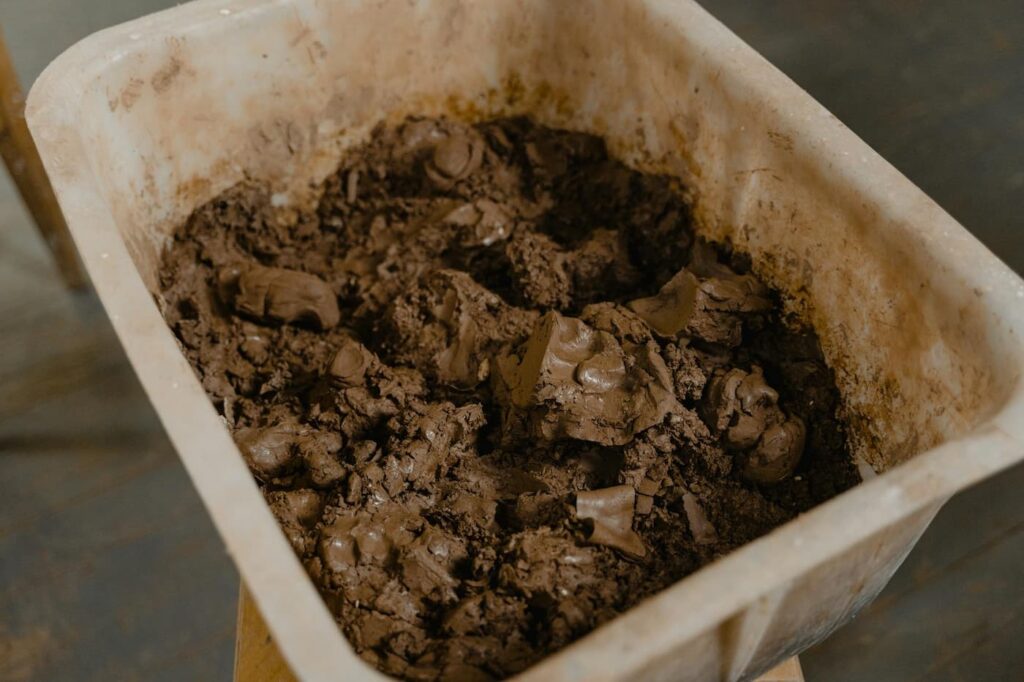
What DS% should your cake actually hit — and what happens when it doesn’t?
A plant operator in central Indonesia once asked me a question that stayed with me: “We’re hitting 17% DS — is that good?” My answer was: good compared to what? For his mixed food-processing sludge, 17% was leaving substantial money on the table. For a pharmaceutical biosludge on the same continent, 17% would be a celebration.
Dry solids (DS) content is the single most consequential performance indicator for a screw press. It drives disposal volumes, haulage costs, polymer consumption, and regulatory compliance. Yet DS benchmarks are almost never published in a format engineers can actually use — segmented by industry, sludge type, and disposal route.
This guide fills that gap. For each major industry category you will find: typical achievable DS ranges, the key variables that limit performance, polymer guidance, and a diagnostic framework when results fall below expectations.
1. What Dry Solids Content Actually Measures — and Why It Matters
Dry solids content is the mass percentage of solids remaining in dewatered cake after free water is removed. A cake at 20% DS contains 200 g of solids per 1,000 g of total wet weight; the remaining 800 g is water that must be transported, processed, or disposed of.
The practical consequence: every percentage point of DS improvement directly reduces cake volume. If a plant produces 100 tonnes DS per day and improves from 18% to 22% DS, the total wet cake volume drops from 556 tonnes to 455 tonnes per day — a 100-tonne reduction. At typical landfill disposal rates of $60–$100 per tonne, the annual saving reaches $2–6 million USD for a mid-size treatment plant.
| Real Project Anchor: Malaysia Food Processing Plant, 2021 An 8,500 m³/day poultry processing plant in Selangor was achieving 19–20% DS after a screw press installed by a local contractor. A polymer optimisation audit revealed the polymer was being dosed at 4.2 kg/tonne DS against a sludge that genuinely needed 9–11 kg/tonne due to high VSS. After increasing dosage and switching to a higher MW cationic polymer, the plant consistently hit 26–27% DS within three weeks. The reduction in wet cake mass cut their disposal transport runs from 14 per week to 9 — saving approximately $180,000 per year in haulage alone. |
2. Industry DS Benchmark Table: What to Expect from a Screw Press
The table below provides achievable DS ranges across the most common sludge types encountered in global wastewater treatment. These figures assume a properly sized, well-maintained multi-disk screw press with correct polymer selection and dosage.
| Industry / Sludge Type | Typical Influent TS (%) | Achievable DS After Screw Press | Dewatering Performance | Polymer ROI |
| Municipal WWTP — primary sludge | 18–22% | 25–28% | Good | High |
| Municipal WWTP — WAS only | 14–18% | 20–25% | Moderate | Medium |
| Municipal WWTP — mixed (primary + WAS) | 16–21% | 22–26% | Good | High |
| Food processing — slaughterhouse | 20–25% | 26–30% | Excellent | High |
| Food processing — dairy / beverage | 18–22% | 24–28% | Good | High |
| Pulp & paper — fiber sludge | 25–30% | 30–35% | Excellent | High |
| Textile & dyeing wastewater | 12–16% | 18–22% | Moderate | Medium |
| Electroplating / metal finishing | 10–14% | 15–19% | Variable | Low |
| Rendering / fat-rich industrial | 22–28% | 28–34% | Excellent | High |
| Pharmaceutical / bio-pharma | 8–13% | 14–18% | Low–Mod | Medium |
| Leachate treatment | 6–10% | 10–14% | Low | Low |
Notes: ‘Influent TS’ is the total solids concentration fed to the press. Feeding below 1% TS significantly reduces performance — gravity thickening or dissolved air flotation (DAF) thickening to ≥2–3% TS before pressing is strongly recommended. ‘Polymer ROI’ reflects the cost-effectiveness of polymer investment relative to DS improvement achieved.
3. The Economic Case: How DS Directly Reduces Disposal Cost
The relationship between DS content and disposal cost is linear and predictable. For every tonne of dry solids produced, the wet cake mass equals 100 ÷ DS%. The table below quantifies this for a facility disposing of 100 kg DS (e.g., one press-hour of output), at a disposal rate of $0.08 per kg wet cake:
| DS Content | Wet Cake Mass (per 100 kg DS) | Disposal Cost (@ $0.08/kg) | Savings vs 15% Baseline |
| 15% | 667 kg | ~$53 | Baseline |
| 18% | 556 kg | ~$44 | −$9 / tonne DS |
| 20% | 500 kg | ~$40 | −$13 / tonne DS |
| 22% | 455 kg | ~$36 | −$17 / tonne DS |
| 25% | 400 kg | ~$32 | −$21 / tonne DS |
| 28% | 357 kg | ~$29 | −$24 / tonne DS |
At scale — a plant generating 50 tonnes DS/day — the difference between 18% and 25% DS represents approximately $1.3 million per year in avoided disposal cost. This calculation alone often justifies a polymer programme or press upgrade.
4. Key Factors That Determine Achievable DS — Ranked by Impact
DS content is not a fixed equipment specification. It is a dynamic result of multiple interacting variables. Understanding which factors dominate in your context is the first step to targeted optimisation.
| Factor | Impact on DS | Practical Notes |
| Sludge type (primary vs WAS) | High | WAS is harder to dewater; mixing with primary improves DS by 3–6% |
| Volatile solids content (VSS/TSS) | High | Higher VSS = lower achievable DS; target VSS/TSS < 70% for best results |
| Polymer type & dosage | High | Under-dosing reduces DS; over-dosing wastes cost — optimise to 5–8 kg/tonne DS |
| Feed concentration (influent TS) | Medium | Below 0.8% TS = poor floc; thicken to ≥ 2% before pressing if possible |
| Screw press rotation speed (RPM) | Medium | Lower speed = more residence time = higher DS (trade-off: lower throughput) |
| Back-pressure setting | Medium–High | Higher back-pressure directly raises DS but increases motor load |
| Sludge temperature | Low–Medium | Cold sludge (< 10°C) thickens polymer and reduces floc formation |
| Sludge age / digestion status | Medium | Anaerobically digested sludge typically yields 2–4% higher DS |
| Grease/FOG content | Medium | High FOG coats particles, reduces polymer contact — pre-skim if > 5% of VSS |
| Screen aperture size | Low–Medium | Finer screens (0.2 mm) increase DS but risk blinding on fibrous sludge |
In practice, three factors account for over 70% of DS variation across sites: sludge type and blending ratio, polymer performance, and back-pressure setting. The remaining factors matter at the margin, but fixing these three first delivers the most immediate improvement.
5. Polymer Selection and Dosage Guide by Sludge Type
Polymer is the most controllable lever for improving DS performance. The right polymer type and dosage can add 3–8 percentage points of DS on the same press, with no capital investment. The wrong polymer, or the right polymer at the wrong dose, can limit performance well below equipment capability.
| Sludge Type | Recommended Polymer | Typical Dosage | DS Uplift | Notes |
| Municipal WAS | Cationic, medium–high charge | 6–10 kg/tonne DS | High | Jar test monthly |
| Municipal primary | Cationic, low–medium charge | 3–6 kg/tonne DS | Medium | Check after blend ratio changes |
| Food processing (FOG) | Cationic, high MW | 8–14 kg/tonne DS | High | FOG interferes — emulsify first |
| Pulp & paper | Cationic or anionic | 4–8 kg/tonne DS | Medium | Fibre aids filtration — test both types |
| Electroplating / metal-bearing | Inorganic (alum) + cationic | 10–18 kg/tonne DS | Low | Heavy metals reduce polymer efficiency |
| Pharmaceutical | Cationic, low charge | 5–9 kg/tonne DS | Medium | Cell debris hard to dewater — longer retention |
| Field Note: Polymer Overdosing Is More Common Than You Think In a 2019 audit of seven municipal plants across three Southeast Asian countries, five were overdosing polymer — in two cases by more than 40%. Overdosing does not simply ‘waste’ cost: excess polymer remains active in the filtrate, re-flocculating fine particles and increasing filtrate turbidity. In one 12,000 m³/day plant in the Philippines, reducing polymer dose from 11 kg/tDS to 7.5 kg/tDS improved DS from 20% to 23% while saving $130,000 per year in chemical cost. |
6. DS Targets by Disposal Route and Regulatory Standard
The required DS at your facility is ultimately set by your disposal route, not by engineering preference. The table below maps disposal and reuse pathways to minimum acceptable and operationally optimal DS targets:
| Disposal / Reuse Route | Minimum Acceptable DS | Target DS for Operations | Notes |
| EU municipal biosolids (Class A) | ≥ 22% DS | ≥ 25% DS preferred | Land application, composting |
| US EPA Part 503 Class B biosolids | ≥ 18% DS | ≥ 22% DS | Restricted land application |
| Landfill acceptance (paint test) | ≥ 20% DS | ≥ 25% DS | Many landfills require TCLP pass + no free liquid |
| Incineration / drying — energy cost | ≥ 25% DS | ≥ 28% DS | Below 20% DS = net energy negative in dryer |
| Composting (windrow method) | ≥ 18% DS | ≥ 20–22% DS | Mix ratio with bulking agent improves if DS > 20% |
| Agricultural reuse (developing regions) | ≥ 15% DS | ≥ 18% DS | Check local regulations — often less stringent |
| Thermal hydrolysis feed | Any | 14–16% DS optimal | THP efficiency peaks at lower DS before reactor |
A critical mismatch occurs when operators target the minimum acceptable DS rather than the operational optimum. Running consistently at 18% when your disposal route requires only 18% leaves no buffer for process variation — and sludge that falls below specification on a single test event can trigger regulatory intervention. Design for the target column, not the minimum.
7. DS Diagnostic Framework: When Performance Falls Below Benchmark
When measured DS consistently underperforms the industry benchmark for your sludge type, a structured diagnostic approach resolves the root cause faster than trial-and-error adjustment.
| Symptom | Root Cause | Corrective Action |
| DS drops suddenly 3–5 points | Feed sludge composition changed | Jar-test polymer again; check blend ratio of primary/WAS |
| DS consistently 4–6% below target | Under-dosing polymer or wrong type | Increase PAM dose in 0.5 kg/tDS steps; observe cake texture |
| Cake is wet and sticky | Low back-pressure or high screw speed | Increase back-pressure 5%; reduce RPM by 10% |
| DS high but filtrate is cloudy | Over-dosing polymer | Reduce PAM dose; excess polymer flocculates fine particles into filtrate |
| Cake crumbles / too dry | Back-pressure too high; over-retention | Reduce back-pressure; increase RPM slightly |
| DS OK but throughput falls 30% | Screen panels blinding (fine aperture) | Check screen condition; backwash; switch to 0.25 mm aperture |
| DS varies cyclically hour-to-hour | Inconsistent polymer make-down | Check dilution water flow; verify aging time ≥ 45 min for dry polymer |
| Case Study: Cyclical DS Drop at a Taiwanese Paper Mill, 2022 A paper and pulp facility in Taichung experienced DS swinging between 22% and 27% on a three-hour cycle, seemingly without explanation. Maintenance logs showed that the polymer make-down unit’s dilution water solenoid was sticking, causing polymer to be made down at 0.15% rather than 0.10% concentration during the low-DS phases. Polymer solution viscosity was too high to transfer properly to the dosing pump at the higher concentration. Fixing the solenoid and adding a flow meter to the dilution water line stabilised DS at 26–27% within two shifts. |
8. How to Measure and Report DS Accurately
Accurate DS measurement is foundational to performance monitoring. Incorrect sampling or drying procedures introduce systematic error that undermines the entire benchmarking exercise.
Standard Method (APHA 2540G / ISO 11465)
- Sample: Take a composite sample from the cake discharge conveyor — not a single grab. Three samples from three press cycles, blended.
- Weigh wet: Weigh a 20–50 g subsample in a pre-dried, pre-weighed crucible (±0.01 g accuracy).
- Dry: Place at 103–105°C in a calibrated oven for a minimum of 2 hours or until constant weight.
- Cool and reweigh: Cool in a desiccator to prevent moisture re-absorption.
- Calculate: DS% = (dry mass ÷ wet mass) × 100. Report as the average of three samples; flag if individual values differ by > 1.5%.
Frequency recommendation: Measure DS twice per operating shift during normal operation; increase to every two hours during polymer optimisation trials or after sludge composition changes.
9. Quick-Reference: Is Your DS Result Within Benchmark?
Use this checklist to quickly assess whether your current DS performance is within expected range for your sludge type:
- Identify your sludge type from the Industry Benchmark Table (Section 2)
- Compare your measured DS% against the ‘Achievable DS After Screw Press’ range
- If below range: check influent TS first — is feed concentration ≥ 1.5%? If not, thickening is the priority
- If influent TS is adequate: run a jar test to verify polymer type and dosage
- If polymer is optimal: check back-pressure setting and screw rotation speed
- If all settings are correct: inspect screen panels for blinding; check for bearing wear affecting back-pressure consistency
- If DS is within range but near the lower end: optimise polymer first — lowest-cost improvement lever
| Not achieving your benchmark DS? Our engineering team has optimised screw press dewatering systems across 40+ projects in 15 countries. We offer remote DS performance audits, polymer selection review, and full dewatering system design services. → Request a DS Performance Audit — fill in our equipment query form and receive a benchmark assessment within 48 hours. |