
Chemical Dosing
PE Tank System
A complete, skid-mounted chemical dosing system combining a corrosion-resistant polyethylene storage tank, metering pump, agitator, and control panel — delivering accurate, repeatable chemical feed for coagulation, flocculation, pH control, disinfection, and polymer preparation in water and wastewater treatment.
What Is A Chemical
Dosing PE Tank System?
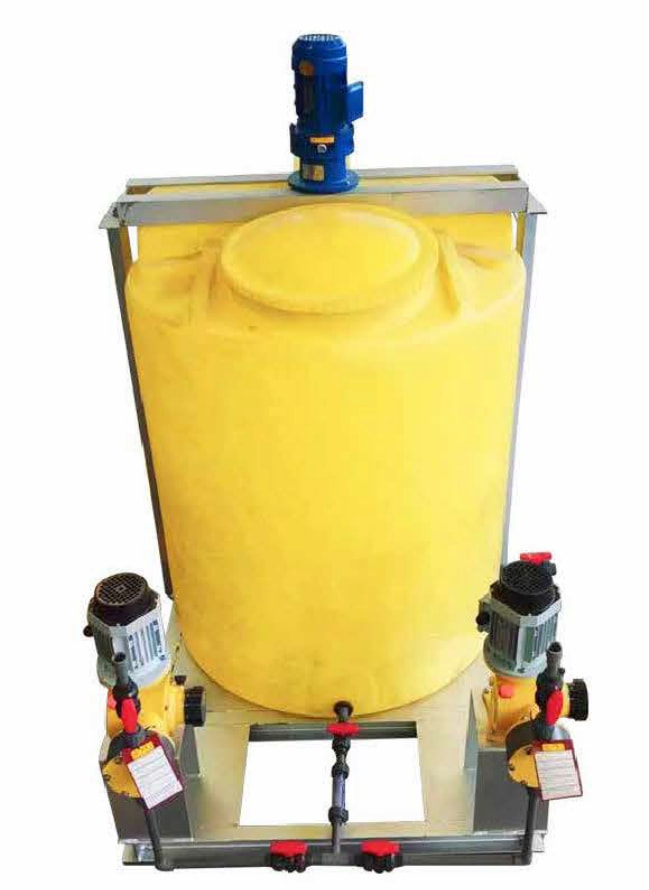
The Chemical Dosing PE Tank System is a complete, pre-assembled chemical feed unit designed for accurate, controlled introduction of liquid chemicals into water and wastewater treatment processes. The system integrates a corrosion-resistant polyethylene (PE) or polypropylene (PP) storage tank with a precision metering pump, mechanical agitator, pipework, and an automatic control panel — all mounted on a compact structural frame or directly onto the tank body.
The metering pump draws chemical solution from the storage tank and injects it into the process at a precisely controlled flow rate. An agitator continuously mixes the solution in the tank to maintain uniform concentration and prevent sedimentation. The automatic control system — PLC or relay-based — monitors and adjusts dosing speed and volume in response to flow signals, level sensors, or manual setpoints, ensuring consistent chemical feed with minimal operator attention.
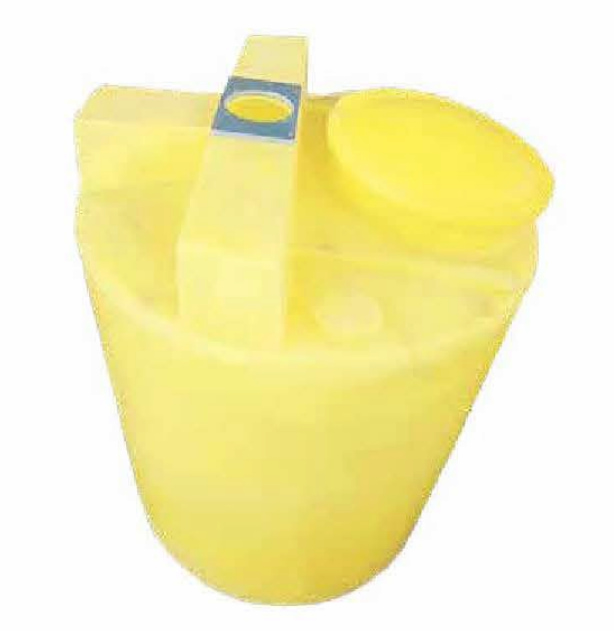
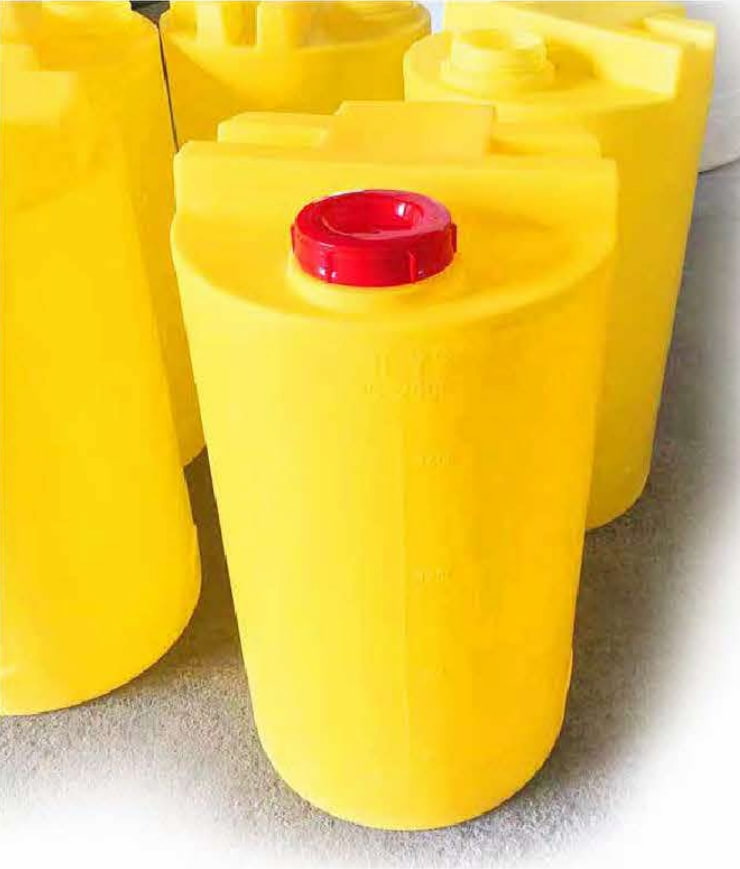
Standard tank materials are PE (polyethylene), PP (polypropylene), and FRP (fibre-reinforced plastic). Each offers excellent chemical resistance across a wide range of acids, alkalis, oxidants, and polymer solutions. Tanks from 100 L to 2,000 L are available, with custom sizes for larger installations.
- Coagulant dosing (PAC, alum, ferric chloride) for clarification
- Polymer / flocculant preparation and dosing for sludge dewatering
- pH adjustment — acid or alkali dosing for neutralisation
- Disinfection — sodium hypochlorite, PAA, or chlorine dioxide
- Scale and corrosion inhibitor dosing in cooling water systems
- Nutrient dosing (phosphoric acid, urea) for biological treatment
- Demulsifier, bactericide, and biocide injection in industrial processes
- Pre-treatment chemical feed for membrane and DAF systems
Why Choose Our
Chemical Dosing PE Tank System
Corrosion-Resistant Tank Body
PE, PP, and FRP tanks resist a wide range of aggressive chemicals — acids, alkalis, oxidants, and high-concentration polymer solutions. No lining required, no rust, and no contamination of the chemical solution.
Accurate Metering Pump
Diaphragm metering pumps deliver dosing accuracy of ±1% of setpoint across the full stroke range. Adjustable via stroke length and frequency — wide turndown ratio without sacrificing accuracy.
Continuous Agitation
Mechanical agitator maintains uniform chemical concentration throughout the tank — prevents sedimentation of polymer solutions and ensures stable dosing concentration at the pump suction point.
Automatic Control System
PLC-based control panel with flow-proportional dosing, level alarming, and remote I/O capability. Relay-controlled manual systems also available for simpler applications with lower automation requirements.
Compact Skid-Mounted Design
All components — tank, pump, agitator, panel, and pipework — pre-assembled and pre-tested on a structural frame. Ready to connect on arrival: chemical inlet, process outlet, power supply, and signal cables only.
Fully Configurable
Tank volume, material, pump type and flow range, agitator speed, control level, and pipework configuration all specified per project. Single-tank units up to multi-tank parallel systems with duty/standby pump arrangements.
How It Works
Fill & Mix
Chemical is filled into the PE tank via the fill port. The agitator runs continuously to mix the solution to uniform concentration.
Level Monitor
Float or ultrasonic level sensor monitors tank level. Low-level alarm triggers refill notification or automatic valve control to prevent dry-run.
Controlled Dosing
PLC or relay panel signals the metering pump to inject chemical at the set rate — manual setpoint, timer-based, or proportional to process flow signal.
Process Injection
Chemical is injected into the process pipeline or mixing chamber via check valve and dosing line. Back-pressure valve prevents siphoning when pump stops.
Standard Dosing System
Selection Table
| Model | Tank Volume (L) | Tank Material | Pump Flow (L/h) | Pump Pressure (MPa) | Agitator Power (kW) | Pump Power (kW) |
|---|---|---|---|---|---|---|
| JY-100 | 100 | PE | 0–60 | 0.5 | 0.18 | 0.04 |
| JY-200 | 200 | PE | 0–100 | 0.5 | 0.18 | 0.04 |
| JY-300 | 300 | PE | 0–150 | 0.5 | 0.37 | 0.06 |
| JY-500 | 500 | PE / PP | 0–300 | 0.5 | 0.37 | 0.09 |
| JY-1000 | 1,000 | PE / PP / FRP | 0–500 | 0.5 | 0.55 | 0.12 |
| JY-1500 | 1,500 | PP / FRP | 0–800 | 0.5 | 0.75 | 0.18 |
| JY-2000 | 2,000 | PP / FRP | 0–1,000 | 0.5 | 0.75 | 0.18 |
| Note: Custom tank volumes, materials, and pump configurations available on request. Pump flow range and pressure vary by metering pump model selected. Agitator speed and impeller type specified per chemical application. All models available with manual, timer, flow-proportional, or PLC control. | ||||||
Request A Quote
Or Technical Consultation
Tell us the chemical to be dosed, required flow rate, dosing accuracy requirement, and control level — we will configure the right tank size, pump type, and control system for your application.