Learn how belt filter presses work, their advantages and limitations, common applications, and how to select the right sludge dewatering solution for municipal and industrial wastewater treatment.
Belt filter presses have been one of the most widely used sludge dewatering technologies for decades. Their continuous operation, relatively high processing capacity, and proven reliability make them a common choice for municipal wastewater treatment plants and many industrial facilities.
Although newer technologies such as screw presses and decanter centrifuges have gained popularity, belt filter presses remain an economical solution for medium- and large-scale sludge treatment projects where high throughput is required.
This guide explains how belt filter presses work, compares them with other dewatering technologies, and provides practical engineering guidance for equipment selection.
For additional wastewater engineering resources, professionals can refer to the Water Environment Federation at https://www.wef.org.
Quick Reference — Belt Filter Press
| Parameter | Typical Value |
|---|---|
| Feed Solids | 0.5–5% DS |
| Cake Solids | 18–30% DS |
| Capacity | 5–150 m³/h |
| Polymer Consumption | 2–8 kg/t DS |
| Wash Water Consumption | Moderate to High |
| Operation | Continuous |
| Belt Speed | Adjustable |
| Automation | Fully Automatic |
| Construction Material | SS304 / SS316L |
| Typical Service Life | 10–20 Years |
What Is a Belt Filter Press?
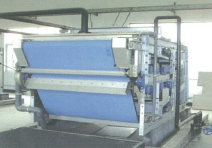
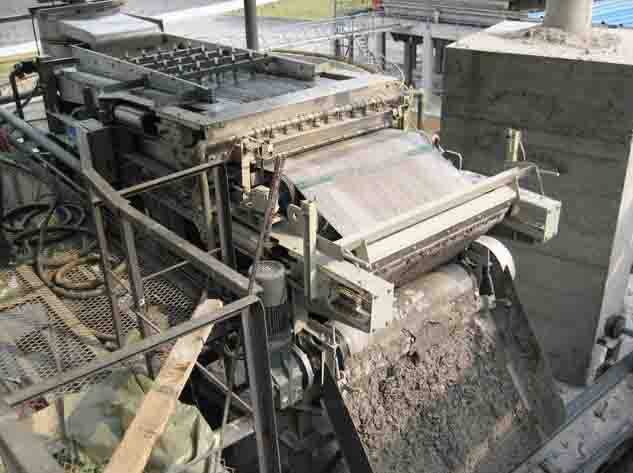
A belt filter press is a continuous mechanical sludge dewatering machine that removes water by gradually compressing conditioned sludge between two moving porous belts.
Unlike filter presses that operate in batches, belt filter presses provide uninterrupted operation, making them suitable for facilities with large daily sludge production.
Typical sludge treated includes:
- Primary sludge
- Waste activated sludge
- Mixed sludge
- Industrial biological sludge
- Food processing sludge
How a Belt Filter Press Works
The dewatering process consists of several stages.
Step 1 – Polymer Conditioning
Sludge first enters a mixing tank where polymer is added.
The polymer forms larger flocs, allowing water to separate more easily.
Proper flocculation is essential for efficient dewatering.
Step 2 – Gravity Drainage
The conditioned sludge is evenly distributed onto the moving filter belt.
Free water drains through the belt under gravity.
This stage removes a significant amount of water before mechanical pressing.
Step 3 – Wedge Zone
A second belt gradually covers the sludge.
The narrowing gap gently compresses the sludge while preventing sudden loss of solids.
Step 4 – Pressure Zone
The sludge passes through multiple rollers of decreasing diameter.
Increasing pressure squeezes additional water from the sludge.
The remaining material forms a dewatered sludge cake.
Step 5 – Belt Washing
High-pressure spray nozzles continuously clean both belts.
Clean belts ensure stable filtration performance during continuous operation.
Main Components
A typical belt filter press includes:
- Polymer preparation system
- Sludge feed system
- Gravity drainage section
- Wedge zone
- Pressure rollers
- Filter belts
- Belt washing system
- Drive motor
- Automatic control panel
Each component contributes to overall dewatering efficiency.
Typical Applications
Municipal Wastewater Treatment
Belt filter presses are widely used in municipal wastewater treatment plants for:
- Primary sludge
- Secondary sludge
- Mixed sludge
- Digested sludge
Their continuous operation makes them suitable for plants with high sludge production.
Industrial Wastewater Treatment
Industrial applications include:
- Food processing
- Beverage production
- Textile manufacturing
- Paper mills
- Chemical plants
- Mining
- Livestock farms
Performance depends on sludge characteristics and proper polymer selection.
Project Example – Municipal WWTP
A municipal wastewater treatment plant handling approximately 120 m³/day of mixed sludge upgraded its aging belt filter press with an automated control system.
The upgrade improved belt tension control, reduced operator intervention, and increased sludge cake consistency while maintaining the existing throughput.
Project Example – Food Processing Plant
A meat processing facility installed a belt filter press to dewater biological sludge after dissolved air flotation and aerobic treatment.
The continuous dewatering process reduced sludge transportation frequency and lowered disposal costs.
Belt Filter Press vs Other Dewatering Technologies
| Technology | Cake Solids | Energy Use | Water Consumption | Best Application |
|---|---|---|---|---|
| Belt Filter Press | 18–30% | Moderate | High | Large Municipal Plants |
| Screw Press | 18–25% | Low | Very Low | Small & Medium Plants |
| Decanter Centrifuge | 20–30% | High | Low | Industrial Sludge |
| Plate Filter Press | 25–40% | Moderate | Low | High Dryness Applications |
| Volute Screw Press | 18–25% | Very Low | Very Low | Municipal & Industrial |
Belt filter presses offer an excellent balance between throughput and investment cost, particularly where sufficient wash water is available.
Advantages
Continuous Operation
Unlike batch-operated filter presses, belt filter presses provide uninterrupted sludge dewatering.
This improves productivity and reduces operator workload.
High Processing Capacity
Large municipal wastewater treatment plants often select belt filter presses because they can process substantial sludge volumes efficiently.
Proven Technology
Belt filter presses have decades of successful operating history worldwide.
Replacement parts and technical expertise are widely available.
Stable Operation
When properly adjusted, belt filter presses provide consistent sludge cake quality over long operating periods.
Limitations
Although highly reliable, belt filter presses have several disadvantages.
High Wash Water Consumption
Continuous belt cleaning requires a significant volume of wash water.
This increases overall water consumption compared with screw presses.
Larger Installation Area
The equipment requires more floor space than centrifuges or screw presses.
Space availability should be evaluated during plant design.
Regular Belt Maintenance
Filter belts gradually wear over time.
Periodic inspection, alignment, and replacement are necessary for reliable operation.
Key Design Considerations
Sludge Characteristics
Different sludge types behave differently during dewatering.
Important parameters include:
- Organic content
- Fiber content
- Oil and grease
- Particle size
- Biological activity
Pilot testing is recommended whenever sludge characteristics are uncertain.
Polymer Selection
Proper polymer conditioning greatly influences:
- Cake solids
- Filtrate clarity
- Polymer consumption
- Belt performance
Laboratory testing helps optimize polymer type and dosage.
Belt Speed
Adjustable belt speed balances:
- Processing capacity
- Dewatering performance
- Cake dryness
Higher throughput does not always produce better results.
Roller Pressure
Roller configuration determines compression force.
Gradual pressure application generally improves sludge cake quality while reducing solids loss.
Common Design Mistakes
Oversizing Equipment
Selecting equipment based only on future expansion can reduce dewatering efficiency during normal operation.
Proper hydraulic loading is essential.
Ignoring Wash Water Requirements
Some facilities underestimate wash water demand.
Adequate water supply should be included during plant design.
Selecting Equipment Only by Cake Solids
Higher cake dryness is not always the lowest-cost solution.
Energy consumption, maintenance, wash water, and polymer usage should also be evaluated.
Project Example – Textile Industry
A textile wastewater treatment plant originally selected a centrifuge because of its compact footprint.
After evaluating operating costs, engineers replaced it with a belt filter press due to lower maintenance costs and better performance for fiber-rich sludge.
Engineering Perspective
Belt filter presses remain one of the most practical sludge dewatering solutions for medium- and large-scale wastewater treatment plants.
Although screw presses have become increasingly popular due to their lower energy and wash water consumption, belt filter presses continue to provide excellent performance where high sludge throughput is required.
The most successful projects consider sludge characteristics, available space, wash water availability, and long-term operating costs rather than focusing on a single performance indicator.
Belt Filter Press Selection Checklist
Process Evaluation
- Identify sludge type
- Measure feed solids concentration
- Estimate daily sludge production
- Review disposal requirements
- Evaluate available installation space
Equipment Selection
- Determine belt width
- Calculate hydraulic capacity
- Select polymer preparation system
- Review belt washing requirements
- Confirm automation level
Procurement Review
- Compare lifecycle costs
- Verify spare parts availability
- Confirm local service support
- Review warranty conditions
- Evaluate operating references
Frequently Asked Questions
What is a belt filter press used for?
A belt filter press removes water from sludge through continuous mechanical compression, reducing sludge volume before disposal or further treatment.
What cake solids can a belt filter press achieve?
Most municipal sludge applications produce sludge cakes containing approximately 18–30% dry solids, depending on sludge characteristics and polymer conditioning.
Does a belt filter press require polymer?
Yes.
Most belt filter presses require polymer conditioning to improve floc formation and increase dewatering efficiency.
Is a belt filter press better than a screw press?
Neither technology is universally better.
Belt filter presses generally offer higher throughput, while screw presses consume less energy and wash water.
Equipment selection depends on project requirements.
Conclusion
Belt filter presses remain a reliable and cost-effective solution for sludge dewatering in municipal and industrial wastewater treatment.
Their continuous operation, high processing capacity, and proven performance make them particularly suitable for facilities with large sludge production.
Selecting the correct equipment requires careful evaluation of sludge characteristics, wash water availability, polymer requirements, and long-term operating costs.
When properly designed and maintained, belt filter presses provide stable performance and significant savings in sludge handling and disposal.
Need Help Selecting a Belt Filter Press?
Morvolous supplies belt filter presses, screw presses, polymer dosing systems, sludge conveyors, and complete sludge treatment solutions for municipal and industrial wastewater treatment plants.
Our engineering team can help evaluate your sludge characteristics and recommend the most suitable dewatering solution for your application.
About the Author
Morvolous Engineering Team
Morvolous specializes in sludge treatment, wastewater filtration, chemical dosing, and turnkey wastewater treatment systems. Our engineers provide customized equipment selection, process optimization, and engineering support for customers worldwide.