Learn how polymer preparation systems improve sludge dewatering, enhance chemical dosing accuracy, and reduce operating costs in municipal and industrial wastewater treatment.
Polymer preparation systems play a critical role in modern wastewater treatment by ensuring that flocculants are properly dissolved, aged, and dosed before entering sludge dewatering or solid-liquid separation processes.
Whether used with screw presses, belt filter presses, decanter centrifuges, dissolved air flotation (DAF) systems, or clarifiers, a properly designed polymer preparation system improves floc formation, increases solids recovery, and reduces chemical consumption.
Manual polymer mixing often results in inconsistent solution concentration, poor flocculation, and unnecessary operating costs. Automatic polymer preparation systems solve these problems by producing a stable, homogeneous polymer solution with minimal operator intervention.
This guide explains how polymer preparation systems work, compares manual and automatic preparation methods, and provides practical design guidance for municipal and industrial wastewater treatment plants.
For additional wastewater engineering resources, professionals can refer to the Water Environment Federation at https://www.wef.org.
Quick Reference — Polymer Preparation System
| Parameter | Typical Value |
|---|---|
| Polymer Type | Powder / Emulsion |
| Solution Concentration | 0.05–0.5% |
| Preparation Capacity | 500–10,000 L/h |
| Aging Time | 30–60 Minutes |
| Dosing Accuracy | ±1% |
| Operation | Automatic |
| Construction Material | SS304 / PP / PE |
| Water Supply Pressure | 2–5 bar |
| Power Supply | 380V / 50Hz or Customized |
| Typical Service Life | 10–15 Years |
What Is a Polymer Preparation System?
A polymer preparation system is an automatic chemical mixing unit that prepares polymer solutions at a controlled concentration before they are dosed into wastewater treatment processes.
The system performs three main functions:
- Polymer dissolution
- Polymer aging (maturation)
- Continuous solution dosing
Proper preparation allows polymer molecules to fully hydrate, maximizing their flocculation efficiency.
Why Polymer Preparation Is Important
Improperly prepared polymer can lead to:
- Poor sludge dewatering
- Higher polymer consumption
- Weak floc formation
- Increased filtrate suspended solids
- Reduced sludge cake dryness
Automatic preparation systems ensure consistent chemical quality, improving the performance of downstream equipment.
How a Polymer Preparation System Works
Step 1 – Dry Polymer Feeding
Powder polymer is automatically fed from a hopper into the wetting chamber.
Accurate dosing prevents polymer waste and ensures stable solution concentration.
Step 2 – Mixing
Fresh water mixes with the polymer under controlled agitation.
Proper wetting prevents polymer clumping, commonly known as “fish eyes.”
Step 3 – Aging
The polymer solution flows through one or more aging tanks.
During this period, polymer molecules fully hydrate and develop their flocculation capability.
Typical aging time ranges from 30 to 60 minutes.
Step 4 – Storage
Prepared polymer solution is stored in the final chamber until required by the dosing pumps.
Level sensors automatically maintain solution availability.
Step 5 – Dosing
Metering pumps transfer the prepared polymer solution to:
- Screw presses
- Belt filter presses
- Decanter centrifuges
- DAF systems
- Clarifiers
- Sludge thickeners
Flow rate automatically adjusts according to process demand.
Main Components
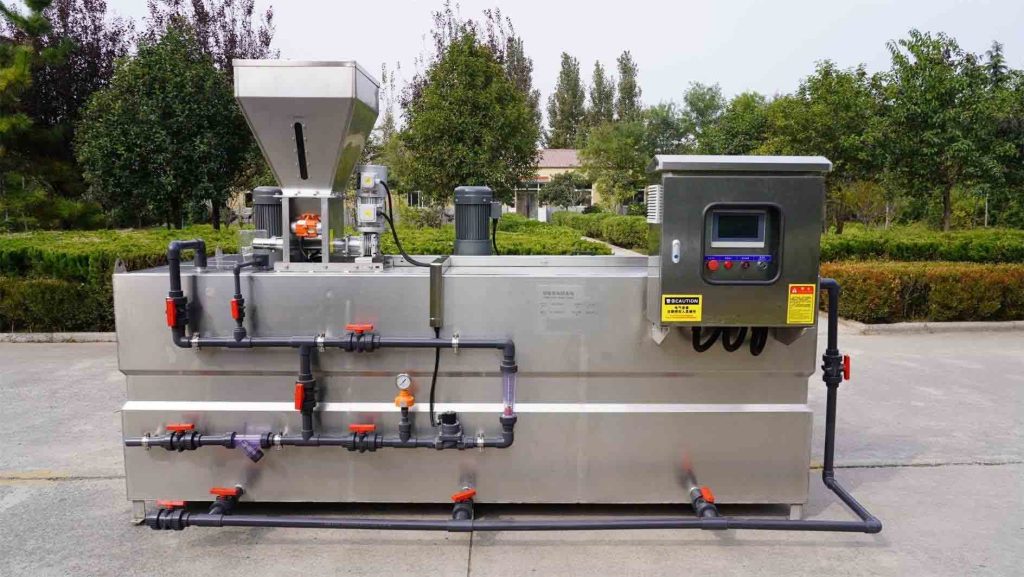
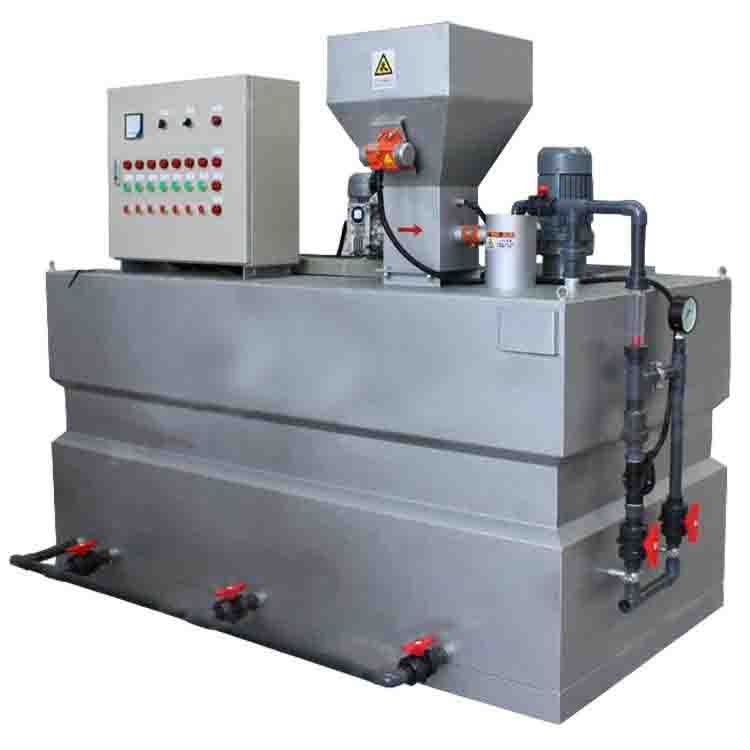
A typical polymer preparation system includes:
- Dry polymer hopper
- Screw feeder
- Wetting device
- Mixing tank
- Aging tank
- Storage tank
- Agitators
- Level sensors
- Metering pumps
- PLC control panel
Most systems use a three-chamber design for continuous operation.
Typical Applications
Sludge Dewatering
Polymer preparation systems improve sludge dewatering for:
- Screw presses
- Belt filter presses
- Decanter centrifuges
- Plate filter presses
Proper polymer conditioning increases cake solids and reduces filtrate turbidity.
Dissolved Air Flotation (DAF)
DAF systems rely on polymer to improve floc formation before flotation.
Automatic preparation ensures stable flotation performance.
Clarification
Polymer dosing enhances particle aggregation in:
- Lamella clarifiers
- Tube settlers
- Primary clarifiers
Better floc formation improves settling efficiency.
Water Treatment
Polymer preparation systems are also used in:
- Drinking water plants
- Surface water treatment
- Industrial process water
- Mining water treatment
Project Example – Municipal WWTP
A municipal wastewater treatment plant replaced manual polymer mixing with an automatic three-tank polymer preparation system.
The upgrade reduced chemical consumption by approximately 15% while improving sludge cake consistency and reducing operator workload.
Project Example – Food Processing Plant
A food processing factory installed an automatic polymer preparation system upstream of its screw press.
The improved polymer hydration resulted in stronger flocs, lower filtrate suspended solids, and reduced polymer usage.
Automatic vs Manual Polymer Preparation
| Feature | Automatic System | Manual Mixing |
|---|---|---|
| Solution Consistency | Excellent | Variable |
| Chemical Consumption | Low | Higher |
| Labor Requirement | Low | High |
| Dosing Accuracy | Excellent | Moderate |
| Operating Stability | Excellent | Moderate |
| Automation | Fully Automatic | Manual |
Automatic systems generally provide lower long-term operating costs despite higher initial investment.
Advantages
Consistent Polymer Quality
Automatic control maintains stable polymer concentration throughout operation.
Reduced Chemical Consumption
Proper hydration maximizes polymer efficiency, reducing chemical waste.
Lower Labor Requirements
Automatic preparation eliminates frequent manual mixing.
Better Sludge Dewatering
Improved floc formation increases cake solids and reduces filtrate suspended solids.
Easy Integration
Polymer preparation systems can be integrated with:
- Screw presses
- Belt filter presses
- Centrifuges
- DAF systems
- SCADA control systems
Design Considerations
Polymer Type
Systems should be selected based on:
- Powder polymer
- Liquid emulsion polymer
Some units can process both types.
Aging Time
Insufficient aging reduces polymer effectiveness.
Typical design values range between 30 and 60 minutes.
Capacity
System capacity should match:
- Average polymer demand
- Peak sludge production
- Future plant expansion
Oversized systems may reduce solution freshness.
Water Quality
Preparation water should be clean and free from excessive suspended solids.
Poor water quality can affect polymer dissolution.
Common Design Mistakes
Incorrect Solution Concentration
Overly concentrated polymer solutions often mix poorly.
Lower concentrations usually provide better hydration.
Inadequate Aging Volume
Insufficient maturation time reduces flocculation performance.
Tank volume should be designed accordingly.
Poor Polymer Storage
Polymer should be stored in a dry, cool environment to maintain performance.
Moisture exposure can reduce product quality.
Project Example – Textile Wastewater Plant
A textile factory experienced unstable sludge dewatering because operators manually mixed polymer at inconsistent concentrations.
After installing an automatic preparation system, polymer dosage became stable and sludge cake quality improved significantly.
Engineering Perspective
Many wastewater treatment plants focus on selecting high-performance sludge dewatering equipment while overlooking polymer preparation.
In reality, even the most advanced screw press or centrifuge cannot achieve optimal performance without properly prepared polymer.
Automatic polymer preparation systems improve chemical efficiency, reduce operating costs, and stabilize sludge treatment performance.
For many facilities, upgrading the polymer preparation process offers one of the quickest returns on investment.
Polymer Preparation System Selection Checklist
Process Evaluation
- Identify polymer type
- Determine required solution concentration
- Estimate daily polymer demand
- Evaluate sludge production
- Review future expansion
Equipment Selection
- Select preparation capacity
- Determine chamber configuration
- Verify aging time
- Choose dosing pumps
- Confirm automation level
Procurement Review
- Compare lifecycle costs
- Verify spare parts availability
- Confirm local technical support
- Review warranty conditions
- Evaluate operating references
Frequently Asked Questions
What is a polymer preparation system?
A polymer preparation system automatically dissolves, hydrates, ages, and doses polymer solutions used in wastewater treatment processes.
Why is polymer aging important?
Aging allows polymer molecules to fully hydrate, producing stronger flocs and improving separation efficiency.
Can one system prepare both powder and liquid polymers?
Some models are designed to process both powder and emulsion polymers, while others are dedicated to a single polymer type.
Where are polymer preparation systems used?
They are commonly used with sludge dewatering equipment, dissolved air flotation systems, clarifiers, and water treatment processes.
Conclusion
Polymer preparation systems are essential for achieving efficient sludge dewatering and reliable solid-liquid separation in wastewater treatment.
By producing a consistent, properly hydrated polymer solution, these systems reduce chemical consumption, improve floc formation, and enhance the performance of downstream equipment.
Whether used in municipal or industrial wastewater treatment, automatic polymer preparation provides long-term operational and economic benefits.
Need Help Selecting a Polymer Preparation System?
Morvolous supplies automatic polymer preparation systems, polymer dosing units, screw presses, belt filter presses, decanter centrifuges, and complete sludge treatment solutions for municipal and industrial wastewater treatment.
Our engineering team can help design a polymer preparation system that matches your sludge characteristics, chemical requirements, and treatment capacity.
About the Author
Morvolous Engineering Team
Morvolous specializes in chemical dosing systems, sludge dewatering, wastewater filtration, and turnkey wastewater treatment solutions. Our engineers provide customized equipment selection and process optimization for municipal and industrial wastewater treatment projects worldwide.