Learn how chemical dosing systems work, the different types of dosing chemicals used in wastewater treatment, and how to select the right dosing equipment for municipal and industrial applications.
Chemical dosing systems are essential components of modern wastewater treatment plants. They automatically inject precise amounts of chemicals into the treatment process to adjust pH, promote coagulation and flocculation, disinfect water, remove nutrients, and improve sludge dewatering.
Accurate chemical dosing not only improves treatment efficiency but also reduces chemical waste, minimizes operating costs, and helps facilities comply with increasingly strict discharge regulations.
Whether treating municipal sewage, industrial wastewater, or recycled process water, selecting the appropriate dosing system is critical to achieving stable and reliable treatment performance.
This guide explains how chemical dosing systems work, compares common dosing chemicals, and provides practical engineering guidance for system design and equipment selection.
For additional wastewater engineering resources, professionals can refer to the Water Environment Federation at https://www.wef.org.
Quick Reference — Chemical Dosing System
| Parameter | Typical Value |
|---|---|
| Dosing Accuracy | ±1% |
| Flow Capacity | 1–10,000 L/h |
| Chemical Types | Acid, Alkali, PAC, PAM, Sodium Hypochlorite, Ferric Chloride |
| Tank Material | PE, PP, FRP, SS304, SS316L |
| Control Mode | Manual / Automatic / PLC |
| Metering Pump Type | Diaphragm / Peristaltic / Plunger |
| Power Supply | 220V / 380V |
| Installation | Indoor / Outdoor |
| Typical Service Life | 10–15 Years |
What Is a Chemical Dosing System?
A chemical dosing system is an automated package that stores, prepares, measures, and injects treatment chemicals into a wastewater treatment process.
The primary objective is to deliver the correct chemical dosage at the correct location and time.
Typical treatment chemicals include:
- Coagulants
- Flocculants
- Acids
- Alkalis
- Disinfectants
- Nutrient removal chemicals
- Scale inhibitors
Modern dosing systems automatically adjust chemical feed according to process conditions.
Why Chemical Dosing Is Important
Proper chemical dosing helps wastewater treatment plants achieve:
- Stable treatment performance
- Lower chemical consumption
- Better sludge settling
- Improved sludge dewatering
- Reliable pH control
- Enhanced phosphorus removal
- Effective disinfection
Incorrect dosing can increase operating costs and reduce treatment efficiency.
How a Chemical Dosing System Works
Step 1 – Chemical Storage
Liquid chemicals or prepared solutions are stored in dedicated dosing tanks equipped with level indicators.
Step 2 – Chemical Preparation
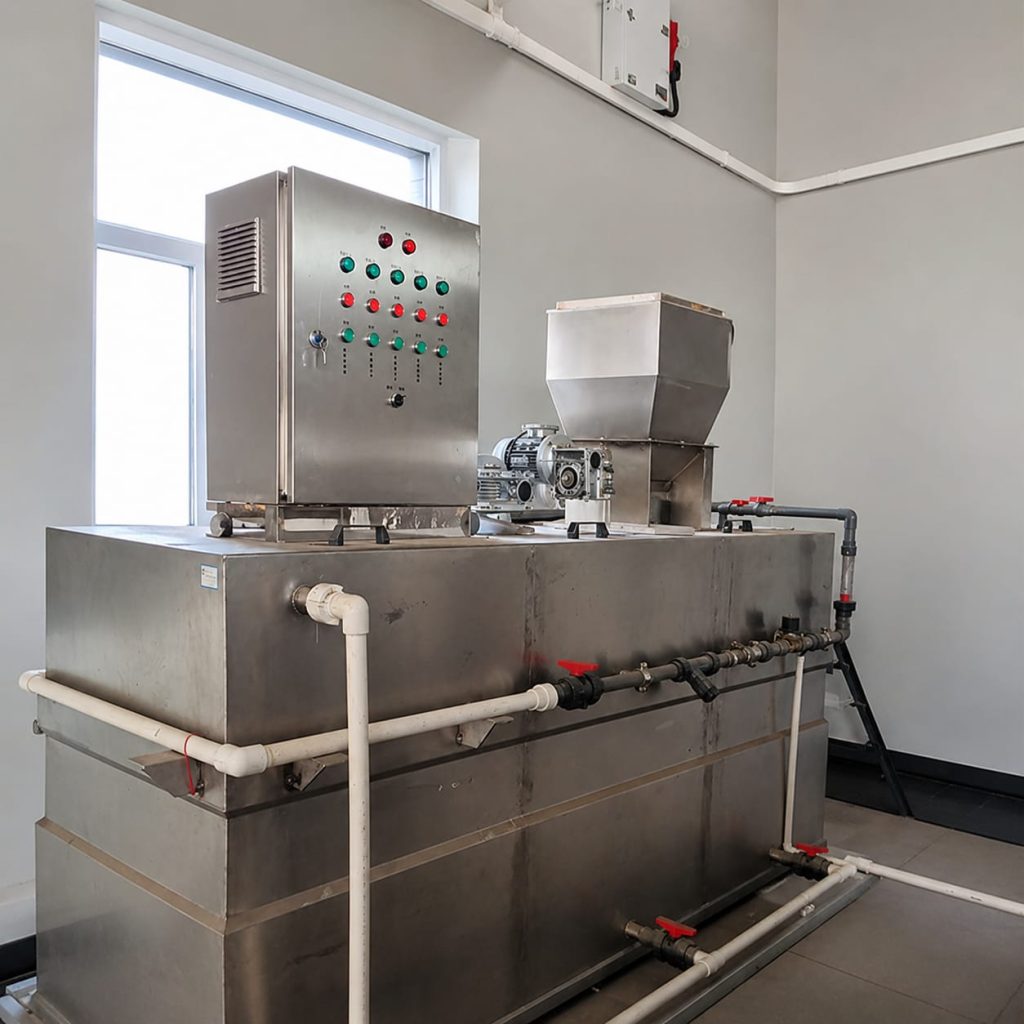
Some chemicals, such as powdered polymers, require automatic preparation before dosing.
Preparation systems ensure proper solution concentration.
Step 3 – Metering
Metering pumps accurately control the dosing flow according to process requirements.
Variable-speed pumps allow continuous adjustment.
Step 4 – Injection
Chemicals are injected into pipelines or reaction tanks through dedicated injection points.
Proper mixing is essential for maximum effectiveness.
Step 5 – Process Control
PLC systems receive signals from flow meters, pH sensors, ORP meters, or turbidity analyzers and automatically adjust dosing rates.
Main Components
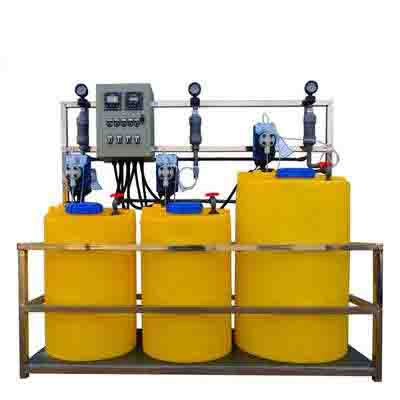
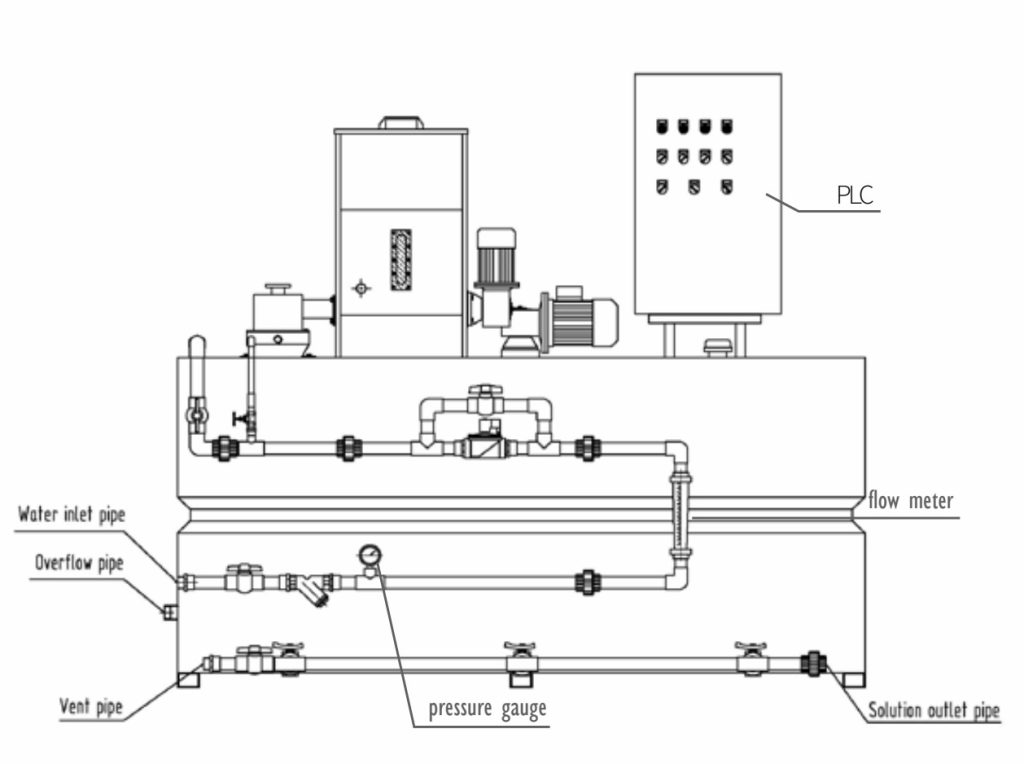
A typical chemical dosing system includes:
- Chemical storage tank
- Metering pump
- Agitator (optional)
- Level transmitter
- Calibration column
- Safety valve
- Pulsation damper
- Injection valve
- PLC control cabinet
- Flow meter
Each component contributes to safe and accurate chemical delivery.
Common Chemicals Used
PAC (Polyaluminum Chloride)
Applications:
- Coagulation
- Suspended solids removal
- Turbidity reduction
Widely used in municipal and industrial water treatment.
PAM (Polyacrylamide)
Applications:
- Flocculation
- Sludge dewatering
- DAF systems
Usually prepared using an automatic polymer preparation system.
Sodium Hypochlorite
Applications:
- Disinfection
- Odor control
- Pathogen removal
Commonly used instead of chlorine gas.
Sulfuric Acid
Applications:
- pH reduction
- Neutralization
- Industrial wastewater treatment
Sodium Hydroxide
Applications:
- pH adjustment
- Neutralization
- Alkalinity control
Ferric Chloride
Applications:
- Phosphorus removal
- Coagulation
- Sulfide control
Typical Applications
Municipal Wastewater Treatment
Chemical dosing systems support:
- Coagulation
- Flocculation
- Nutrient removal
- Sludge dewatering
- Disinfection
Industrial Wastewater Treatment
Industries include:
- Food processing
- Chemical manufacturing
- Textile
- Pharmaceutical
- Mining
- Paper mills
- Electronics
Each application requires different chemical combinations.
Drinking Water Treatment
Chemical dosing improves:
- Turbidity removal
- Disinfection
- pH stabilization
- Corrosion control
Project Example – Municipal WWTP
A municipal wastewater treatment plant upgraded its chemical dosing system with PLC-controlled metering pumps linked to online flow meters.
Automatic dosing reduced chemical consumption while improving effluent quality consistency.
Project Example – Textile Factory
A textile wastewater treatment facility installed separate PAC and PAM dosing systems ahead of a dissolved air flotation unit.
The optimized dosing strategy improved suspended solids removal and reduced sludge production.
Chemical Dosing System vs Manual Dosing
| Feature | Automatic Dosing | Manual Dosing |
|---|---|---|
| Accuracy | Excellent | Variable |
| Chemical Consumption | Lower | Higher |
| Labor Requirement | Low | High |
| Process Stability | Excellent | Moderate |
| Automation | Full PLC Control | Manual |
| Safety | Higher | Lower |
Automatic systems offer superior consistency and lower long-term operating costs.
Advantages
Accurate Chemical Injection
Metering pumps provide precise dosing regardless of flow fluctuations.
Reduced Chemical Waste
Automatic control minimizes overdosing and unnecessary chemical consumption.
Improved Treatment Performance
Stable dosing enhances coagulation, flocculation, disinfection, and sludge dewatering.
Enhanced Safety
Closed chemical handling systems reduce operator exposure to hazardous chemicals.
Easy Integration
Chemical dosing systems integrate easily with:
- PLC
- SCADA
- Flow meters
- pH controllers
- ORP analyzers
Design Considerations
Chemical Compatibility
Tank materials and piping must resist chemical corrosion.
Common material choices include:
- PE
- PP
- FRP
- PVC
- SS316L
Dosing Pump Selection
Pump selection depends on:
- Flow rate
- Pressure
- Chemical viscosity
- Required accuracy
Instrumentation
Online instruments may include:
- pH meter
- ORP analyzer
- Turbidity meter
- Conductivity meter
- Flow meter
These sensors improve dosing accuracy.
Safety Features
Recommended safety equipment includes:
- Leak detection
- Secondary containment
- Ventilation
- Emergency shutdown
- Overflow protection
Common Design Mistakes
Oversized Dosing Pumps
Large pumps operating at very low capacity often reduce dosing accuracy.
Proper sizing improves performance.
Poor Chemical Storage
Incorrect storage temperatures or direct sunlight may reduce chemical stability.
Ignoring Mixing Conditions
Even accurate dosing cannot compensate for poor mixing inside reaction tanks.
Proper hydraulic design is essential.
Project Example – Food Processing Plant
A food factory experienced inconsistent pH control because chemicals were injected immediately before a sharp pipe bend.
Relocating the injection point and improving mixing significantly stabilized process performance.
Engineering Perspective
Chemical dosing systems influence nearly every stage of wastewater treatment.
From coagulation and flocculation to sludge dewatering and disinfection, precise chemical delivery directly affects treatment efficiency, operating costs, and regulatory compliance.
Rather than selecting equipment solely by pump capacity, engineers should evaluate chemical compatibility, automation requirements, monitoring systems, and long-term maintenance needs.
A well-designed dosing system provides consistent performance while minimizing chemical consumption throughout the plant lifecycle.
Chemical Dosing System Selection Checklist
Process Evaluation
- Identify treatment objectives
- Determine chemical types
- Estimate dosing demand
- Review wastewater characteristics
- Evaluate automation requirements
Equipment Selection
- Select tank material
- Choose metering pump
- Verify instrumentation
- Review control system
- Confirm safety devices
Procurement Review
- Compare lifecycle costs
- Verify spare parts availability
- Confirm technical support
- Review warranty conditions
- Evaluate installation requirements
Frequently Asked Questions
What is a chemical dosing system?
A chemical dosing system automatically stores, prepares, and injects chemicals into water or wastewater treatment processes.
Which chemicals are most commonly used?
Common chemicals include PAC, PAM, sodium hypochlorite, sulfuric acid, sodium hydroxide, and ferric chloride.
Why are metering pumps used?
Metering pumps provide precise chemical dosing, ensuring stable treatment performance while minimizing chemical waste.
Can chemical dosing systems operate automatically?
Yes.
Most modern systems use PLC control combined with online sensors to automatically adjust dosing according to process conditions.
Conclusion
Chemical dosing systems are essential for efficient municipal and industrial wastewater treatment.
Accurate chemical injection improves coagulation, flocculation, disinfection, pH control, and sludge dewatering while reducing chemical consumption and operating costs.
Proper equipment selection requires careful evaluation of chemical compatibility, dosing accuracy, automation requirements, and long-term maintenance considerations.
With the right design, chemical dosing systems provide reliable, safe, and cost-effective operation for a wide range of water treatment applications.
Need Help Selecting a Chemical Dosing System?
Morvolous supplies complete chemical dosing systems, polymer preparation units, PE dosing tanks, metering pumps, and automatic control systems for municipal and industrial wastewater treatment plants.
Our engineering team can help design a customized dosing solution based on your treatment process, chemical requirements, and project capacity.
About the Author
Morvolous Engineering Team
Morvolous specializes in chemical dosing, sludge treatment, wastewater filtration, and turnkey wastewater treatment solutions. We provide customized engineering support and reliable equipment for municipal and industrial water treatment projects worldwide.