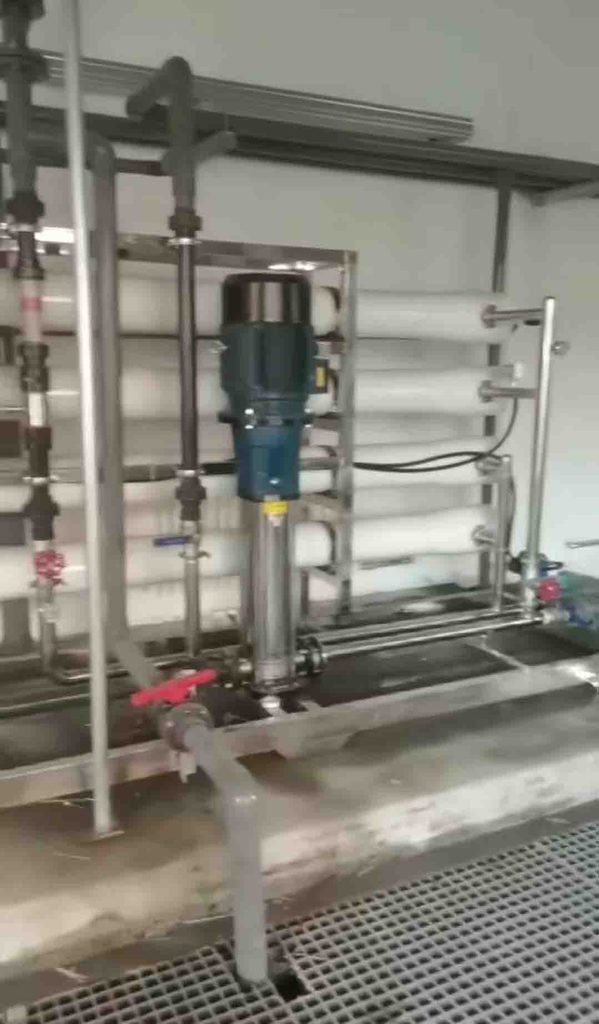
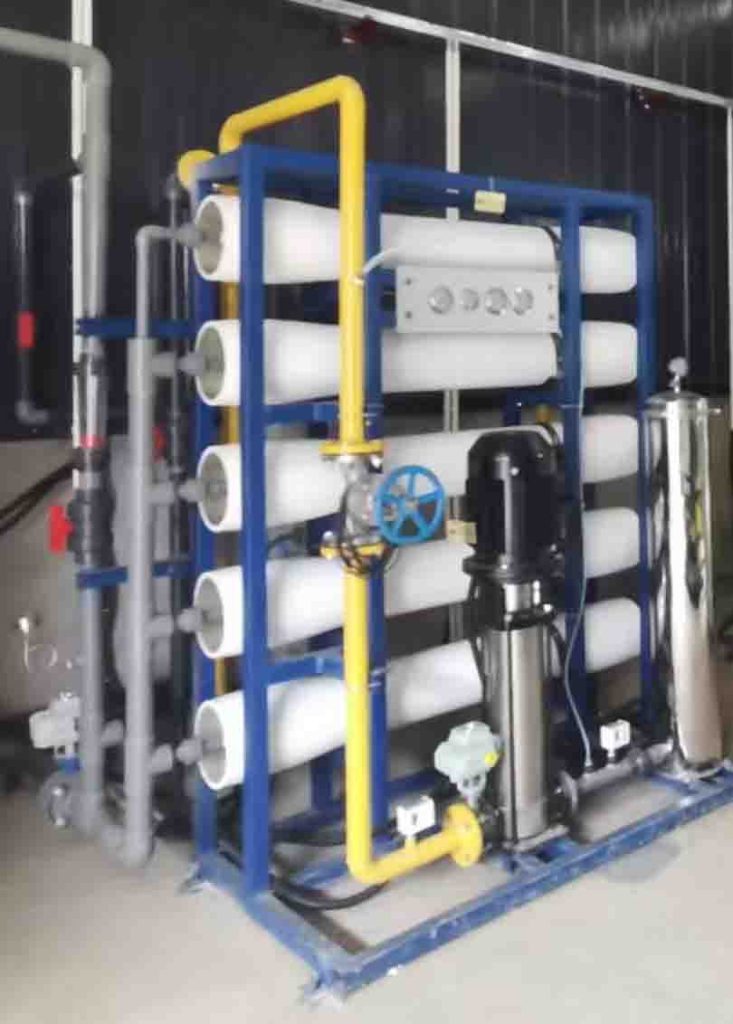
Learn how ultrafiltration systems remove suspended solids, colloids, bacteria, and other contaminants from wastewater and provide high-quality water for discharge, reuse, and further treatment.
Ultrafiltration, or UF, is a pressure-driven membrane filtration technology used in water and wastewater treatment.
UF membranes have very small pores. They can retain suspended solids, colloids, bacteria, and other larger contaminants while allowing water and many dissolved substances to pass through.
Because of this separation ability, UF can work as a polishing step after biological treatment or as pretreatment before reverse osmosis.
The U.S. EPA identifies microfiltration and ultrafiltration as important membrane processes in wastewater treatment. UF can also help protect downstream RO membranes from fouling.
This article explains how an ultrafiltration system works, its main components, applications, advantages, limitations, and the factors engineers should consider when selecting UF equipment.
Quick Reference — Ultrafiltration System
| Parameter | Typical Value |
|---|---|
| Technology | Ultrafiltration |
| Abbreviation | UF |
| Main Function | Fine Membrane Filtration |
| Typical Membrane Material | PVDF / PES |
| Typical Configuration | Hollow Fiber / Tubular |
| Operation | Continuous / Automatic |
| Main Removal Target | Suspended Solids, Colloids, Microorganisms |
| Typical Application | Wastewater Treatment & Water Reuse |
| Downstream Process | RO / Disinfection / Reuse |
| Control | PLC / Automatic |
Actual membrane specifications, flux, recovery, and operating pressure depend on wastewater quality and membrane design.
What Is an Ultrafiltration System?
An ultrafiltration system uses a membrane to separate contaminants from water.
The UF membrane contains extremely small pores.
During operation, pressure pushes water through the membrane. Larger particles remain on the feed side, while filtered water passes through as permeate.
This creates two streams:
- Permeate: treated water that passes through the membrane
- Concentrate: water containing the retained contaminants
The exact flow arrangement depends on the UF system design.
How Does Ultrafiltration Work?
Step 1 – Pretreatment
First, wastewater passes through pretreatment equipment.
Screens, strainers, filters, or other separation equipment can remove larger particles.
Good pretreatment helps protect the membrane and reduces fouling.
The EPA notes that pretreatment for membrane filtration is primarily used to prevent membrane fouling and damage.
Step 2 – Feed Pumping
A feed pump sends water toward the UF membrane modules.
The pump provides the pressure needed for filtration.
The required pressure depends on membrane type, water quality, and system design.
Step 3 – Membrane Filtration
Water enters the UF membrane module.
The membrane retains larger contaminants while water and smaller dissolved substances pass through.
The treated water becomes the UF permeate.
Step 4 – Permeate Collection
The permeate enters a clean-water or treated-water tank.
Depending on the project, it may then move to:
- Disinfection
- RO
- Reuse
- Final discharge
Step 5 – Backwashing
During operation, contaminants can accumulate on the membrane surface.
The system periodically performs backwashing.
Clean water flows in the opposite direction through the membrane.
This removes accumulated solids and helps restore filtration performance.
Step 6 – Chemical Cleaning
Backwashing alone may not remove all membrane fouling.
Therefore, the UF system may also require chemical cleaning.
The cleaning chemical depends on the type of fouling and membrane manufacturer’s recommendations.
Main Components of a UF System
A complete ultrafiltration system may include:
- Pretreatment filter
- Feed tank
- Feed pump
- UF membrane modules
- Permeate pump
- Backwash pump
- Backwash tank
- Chemical cleaning system
- Air compressor or blower
- Valves
- Pressure sensors
- Flow meters
- PLC control cabinet
The actual configuration depends on the required treatment capacity and water quality.
UF Membrane Types
Hollow Fiber Membrane
Hollow fiber membranes contain many small membrane fibers.
Water passes through the membrane wall while larger contaminants remain outside or inside the fibers, depending on the system configuration.
Hollow fiber UF is widely used because it provides a large membrane area in a compact system.
Tubular Membrane
Tubular membranes use larger membrane channels.
They can be useful for wastewater with higher suspended solids or more difficult feed conditions.
The larger channels can reduce blockage compared with some smaller membrane configurations.
UF vs MF vs RO
| Parameter | MF | UF | RO |
|---|---|---|---|
| Main Function | Particle Filtration | Fine Filtration | Dissolved Contaminant Removal |
| Typical Separation | Larger Particles | Colloids & Microorganisms | Salts & Small Dissolved Compounds |
| Pressure | Low | Low to Moderate | High |
| Removes Suspended Solids | Yes | Yes | Yes |
| Removes Bacteria | Yes | Yes | Yes |
| Removes Dissolved Salts | Limited | No | Yes |
| Typical Use | Pretreatment | Water Polishing / Pretreatment | Advanced Water Treatment |
Membrane selection should follow the actual treatment target.
UF is not a replacement for RO when dissolved salts and many small dissolved contaminants need removal.
The EPA notes that NF and RO are used when removal of dissolved or ionic materials is required, while MF and UF mainly provide particulate and biological contaminant removal.
UF Applications in Wastewater Treatment
Municipal Wastewater
UF can polish treated municipal wastewater before reuse or further advanced treatment.
For example:
Biological Treatment → UF → Disinfection → Reuse
The actual process depends on local regulations and the intended reuse application.
Industrial Wastewater
UF can treat wastewater from many industrial processes.
Potential applications include:
- Food processing
- Dairy
- Beverage production
- Pharmaceutical manufacturing
- Electronics
- Textile production
- Chemical processing
However, difficult industrial wastewater may require pretreatment before UF.
MBR Systems
UF membranes can also form part of a membrane bioreactor.
An MBR combines biological treatment with membrane separation.
The EPA describes MBR as a combination of suspended-growth biological treatment and membrane filtration. In this configuration, membrane filtration can replace secondary clarification.
Water Reuse
UF can provide high-quality feed water for advanced water treatment.
A common process is:
Wastewater Treatment → UF → RO → Disinfection → Reuse
Water reuse treatment depends on the source water and intended application. EPA guidance emphasizes that treatment requirements should match the final use and associated health risks.
UF for RO Pretreatment
RO membranes are sensitive to suspended solids and fouling.
UF can remove many particles and colloids before the water reaches the RO system.
Therefore, a UF system can act as a stable pretreatment step.
A typical process is:
Pretreatment → UF → Cartridge Filter → RO
This arrangement can improve RO feed quality and help reduce membrane fouling.
Advantages of Ultrafiltration
High-Quality Filtration
UF provides fine physical separation.
It can retain suspended solids, colloids, and many microorganisms.
As a result, UF permeate can have very low turbidity.
Compact Footprint
UF membrane modules provide a large membrane area in a relatively small installation space.
This makes UF suitable for projects where available space is limited.
Automatic Operation
Modern UF systems can use PLC control.
The system can automatically manage:
- Filtration
- Backwashing
- Chemical cleaning
- Valve operation
- Pump control
- Alarm functions
Therefore, operators can reduce routine manual work.
Suitable for Water Reuse
UF can provide a consistent filtration step for water reuse systems.
It can also work with RO and disinfection technologies when the reuse target requires additional treatment.
Limitations of UF Systems
Membrane Fouling
Fouling is one of the main challenges in membrane filtration.
Organic matter, suspended solids, microorganisms, and other contaminants can accumulate on the membrane.
As fouling increases, filtration performance can decline.
Pretreatment Is Important
Poor pretreatment can increase membrane fouling.
Large particles can also damage or block membrane modules.
Therefore, engineers should design pretreatment together with the UF system.
Cleaning Is Required
UF membranes require regular maintenance.
The system may use:
- Backwashing
- Air scouring
- Chemical-enhanced backwash
- Chemical cleaning
The exact cleaning method depends on membrane design and operating conditions.
What Causes UF Membrane Fouling?
Common causes include:
- High suspended solids
- Organic matter
- Oil and grease
- Colloids
- Microbial growth
- Poor pretreatment
- Incorrect operating conditions
Industrial wastewater can contain additional substances that increase fouling risk.
Therefore, wastewater testing is important before selecting a UF system.
How to Reduce UF Fouling
Improve Pretreatment
A suitable pretreatment system can remove larger particles before they reach the UF membrane.
Depending on the wastewater, pretreatment may include:
- Screening
- DAF
- Sand filtration
- Cartridge filtration
- Chemical coagulation
Control Membrane Flux
Membrane flux affects both system capacity and fouling.
A higher flux may reduce the required membrane area.
However, excessive flux can increase fouling.
Therefore, the design should balance capacity and long-term membrane performance.
Use Regular Backwashing
Backwashing removes accumulated solids from the membrane.
A suitable backwash cycle helps maintain stable filtration.
Monitor Transmembrane Pressure
Transmembrane pressure, or TMP, is an important operating indicator.
An increase in TMP may indicate increasing membrane resistance or fouling.
Operators can use TMP trends to determine when cleaning is required.
UF System Automation
A PLC-controlled UF system can automatically manage the filtration cycle.
A typical sequence may include:
Filtration → Backwash → Air Scour → Filtration → Chemical Cleaning
The actual sequence depends on membrane specifications.
The control system can also monitor:
- Feed pressure
- Permeate pressure
- TMP
- Flow rate
- Tank level
- Pump status
- Valve status
- Cleaning cycles
UF System for Industrial Wastewater
Industrial wastewater can vary greatly from one factory to another.
For example, food processing wastewater may contain high organic loads.
Textile wastewater may contain color and chemicals.
Electronics wastewater may contain fine particles and dissolved contaminants.
Therefore, UF should not be selected based only on flow rate.
Engineers should first analyze the wastewater characteristics and determine the required treatment process.
UF System in a Dairy Wastewater Plant
A dairy wastewater treatment system may include:
Screening → Equalization → DAF → Biological Treatment → UF → Disinfection
DAF can remove fats, oils, and suspended solids before biological treatment.
UF can then provide additional solid-liquid separation.
The exact process should depend on wastewater quality and the final discharge or reuse requirements.
UF System in a Livestock Wastewater Plant
For livestock wastewater, UF may be used after suitable biological and solid-liquid treatment.
A possible process is:
Solid-Liquid Separation → DAF → Biological Treatment → UF → Disinfection / RO
High-strength livestock wastewater may need additional treatment before UF.
Pretreatment becomes especially important when the wastewater contains high suspended solids and organic matter.
UF System vs Conventional Filtration
| Parameter | UF System | Conventional Media Filter |
|---|---|---|
| Filtration Mechanism | Membrane Separation | Physical Filtration |
| Fine Particle Removal | Excellent | Moderate |
| Bacteria Removal | High | Depends on System |
| Automation | High | Moderate |
| Footprint | Compact | Larger |
| Backwash | Required | Required |
| Chemical Cleaning | Possible | Usually Less Frequent |
| Water Reuse | Suitable | Often Needs Further Treatment |
UF provides a stronger physical barrier than many conventional media filters.
However, the additional membrane equipment also requires more careful operation and maintenance.
UF System Design Considerations
Wastewater Quality
Engineers should review:
- Flow rate
- TSS
- Turbidity
- COD
- BOD
- Oil and grease
- pH
- Temperature
- Microbial content
These parameters affect pretreatment and membrane selection.
Required Permeate Quality
The final water use determines the required treatment level.
For example, irrigation, industrial reuse, and RO feed water may have different requirements.
Therefore, the UF system should be designed around the final water quality target.
Recovery Rate
Recovery describes the percentage of feed water converted into permeate.
A higher recovery can reduce concentrate volume.
However, it may also increase the concentration of contaminants on the feed side.
Therefore, recovery should be selected according to membrane performance and wastewater characteristics.
Common UF Design Mistakes
Selecting UF Only by Flow Rate
Flow rate is important, but it is not enough.
Membrane area also depends on feed water quality and design flux.
Poor Pretreatment
High suspended solids or oil entering the UF system can increase fouling.
Therefore, pretreatment should receive sufficient attention during design.
Ignoring Cleaning Requirements
The UF system should include suitable cleaning equipment and chemical storage when required.
Operators also need enough space to maintain and replace membrane modules.
Choosing Excessive Flux
High flux may reduce the required membrane area.
However, it can increase fouling and cleaning frequency.
A balanced design can provide better long-term performance.
UF System Maintenance
Regular maintenance helps keep membrane performance stable.
Operators should monitor:
- Feed pressure
- Permeate flow
- TMP
- Water quality
- Backwash performance
- Chemical cleaning frequency
Maintenance teams should also inspect:
- Membrane modules
- Pumps
- Valves
- Pipes
- Instruments
- Control cabinet
A gradual increase in TMP can indicate that the membrane requires cleaning.
Engineering Perspective
UF is an effective membrane filtration technology for wastewater polishing and water reuse.
Its main strength is physical separation. UF can retain suspended solids, colloids, and many microorganisms while allowing water and smaller dissolved substances to pass through.
However, UF does not remove all dissolved contaminants.
Therefore, engineers should select the membrane process according to the actual treatment target.
For example, a project may use UF alone for polishing, while another project may combine UF with RO for advanced water reuse.
The EPA’s wastewater technology database similarly distinguishes UF and MF from NF and RO based on the size and type of contaminants targeted.
UF System Selection Checklist
Feed Water
- Flow rate
- TSS
- Turbidity
- COD
- Oil and grease
- pH
- Temperature
Treatment Target
- Required permeate quality
- Final discharge standard
- Reuse application
- RO feed requirement
Equipment
- Membrane type
- Membrane area
- Feed pump
- Backwash pump
- Cleaning system
- Control cabinet
- Instruments
Operation
- Design flux
- Recovery
- Backwash frequency
- Chemical cleaning frequency
- Membrane replacement plan
Frequently Asked Questions
What is a UF system?
A UF system uses ultrafiltration membranes to separate suspended solids, colloids, microorganisms, and other larger contaminants from water.
What does UF remove from wastewater?
UF can remove suspended solids, colloids, bacteria, and many other particles.
It does not provide the same dissolved-salt removal as RO.
Can UF treat industrial wastewater?
Yes.
UF can treat many types of industrial wastewater, but the required pretreatment depends on the wastewater characteristics.
Can UF be used before RO?
Yes.
UF is commonly used as a pretreatment step before RO because it can reduce suspended solids and colloidal loading.
The EPA identifies UF as a membrane process that can help reduce fouling on downstream RO membranes.
Does a UF membrane need cleaning?
Yes.
UF membranes normally require regular backwashing and may require chemical cleaning to control fouling.
Can UF replace an MBR?
Not directly.
UF is a membrane filtration process.
MBR combines biological treatment with membrane filtration.
The two technologies may use similar membrane principles, but they serve different process functions.
Conclusion
An ultrafiltration system provides fine membrane filtration for wastewater treatment, water polishing, and water reuse.
UF can remove suspended solids, colloids, and many microorganisms while producing consistent permeate quality.
The technology can also work as pretreatment for RO systems.
However, membrane performance depends heavily on pretreatment, flux, recovery, backwashing, and cleaning.
For this reason, engineers should evaluate the complete treatment process rather than selecting UF equipment based only on flow rate.
With suitable process design, UF can provide a compact and highly automated filtration solution for municipal and industrial wastewater treatment.
Need an Ultrafiltration System?
Morvolous provides UF systems, MBR systems, RO systems, DAF systems, chemical dosing equipment, PE dosing tanks, sludge dewatering equipment, and complete wastewater treatment solutions.
Our engineering team can evaluate your wastewater flow, water quality, treatment target, and reuse requirements.
Based on these conditions, we can recommend a suitable membrane filtration process and supporting equipment.
About the Author
Morvolous Engineering Team
Morvolous specializes in wastewater treatment equipment, membrane filtration, chemical dosing, sludge dewatering, and complete wastewater treatment solutions.
Our engineering team provides customized equipment and process solutions for municipal, industrial, food processing, and livestock wastewater treatment projects worldwide.