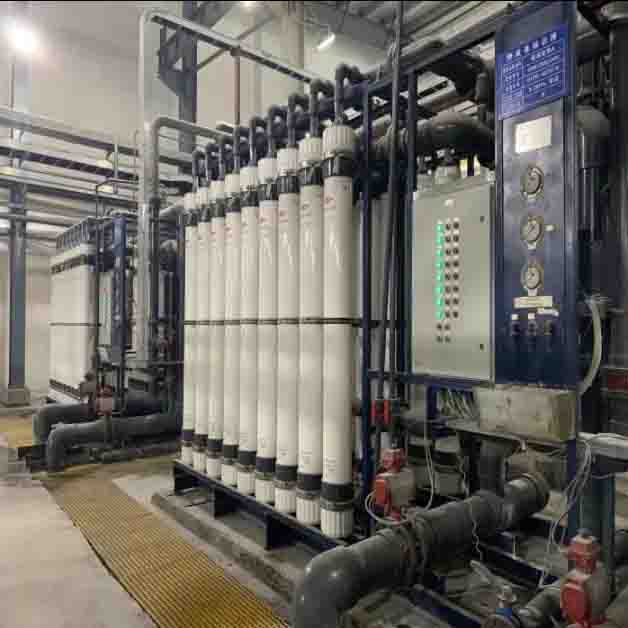
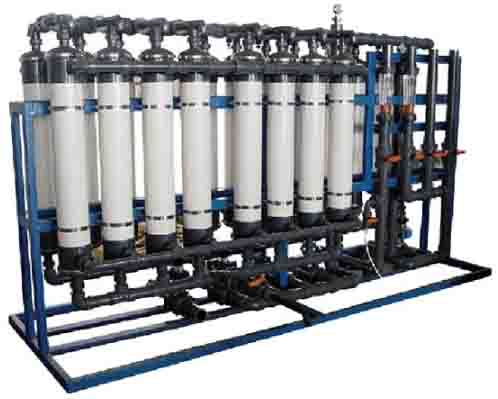
Reverse osmosis is widely used when a treatment plant needs water quality beyond conventional filtration. It can reduce dissolved salts, many dissolved contaminants, and other small substances that remain after biological and physical treatment.
A reverse osmosis system usually works as an advanced polishing step rather than the first treatment stage. Feed water should already have low suspended solids and stable quality. Good pretreatment helps protect the membrane surface and keeps operating pressure under control.
For wastewater reuse projects, membrane treatment often combines several processes. UF or MF may remove fine particles before RO, while chemical conditioning controls scaling and biological growth. The U.S. Environmental Protection Agency also notes that sufficient pretreatment is essential for reliable RO operation because organic matter, colloids, biological growth, and mineral scale can affect membrane performance. More information is available in the EPA’s Potable Reuse Compendium.
Quick Reference — RO Water Treatment
| Item | Typical Consideration |
|---|---|
| Main purpose | Removal of dissolved salts and dissolved contaminants |
| Treatment position | Advanced treatment or water reuse polishing |
| Common pretreatment | Multimedia filter, activated carbon, UF or cartridge filter |
| Membrane type | Usually spiral-wound membrane elements |
| Driving force | High-pressure pump |
| Main outputs | Permeate and concentrate |
| Key feed parameters | TDS, hardness, silica, SDI, pH and temperature |
| Main operating risk | Scaling, fouling and membrane damage |
| Chemical support | Antiscalant, pH adjustment and cleaning chemicals |
| Typical applications | Industrial reuse, process water and high-quality reclaimed water |
| System control | Pressure, flow, conductivity and recovery monitoring |
| Cleaning method | CIP according to membrane condition |
What Does Reverse Osmosis Do?
RO uses a semi-permeable membrane to separate water from many dissolved substances. Pressure pushes feed water across the membrane surface. Part of the water passes through the membrane and becomes permeate.
The remaining stream carries a higher concentration of dissolved substances. This stream is normally called concentrate or reject water.
Unlike conventional screens or media filters, RO does not mainly target visible suspended solids. Its main value comes after those solids have already been controlled.
Therefore, the technology often serves as the final membrane barrier in a reuse process.
RO vs UF
UF and RO serve different purposes.
Ultrafiltration mainly removes suspended particles, colloids, microorganisms, and larger macromolecules. Dissolved salts generally pass through a UF membrane.
RO works at a much smaller separation scale. It can significantly reduce dissolved ions and many dissolved compounds.
As a result, the two technologies often work together instead of competing with each other.
| Comparison | UF | RO |
|---|---|---|
| Suspended solids removal | Excellent | Requires pretreatment |
| Colloid removal | Excellent | High, but fouling risk |
| Bacteria removal | High | Very high barrier |
| Dissolved salt removal | Limited | High |
| Operating pressure | Lower | Higher |
| Main role | Pretreatment / polishing | Desalination / advanced reuse |
| Concentrate production | Relatively low | Significant |
| Pretreatment demand | Moderate | High |
EPA water reuse guidance includes combinations of ultrafiltration and reverse osmosis for advanced treatment. In practical wastewater projects, UF can provide a more stable feed to downstream RO membranes and reduce particulate fouling. The EPA’s Guidelines for Water Reuse also discusses membrane-based advanced treatment using UF and RO for reclaimed-water applications.
Main Components of an RO Treatment Plant
A complete installation includes much more than membrane elements. Each supporting component affects stability, membrane life, and product water quality.
Pretreatment Section
Pretreatment depends on the raw water source.
A groundwater application may require iron removal or softening. Industrial wastewater reuse may need clarification, biological treatment, DAF, filtration, or UF before RO.
Cartridge filters commonly provide the final physical protection before the high-pressure section.
The aim is simple: keep particles, scale-forming compounds, oil, and biological material away from the membrane as much as possible.
High-Pressure Pump
Osmotic pressure naturally opposes water movement through the membrane.
The pump provides enough pressure to overcome this resistance and generate permeate flow. Required pressure changes with feed salinity, temperature, recovery, membrane condition, and product water target.
Selecting a pump only by nominal flow can create poor operating results. Hydraulic calculations should consider both flow and actual membrane pressure requirements.
Membrane Pressure Vessels
Pressure vessels hold the membrane elements.
Systems may use several vessels in parallel and multiple membrane stages. Designers arrange these elements according to capacity and recovery requirements.
A larger plant therefore does not simply use one larger membrane. Engineers normally increase the number of membrane elements and organize them into a suitable array.
Instrumentation and Control
Stable operation depends on continuous monitoring.
Useful parameters include feed pressure, concentrate pressure, permeate pressure, flow, conductivity, temperature, and differential pressure.
Conductivity provides a quick indication of salt passage. Increasing differential pressure may indicate fouling or blockage.
Automated alarms help operators respond before a small problem becomes membrane damage.
Why Pretreatment Matters
Membranes contain narrow flow channels. Even a small amount of poorly controlled contamination can accumulate over time.
Suspended solids may block feed channels. Organic matter can form deposits. Microorganisms may create biofilm. Calcium and other minerals can form scale when their concentration increases.
EPA technical guidance identifies scaling, colloidal fouling, and biological or organic fouling as important concerns in RO operation. The same guidance explains that MF or UF often serves as pretreatment in wastewater reuse because better feed quality can reduce cleaning frequency and membrane replacement.
Typical Pretreatment Process
A wastewater reuse line may follow this sequence:
Raw wastewater → Screening → Biological treatment → Clarification / DAF → Multimedia filtration → UF → Cartridge filter → RO → Reuse water
However, every project needs a different arrangement.
Wastewater containing high oil or grease may require DAF. Hard water may need softening or antiscalant dosing. Feed containing free chlorine may require dechlorination when the selected membrane material is sensitive to oxidants.
A water analysis should guide the final process.
Key Feed Water Parameters
Before selecting a reverse osmosis system, engineers should collect complete water-quality information.
TDS alone is not enough.
| Parameter | Why It Matters |
|---|---|
| TDS / Conductivity | Indicates overall dissolved salt level |
| Hardness | Affects calcium and magnesium scaling risk |
| Alkalinity | Influences carbonate scaling |
| Silica | Can create difficult membrane deposits |
| Iron / Manganese | May cause fouling and precipitation |
| Turbidity | Indicates suspended contamination |
| SDI | Helps evaluate membrane fouling potential |
| COD / TOC | Indicates organic loading |
| pH | Influences scaling and membrane performance |
| Temperature | Changes permeate flux |
| Chloride | Important for corrosion and water quality |
| Sulfate | Contributes to some scale formation |
| Free chlorine | May damage certain membrane materials |
A laboratory report should include both major ions and relevant industrial contaminants when possible.
For industrial wastewater, process changes also matter. One sample taken during normal production may not represent cleaning periods, batch discharge, or seasonal variation.
Recovery Rate and Concentrate
Recovery describes how much feed water becomes permeate.
For example, a higher recovery means the plant produces more useful water from the same feed volume. However, dissolved minerals also become more concentrated in the reject stream.
Therefore, higher recovery is not always better.
Increasing recovery can raise scaling risk and osmotic pressure. It may also increase chemical demand.
The best target balances water efficiency, membrane protection, and concentrate disposal requirements.
Example Water Balance
| Stream | Example Flow |
|---|---|
| RO feed | 100 m³/day |
| Permeate | 70 m³/day |
| Concentrate | 30 m³/day |
| Recovery | 70% |
This table only illustrates the calculation. Actual recovery should come from feed-water chemistry and membrane design software.
What Happens to RO Concentrate?
Concentrate management deserves attention during the design stage.
RO does not destroy dissolved salts. It separates them into a smaller water stream.
Coastal facilities may have different disposal options from inland factories. Some industrial plants can return concentrate to another process. Others need evaporation, further treatment, or controlled discharge.
The correct method depends on local regulations and concentrate chemistry.
Ignoring reject-water disposal during equipment selection may create a serious operating problem later.
Membrane Fouling and Scaling
Fouling usually develops gradually.
Operators may notice reduced permeate flow, higher differential pressure, increasing feed pressure, or changing product conductivity.
Different symptoms point to different causes.
| Problem | Common Cause | Possible Action |
|---|---|---|
| Higher differential pressure | Particle or biological fouling | Inspect pretreatment and clean membranes |
| Lower permeate flow | Fouling, scaling or low temperature | Check operating data and membrane condition |
| Higher permeate conductivity | Membrane damage or poor sealing | Check membrane integrity |
| Frequent scaling | High recovery or poor chemical control | Review antiscalant and recovery |
| Rapid cartridge blockage | Poor upstream filtration | Improve pretreatment |
| Biological growth | Poor biological control | Review cleaning and feed conditions |
Cleaning should respond to operating trends rather than follow an arbitrary schedule alone.
A good plant records baseline pressure, flow, temperature, and conductivity after commissioning. Operators can then compare later performance against this reference.
CIP Cleaning
CIP means Cleaning in Place.
The process circulates a suitable cleaning solution through membrane vessels without removing each element.
Different deposits require different chemicals. Acid cleaning may help with certain mineral scales. Alkaline formulations can target some organic deposits.
Chemical selection must follow the membrane manufacturer’s instructions.
Incorrect concentration, temperature, or pH may damage membrane materials instead of cleaning them.
When Should RO Membranes Be Cleaned?
Operators should watch normalized system performance.
Possible warning signs include:
- noticeable loss of normalized permeate flow;
- increasing normalized pressure differential;
- reduced salt rejection;
- rising operating pressure under similar feed conditions.
Waiting until a membrane becomes heavily blocked usually makes recovery more difficult.
Typical Applications
RO technology appears in many industrial and municipal water projects.
Industrial Wastewater Reuse
Factories can use advanced membrane treatment to convert treated effluent into utility or process water.
Possible reuse points include cooling tower makeup, washing, rinsing, and some production processes. Required water quality depends on the final use.
RO can become particularly valuable where water supply is limited or discharge costs are high.
Boiler Feed Pretreatment
Boilers usually require low mineral content.
RO can reduce hardness-related ions and total dissolved solids before additional polishing.
Some projects also add softening or ion exchange according to boiler pressure and water specifications.
Food and Beverage Process Water
Food factories often need stable water quality for washing, utilities, and selected production processes.
However, engineers should evaluate food-contact requirements and local regulations separately. A general industrial RO design cannot automatically qualify water for every food application.
Municipal Water Reuse
Advanced membrane treatment can support high-quality municipal reuse schemes.
The exact process depends on the required reuse class and regional standards.
For example, some advanced potable reuse frameworks combine several treatment barriers rather than relying on RO alone. EPA information on California’s direct potable reuse regulation describes a multi-barrier approach that includes ozone/BAC, reverse osmosis, and advanced oxidation.
How to Select RO Capacity
Daily water demand gives only the starting point.
Engineers should also know how many hours the plant operates each day.
A factory needing 100 m³/day may operate its treatment unit for 10 hours or 20 hours. These two schedules require very different hourly membrane capacities.
Basic Capacity Example
| Design Item | Example |
|---|---|
| Required permeate | 100 m³/day |
| Operating time | 20 h/day |
| Required permeate rate | 5 m³/h |
| Assumed recovery | 70% |
| Approximate RO feed | 7.14 m³/h |
Design margin may also be necessary for membrane aging, temperature changes, cleaning periods, and demand growth.
Information Needed for an RO Quotation
A reliable quotation needs more than capacity.
Send the following information whenever possible:
| Required Information | Details |
|---|---|
| Feed water source | Groundwater, tap water, industrial effluent, reclaimed water |
| Required capacity | m³/h and m³/day |
| Operating hours | Hours per day |
| Feed analysis | Complete laboratory report |
| TDS / conductivity | Required |
| Temperature | Minimum and typical |
| Current treatment | Existing upstream process |
| Required product water | Target conductivity or application |
| Water recovery target | If specified |
| Reuse purpose | Cooling, boiler, process, irrigation, etc. |
| Power supply | Voltage, phase and frequency |
| Installation conditions | Indoor/outdoor and available space |
Providing this information at the RFQ stage reduces later design changes.
Common Selection Mistakes
One common mistake is choosing membranes only by nominal flow.
Feed-water quality changes actual performance considerably.
Another problem is skipping pretreatment to reduce initial investment. This may lower equipment cost, but frequent fouling can quickly increase chemical use and maintenance.
Some buyers also compare systems only by the number of membrane elements. That method ignores membrane model, array design, recovery, operating flux, pump selection, instrumentation, and pretreatment.
A complete system should be evaluated as one process.
Engineering Note: Good RO design begins with water chemistry, not with membrane quantity.
Project Example — Industrial Reuse
A manufacturing plant needs reclaimed water for utility use.
Its biological effluent still contains fine suspended matter and dissolved salts. Direct RO feeding would create a high fouling risk.
The treatment line therefore adds fine filtration and UF before the membrane desalination stage. Stable pretreatment improves feed quality and gives operators better control over membrane performance.
Project Example — High-Hardness Feed Water
An inland industrial facility has relatively high hardness.
The original concept focuses mainly on salt removal. Water analysis later shows a clear scaling risk at the proposed recovery.
Engineers adjust chemical conditioning and recovery rather than simply increasing pump pressure. This approach protects the membrane and improves long-term stability.
Project Example — Process Water Reuse
A factory wants to reduce fresh-water demand.
Treated wastewater already meets discharge requirements, but its conductivity remains too high for an internal process.
Advanced membrane treatment lowers dissolved mineral content and creates a reusable permeate stream. Meanwhile, the plant includes concentrate handling in the overall water balance from the beginning.
Engineering Perspective
RO performance depends on the complete treatment line.
A high-quality membrane cannot compensate for poor pretreatment. Likewise, excellent pretreatment cannot solve an unrealistic recovery target.
The most reliable projects combine water analysis, membrane design, hydraulic calculations, chemical control, monitoring, and concentrate management.
For this reason, equipment selection should start with the required product-water quality and work backward through the process.
Frequently Asked Questions
Design and Selection
Can RO treat wastewater directly?
Usually not. Most wastewater requires biological, physical, or membrane pretreatment before RO. The exact process depends on suspended solids, organics, hardness, oil, and other contaminants.
Should UF always be installed before RO?
Not always. UF becomes especially useful when the feed contains fine particles or variable suspended matter. Cleaner water sources may use simpler pretreatment.
Does lower TDS always mean easier RO treatment?
No. A relatively low-TDS water can still contain silica, hardness, iron, organics, or microorganisms that create serious fouling problems.
Operation and Maintenance
Why does RO pressure increase during operation?
Possible causes include membrane fouling, scale, blocked pretreatment filters, temperature changes, or higher feed salinity. Operating records help identify the cause.
Can RO concentrate return to the wastewater plant?
Sometimes, but not automatically. The increased salt and contaminant concentration may affect biological treatment or discharge conditions. Engineers should evaluate the complete mass balance first.
Conclusion
A well-designed RO plant can produce high-quality water for industrial reuse and other advanced treatment applications.
Successful projects focus on more than membrane selection. Pretreatment, water chemistry, recovery, instrumentation, cleaning, and concentrate disposal all influence long-term operation.
For project evaluation, provide Morvolous with your feed-water analysis, required permeate capacity, operating hours, and final water-quality target. These data allow engineers to develop a more suitable treatment configuration instead of selecting equipment only by nominal capacity.