How to reduce sludge volume before dewatering, transport, and final disposal.
Sludge thickening is often the first major volume-reduction step in a sludge treatment line. It removes free water while retaining most of the suspended solids. A properly selected thickener can significantly reduce the hydraulic load on downstream dewatering equipment.
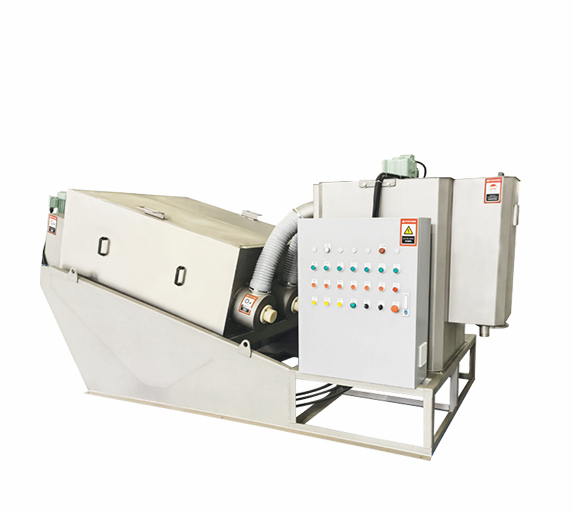
Thickening does not replace dewatering. Instead, it prepares sludge for equipment such as a screw press, belt filter press, or centrifuge. The best system depends on sludge type, solids concentration, flow pattern, polymer demand, and the required downstream cake performance.
For broader engineering guidance, the U.S. EPA Biosolids Program provides useful background on wastewater sludge management and biosolids treatment. Thickening should always be evaluated as part of the complete sludge handling chain rather than as an isolated unit.
- Typical primary sludge feed solids: 1–5% TS
- Typical waste activated sludge feed solids: 0.5–1.5% TS
- Gravity thickened sludge: commonly 3–8% TS
- DAF thickened WAS: commonly 3–6% TS
- Rotary drum thickened sludge: commonly 3–8% TS
- Typical gravity thickener solids loading: about 25–80 kg DS/m²·d
- Typical drum thickener hydraulic loading: project-specific, often 5–30 m³/h per unit
- Typical polymer dose: approximately 1–8 kg polymer/t DS
- Typical sludge volume reduction: 40–80% depending on feed solids
- Typical thickening objective: increase solids concentration before dewatering
What Is Sludge Thickening?
The purpose of thickening
Wastewater sludge contains a large amount of water. Even a small increase in solids concentration can produce a major reduction in sludge volume.
For example, consider 100 m³/day of sludge at 1% total solids. The flow contains roughly 1 tonne of dry solids per day. If thickening raises the concentration to 5%, the theoretical sludge volume falls to about 20 m³/day.
The actual result depends on sludge characteristics and solids recovery. Still, the calculation shows why thickening matters. Smaller downstream equipment can reduce pumping, heating, chemical, and transportation requirements.
Where thickening fits in the process
A typical sludge line may follow this sequence:
Sludge collection → screening or grit removal → thickening → polymer conditioning → dewatering → cake handling → final disposal or reuse.
Some plants combine several functions. Primary sludge may enter a gravity thickener directly. Waste activated sludge may require dissolved air flotation or mechanical thickening because its settling characteristics can be poor.
Main Types of Sludge Thickening Equipment
Gravity sludge thickener
Gravity thickening uses settling to concentrate solids. Sludge enters a tank and moves slowly through a controlled settling zone. Solids move downward while clarified water rises.
A scraper mechanism collects concentrated sludge at the bottom. Supernatant leaves through an overflow system.
Gravity systems work particularly well with primary sludge and other sludge streams with good settling characteristics. They require relatively low mechanical energy and can handle large continuous flows.
The main limitation is footprint. Poorly settling biological sludge can also produce unstable performance. Odor control may become important when sludge remains in the tank for extended periods.
DAF sludge thickener
Dissolved air flotation thickening uses fine air bubbles to lift sludge solids toward the surface. A floating sludge layer forms and is mechanically removed.
DAF thickening is especially useful for waste activated sludge. Biological solids often settle poorly because of their low density and filamentous structure.
The process normally requires polymer conditioning. Recycle water is saturated with dissolved air and then released into the flotation zone. Pressure reduction creates microscopic bubbles that attach to sludge particles.
Rotary drum thickener
A rotary drum thickener uses a rotating perforated or wedge-wire drum to separate water from conditioned sludge. Sludge enters the drum and moves along the screening surface.
Free water passes through the screen. Concentrated sludge exits from the opposite end.
Rotary drum systems provide a compact mechanical solution. They are useful when plant space is limited or when stable continuous thickening is required.
Polymer preparation and dosing normally play an important role. Polymer improves floc formation and helps release water through the screening surface.
Other mechanical thickening methods
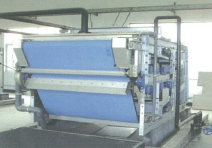
Belt thickeners and certain centrifuge-based systems can also concentrate sludge. The choice depends on required capacity, available space, operating labor, and integration with downstream equipment.
Mechanical systems usually offer a smaller footprint than conventional gravity tanks. Their trade-off is greater mechanical complexity and a higher dependence on correct conditioning.
| Thickening Method | Best Suited Sludge | Main Advantage | Main Limitation |
|---|---|---|---|
| Gravity thickener | Primary sludge | Low energy demand | Large footprint |
| DAF thickener | Waste activated sludge | Good flotation of light solids | Requires air and chemical control |
| Rotary drum thickener | Biological and mixed sludge | Compact continuous operation | Screen and polymer management |
| Belt thickener | Conditioned sludge | High throughput in compact area | Requires wash-water system |
| Centrifugal thickening | Various sludge types | High separation force | Higher energy and maintenance |
How to Size Sludge Thickening Equipment
Start with dry solids loading
Dry solids loading is more useful than sludge flow alone. The basic calculation is:
Dry solids load = sludge flow × sludge concentration
For example, 50 m³/day of sludge at 1% TS contains approximately 0.5 tonnes of dry solids per day.
If a thickener receives 0.5 t DS/day and the selected design solids loading is 50 kg DS/m²·day, the required effective area is approximately:
500 kg DS/day ÷ 50 kg DS/m²·day = 10 m²
Designers should then apply appropriate safety margins and confirm the loading against actual sludge settling or filtration tests.
Consider feed concentration
Feed solids concentration strongly affects thickener selection. A dilute sludge stream can require substantial hydraulic capacity even when its dry solids load is modest.
Biological sludge commonly enters thickening at lower solids concentration than primary sludge. This difference can make hydraulic loading and flotation performance more important than dry solids capacity.
Account for peak flow
Average daily flow should not be the only design condition. Sludge production can change significantly during wet-weather events, process disturbances, maintenance periods, or batch discharge cycles.
A practical design should identify average, maximum daily, and peak instantaneous conditions. Buffer tanks can help smooth short-term variations before mechanical thickening equipment.
Polymer Requirements for Mechanical Thickening
Why polymer matters
Polymer conditioning helps small sludge particles form larger and stronger flocs. Larger flocs release water more readily and improve separation.
The correct polymer dose cannot be selected from a generic table alone. Sludge source, organic content, pH, temperature, shear, and polymer chemistry all influence the result.
Jar testing or pilot testing is therefore valuable before final equipment selection. The target should be stable floc formation with acceptable filtrate or centrate quality.
Polymer preparation and dosing
Automatic polymer preparation systems can produce a consistent polymer solution for thickening equipment. The solution concentration and aging time should match the polymer manufacturer’s requirements.
For mechanical thickeners, polymer quality can affect both throughput and solids capture. Poor preparation may create weak flocs even when the dosing pump delivers the correct volume.
Sludge Thickening Equipment vs Dewatering Equipment
Thickening and dewatering perform different jobs. Confusing these stages can lead to incorrect equipment selection.
| Parameter | Thickening | Dewatering |
|---|---|---|
| Main objective | Increase sludge concentration | Produce a transportable sludge cake |
| Typical feed TS | 0.5–5% | Typically 2–8% after conditioning |
| Typical outlet TS | 3–8% | Commonly 15–30% or higher |
| Primary benefit | Reduce sludge volume | Remove much more water |
| Typical equipment | Gravity, DAF, drum, belt thickener | Screw press, belt press, centrifuge |
| Chemical demand | Often required for mechanical systems | Often required |
A thickener should therefore be judged by how well it prepares the sludge for the next stage. Maximum thickening concentration is not always the correct design target.
How to Select the Right Thickening Technology
Choose gravity thickening when
Gravity thickening is attractive when primary sludge dominates the feed. It suits plants with sufficient land and relatively simple operating requirements.
Engineers should verify settling characteristics before relying on gravity separation. A sludge that settles poorly may require a different technology.
Choose DAF thickening when
DAF thickening is a strong option for waste activated sludge. It can handle light biological solids that do not compact efficiently under gravity.
The design should include air supply, recycle water, polymer dosing, surface sludge removal, and adequate process control.
Choose rotary drum thickening when
Rotary drum thickening fits projects that need compact mechanical equipment. It is particularly useful when continuous sludge production and limited footprint are important factors.
The system should include reliable polymer preparation, wash-water management, screening protection, and easy access for cleaning.
Common Design and Operating Problems
Low solids concentration after thickening
Low outlet solids can result from excessive hydraulic loading, poor floc formation, short retention time, or unsuitable sludge characteristics.
For mechanical systems, check polymer type and dose first. Then inspect feed distribution, screen condition, and equipment loading.
Poor solids capture
High solids in the separated water indicate that particles are escaping the thickening process. Weak flocs often cause this problem.
Review polymer activation, mixing intensity, dosing location, and sludge shear. Excessive shear can break otherwise useful flocs.
Frequent equipment blockage
Fibrous material, screenings, rags, and poorly conditioned sludge can create blockages. Upstream screening and proper sludge handling reduce this risk.
Mechanical equipment should also have adequate access for inspection and cleaning.
Sludge Thickener Selection Checklist
| Selection Item | Engineering Question |
|---|---|
| Sludge source | Primary, WAS, chemical, mixed, or industrial sludge? |
| Average flow | What is the normal daily sludge volume? |
| Peak flow | What is the maximum hydraulic loading? |
| Feed TS | What solids concentration enters the thickener? |
| Dry solids load | How many kg or tonnes DS/day must be processed? |
| Target TS | What concentration does the downstream process require? |
| Polymer | Is polymer conditioning required? |
| Available area | Is a large gravity tank practical? |
| Wash water | Is sufficient water available for mechanical cleaning? |
| Downstream equipment | Will the thickener feed a screw press, belt press, or centrifuge? |
Frequently Asked Questions
Basic Questions
What does sludge thickening equipment do?
It removes part of the free water from sludge and increases solids concentration before dewatering or further treatment.
What sludge concentration can a thickener achieve?
Many systems produce approximately 3–8% TS. Actual performance depends strongly on sludge characteristics and technology.
Is thickening required before sludge dewatering?
Not always. However, thickening can substantially reduce hydraulic loading and improve the operating stability of downstream dewatering equipment.
Design and Selection Questions
Which thickener is best for waste activated sludge?
DAF and mechanical systems are often suitable because waste activated sludge may settle poorly. Final selection should follow sludge testing.
How do I size sludge thickening equipment?
Use both hydraulic flow and dry solids loading. Confirm the selected loading with supplier data and, where needed, laboratory or pilot testing.
Morvolous Engineering Team can evaluate sludge flow, TS concentration, dry solids loading, polymer requirements, and downstream dewatering conditions to develop a practical thickening solution.
Provide your sludge flow and solids concentration for an initial engineering assessment.
Author Bio: Morvolous Engineering Team develops wastewater treatment equipment and process solutions for industrial and municipal applications, with practical experience in sludge thickening, sludge dewatering, dissolved air flotation, polymer preparation, and integrated wastewater treatment systems.