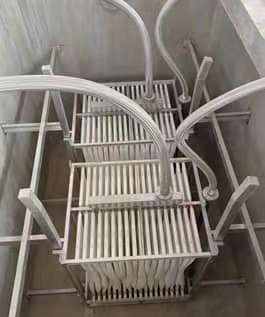
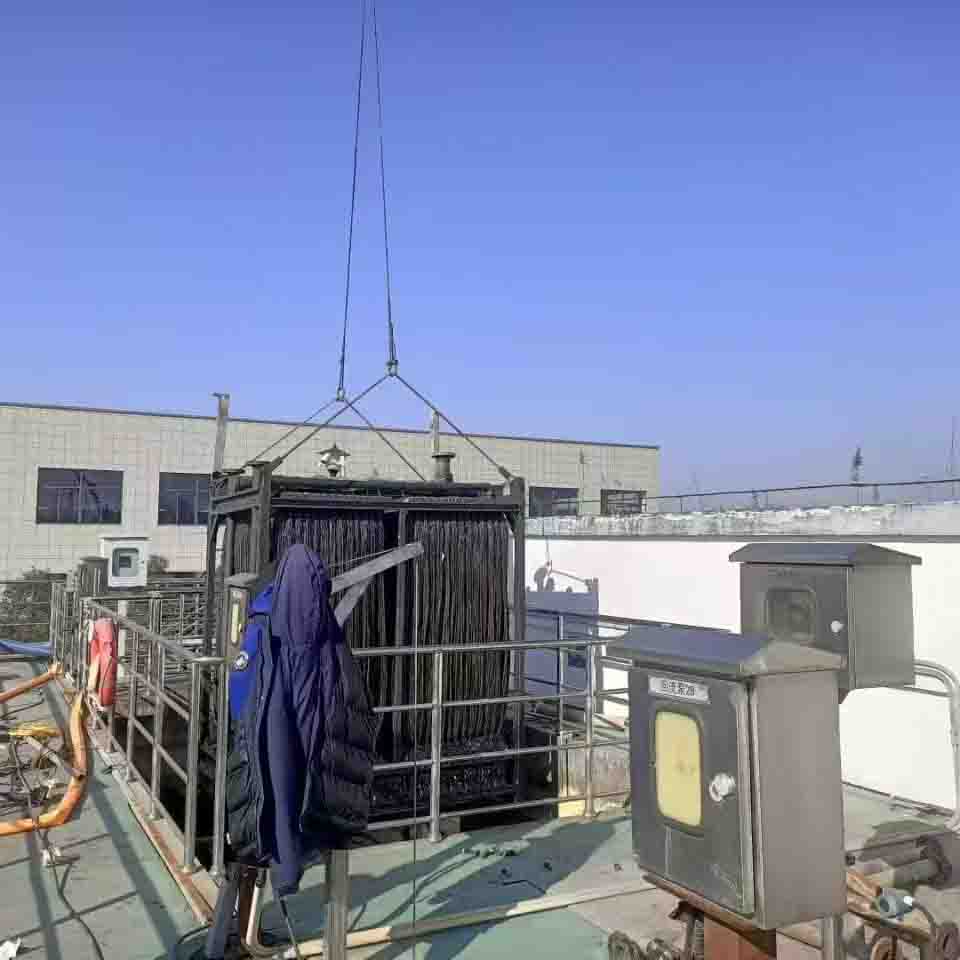
Industrial wastewater treatment often requires more than conventional biological treatment when the project has strict discharge limits, limited installation space, or water reuse requirements. A MBR System combines biological treatment with membrane filtration, allowing microorganisms to break down organic pollutants while membranes provide solid-liquid separation.
Compared with a conventional activated sludge process followed by a secondary clarifier, MBR technology can achieve a higher concentration of biomass in the bioreactor while producing a low-solids effluent. The U.S. Environmental Protection Agency describes MBR as a combination of suspended-growth biological treatment and membrane filtration, with applications including industrial wastewater treatment and water reuse.
For industries dealing with variable organic loads, limited space, or demanding effluent quality, understanding how an MBR works is important before selecting the complete wastewater treatment process.
What Is an MBR System?
A membrane bioreactor, commonly called MBR, integrates a biological reactor with membrane filtration. In the biological section, microorganisms consume biodegradable organic matter and help remove pollutants such as BOD and ammonia. The membrane section then separates treated water from activated sludge.
In a conventional activated sludge plant, a secondary clarifier is normally required to separate biomass from treated water. With MBR technology, membrane filtration performs this solid-liquid separation instead. This allows the biological reactor to maintain a relatively high MLSS concentration and can reduce the overall footprint of the treatment plant.
The basic treatment sequence can be illustrated as:
Pretreatment → Biological Reactor → Membrane Separation → Permeate → Discharge or Reuse
Depending on the wastewater characteristics and effluent requirements, an MBR process may also include anoxic zones, anaerobic zones, equalization tanks, chemical dosing, disinfection, or additional polishing treatment.
How Does an MBR System Work?
The process starts with pretreatment. Screening and other physical separation equipment remove coarse solids, fibers, hair, plastics, and other materials that could damage or foul the membranes. Fine screening is particularly important because membrane modules require effective protection from larger particles. EPA guidance notes that MBR installations generally require fine screening immediately before the membrane stage.
After pretreatment, wastewater enters the biological reactor. Aerobic microorganisms use dissolved oxygen to degrade biodegradable organic matter. Where nitrogen removal is required, anoxic and aerobic zones can be combined with internal recycle to support nitrification and denitrification.
The mixed liquor then reaches the membrane modules. Depending on the equipment configuration, membranes may be submerged directly in the biological tank or installed externally. Hollow-fiber and flat-sheet configurations are two common membrane arrangements.
During filtration, treated water passes through the membrane while suspended solids and most microorganisms remain in the biological system. Part of the concentrated sludge is periodically wasted to control the sludge retention time and maintain stable biological conditions.
Main Components of an MBR System
A complete MBR installation normally contains several interconnected units rather than a membrane module alone.
| Component | Main Function |
|---|---|
| Pretreatment / Fine Screen | Removes coarse and fine solids to protect downstream equipment and membranes |
| Equalization Tank | Balances wastewater flow and pollutant fluctuations |
| Anoxic Tank | Supports denitrification when nitrogen removal is required |
| Aeration Tank | Provides oxygen for biological treatment |
| Membrane Module | Separates treated water from activated sludge |
| Blower System | Supplies air for biological treatment and membrane scouring |
| Permeate Pump | Transfers filtered water from the membrane system |
| Sludge Pump | Removes excess sludge from the biological process |
| Chemical Cleaning System | Supports membrane cleaning and fouling control |
| Control System | Monitors and controls pumps, blowers, valves and operating parameters |
The exact configuration depends on wastewater characteristics, required effluent quality, hydraulic loading, organic loading, and the intended application.
Why Use MBR for Industrial Wastewater Treatment?
One of the main reasons to select MBR is its ability to combine biological treatment and membrane separation in a relatively compact process. EPA information indicates that MBR systems can provide better effluent quality and smaller space requirements than conventional biological systems, although membrane cleaning and operating costs must also be considered.
For industrial projects, several advantages can be important:
High-Quality Effluent
The membrane barrier provides effective separation of suspended solids and microorganisms. This can result in very low TSS concentrations in the permeate and provide a suitable base for additional water reuse treatment.
Compact Footprint
Because the membrane process replaces the conventional secondary clarification step and permits higher biomass concentrations, the biological section can often be designed with a smaller footprint.
Stable Solid-Liquid Separation
Conventional clarifiers can be affected by sludge settling characteristics. Membrane filtration does not rely on gravity settling in the same way, which can provide more consistent solid-liquid separation when the biological process is properly controlled.
Suitable for Water Reuse
MBR permeate can serve as a feed stream for further treatment such as RO when higher-quality reuse water is required. In this type of process, MBR acts as a biological and solid-removal stage while RO provides further removal of dissolved salts and other contaminants.
Flexible Process Configuration
An MBR process can be combined with anaerobic treatment, anoxic zones, chemical treatment, disinfection, or other membrane technologies according to the wastewater characteristics.
MBR Applications in Different Industries
MBR technology is not limited to municipal wastewater. It can be applied to various industrial wastewater streams where biological treatment and high-quality solid separation are required.
Food and Beverage Wastewater
Food processing wastewater often contains biodegradable organic matter and suspended solids. Depending on the specific wastewater, MBR can be integrated after equalization and pretreatment to provide biological treatment followed by membrane separation.
Dairy Wastewater
Dairy wastewater can contain high concentrations of COD, fats, proteins, and suspended solids. Pretreatment such as DAF can be important before biological treatment, especially when fats and suspended solids could affect downstream biological and membrane processes.
Research on dairy wastewater has evaluated MBR technology both after grease removal and after anaerobic pretreatment, demonstrating its potential for high-quality effluent and industrial water reuse.
Meat and Poultry Processing
Wastewater from meat and poultry processing can contain organic matter, fats, oils, grease, suspended solids, and nutrients. A suitable pretreatment system can reduce the load entering the biological stage, while MBR can provide additional biological treatment and solid separation.
Livestock and Pig Farm Wastewater
Wastewater associated with livestock production can have high organic loading, suspended solids, and nitrogen. For pig farm manure wastewater, MBR is generally more suitable as part of a complete treatment train rather than as the first treatment step. Solid-liquid separation, equalization, anaerobic treatment, or other pretreatment may be required before the membrane stage.
This approach can help reduce the organic and solids loading reaching the membranes and improve the stability of downstream operation.
Chemical and Other Industrial Wastewater
MBR has also been investigated for high-strength industrial wastewater. Factors such as HRT, SRT, MLSS, F/M ratio, membrane flux, and transmembrane pressure can significantly influence system performance. Membrane fouling is one of the major operational concerns that must be addressed during design and operation.
The EPA’s Industrial Wastewater Treatment Technology Database also identifies MBR as a treatment technology that can be used to reduce BOD, TSS, nitrogen, and phosphorus under appropriate process conditions.
MBR Membrane Fouling: A Key Design Consideration
Membrane fouling is one of the most important issues in MBR operation. Suspended solids, colloids, extracellular polymeric substances, fats, oils, and other contaminants can accumulate on or inside the membrane surface.
A good pretreatment system is therefore essential. Stable biological operation is equally important because changes in MLSS, sludge characteristics, organic loading, or aeration conditions can affect membrane performance.
Common strategies include:
- Effective pretreatment and fine screening
- Proper control of MLSS
- Adequate membrane scouring
- Correct membrane flux selection
- Periodic relaxation and backwashing where applicable
- Regular chemical cleaning
- Stable biological process control
- Proper management of sludge age and wasting
EPA technical guidance highlights membrane scouring, fine screening, flow equalization, sludge retention time, and membrane cleaning among the important considerations for MBR design and operation.
MBR vs. Conventional Activated Sludge
The choice between MBR and conventional activated sludge depends on the project requirements rather than simply choosing the newer technology.
| Item | MBR | Conventional Activated Sludge |
|---|---|---|
| Solid-liquid separation | Membrane filtration | Secondary clarifier |
| Footprint | Generally smaller | Generally larger |
| Effluent TSS | Very low | Depends strongly on clarification performance |
| Biological MLSS | Generally higher | Generally lower |
| Automation | High potential | Moderate to high |
| Membrane cleaning | Required | Not applicable |
| Energy demand | Relatively high | Generally lower |
| Water reuse potential | Excellent as a treatment stage | May require additional filtration |
| Fouling management | Important | Clarifier settling management is important |
| Initial investment | Usually higher | Usually lower |
MBR can therefore be attractive when space is limited or high effluent quality is required, while conventional activated sludge may remain a more economical option when land is available and the discharge requirements are less demanding.
Can MBR Be Combined with RO?
Yes. MBR and RO perform different treatment functions and can work together.
MBR primarily focuses on biological treatment and suspended-solids separation. RO is a pressure-driven membrane process designed to remove dissolved salts and many other dissolved contaminants.
A typical reuse process may therefore look like:
Pretreatment → Biological Treatment → MBR → RO → Reuse
The MBR permeate provides a much cleaner feed for the RO system by reducing suspended solids and biological fouling potential. The RO stage can then provide the additional dissolved-contaminant removal required for high-quality process water.
This combination is particularly useful when an industrial facility wants to move from wastewater discharge toward water recovery and reuse.
What Information Is Needed to Design an MBR?
A reliable MBR design should be based on actual wastewater characteristics rather than flow rate alone.
Important information normally includes:
| Design Parameter | Why It Matters |
|---|---|
| Average Flow | Determines hydraulic capacity |
| Peak Flow | Determines peak loading and equalization requirements |
| COD | Indicates organic loading |
| BOD | Helps evaluate biodegradable organic matter |
| TSS | Determines solids loading and pretreatment requirements |
| Ammonia | Determines nitrification requirements |
| TN | Helps determine nitrogen removal configuration |
| TP | Determines whether phosphorus removal is required |
| pH | Affects biological activity and membrane operation |
| Temperature | Influences biological reaction rates |
| Fats, Oils and Grease | Important for pretreatment and membrane fouling control |
| Required Effluent Quality | Determines the overall process configuration |
| Reuse Requirements | Determines whether additional RO or polishing is required |
For industrial applications, a wastewater analysis and operating profile are particularly valuable because pollutant concentrations can fluctuate significantly during production cycles.
How to Select the Right MBR System
There is no universal MBR configuration for every industrial application. The system should be selected according to wastewater characteristics and the final treatment objective.
A practical evaluation should consider:
- Wastewater composition – Determine whether the wastewater is mainly organic, nutrient-rich, oily, saline, or contains difficult-to-degrade compounds.
- Pretreatment requirements – High suspended solids, grease, fibers, or large particles may require screening, DAF, or other pretreatment before the membrane stage.
- Required effluent quality – Discharge requirements and water reuse targets determine whether MBR alone is sufficient or whether additional treatment is needed.
- Available space – A compact MBR configuration can be useful for industrial facilities with limited installation areas.
- Operating conditions – MLSS, SRT, DO, membrane flux, TMP, sludge characteristics, and cleaning frequency all influence long-term performance.
- Total operating cost – Membrane replacement, aeration, pumping, cleaning chemicals, sludge handling, and maintenance should be included in the lifecycle evaluation.
Conclusion
An MBR System provides an integrated approach to biological wastewater treatment and membrane-based solid-liquid separation. Its compact footprint, high-quality effluent, and strong potential for water reuse make it an attractive option for many industrial wastewater applications.
However, successful MBR operation depends on more than the membrane itself. Pretreatment, biological process control, aeration, membrane flux, fouling management, and cleaning strategy all need to be considered as part of the complete wastewater treatment system.
For industrial facilities dealing with food and beverage wastewater, dairy wastewater, meat processing wastewater, chemical wastewater, or pig farm manure wastewater, MBR can be designed as one stage within a broader treatment process. When higher-quality reuse water is required, it can also be combined with technologies such as RO to provide additional polishing.
For more information on membrane bioreactor technology and its design considerations, the U.S. EPA Membrane Bioreactors fact sheet provides an industry reference covering MBR applications, advantages, limitations, and design considerations. The EPA’s Industrial Wastewater Treatment Technology Database is also a useful resource for comparing wastewater treatment technologies and their industrial applications.