Learn how membrane bioreactor (MBR) system combine biological treatment and membrane filtration to produce high-quality treated water for municipal and industrial wastewater applications.
Membrane Bioreactor (MBR) technology combines biological wastewater treatment with membrane filtration. This process can produce high-quality treated water in a small installation area.
Traditional biological treatment normally uses a secondary clarifier to separate treated water from activated sludge. An MBR system replaces this step with membrane filtration.
As a result, the system can maintain a higher sludge concentration in the biological tank. It can also produce clearer treated water with very low suspended solids.
MBR systems are now used in municipal wastewater treatment, industrial wastewater treatment, water reuse, and other applications that require high-quality effluent.
This guide explains how MBR systems work, where they are used, their main advantages, and the key factors to consider when selecting an MBR system.
Quick Reference — MBR System
| Parameter | Typical Value |
|---|---|
| Technology | Membrane Bioreactor |
| Main Function | Biological Treatment + Membrane Filtration |
| Typical Capacity | 10–10,000 m³/day |
| Membrane Type | Hollow Fiber / Flat Sheet |
| Membrane Material | PVDF / PES |
| Typical MLSS | 6,000–12,000 mg/L |
| Membrane Pore Size | About 0.01–0.1 μm |
| Operation | Continuous |
| Automation | Automatic / PLC |
| Typical Application | Municipal & Industrial Wastewater |
Actual operating values depend on wastewater quality, membrane type, process design, and treatment targets.
What Is an MBR System?
MBR stands for Membrane Bioreactor.
An MBR system combines two treatment processes:
- Biological wastewater treatment
- Membrane filtration
Microorganisms remove dissolved organic pollutants inside the biological tank.
After that, membranes separate the treated water from the activated sludge.
The membrane pores are very small. Therefore, suspended solids and most bacteria remain in the biological tank while treated water passes through the membrane.
How Does an MBR System Work?
Step 1 – Pretreatment
First, wastewater enters the pretreatment section.
Screens remove large solids, plastics, fibers, and other materials that may damage the membranes.
Proper pretreatment is very important because large solids can cause membrane problems later.
Step 2 – Biological Treatment
The pretreated wastewater enters the biological tank.
Microorganisms use organic pollutants as a food source.
At the same time, aeration supplies oxygen to support biological activity.
The biological process can reduce:
- COD
- BOD
- Ammonia
- Organic matter
Depending on the process design, the system can also support nitrogen and phosphorus removal.
Step 3 – Membrane Filtration
After biological treatment, mixed liquor reaches the membrane unit.
The membrane allows water to pass through while retaining activated sludge and suspended solids.
Therefore, the membrane replaces the secondary settling tank used in many conventional wastewater treatment systems.
Step 4 – Permeate Collection
The treated water that passes through the membrane is called permeate.
Permeate can move to:
- Disinfection
- Reuse
- RO treatment
- Final discharge
The required next step depends on the final water quality target.
Step 5 – Sludge Management
Some activated sludge must leave the system to control sludge concentration and sludge age.
This excess sludge can then enter a sludge treatment system.
For example, a plant may use a screw press or decanter centrifuge for sludge dewatering.
Main Components of an MBR System
A typical MBR system includes:
- Pretreatment screen
- Equalization tank
- Biological treatment tank
- Aeration system
- Membrane module
- Permeate pump
- Air scour system
- Cleaning system
- Sludge return system
- PLC control cabinet
The exact system layout depends on the wastewater flow and treatment requirements.
Types of MBR Systems
Hollow Fiber MBR
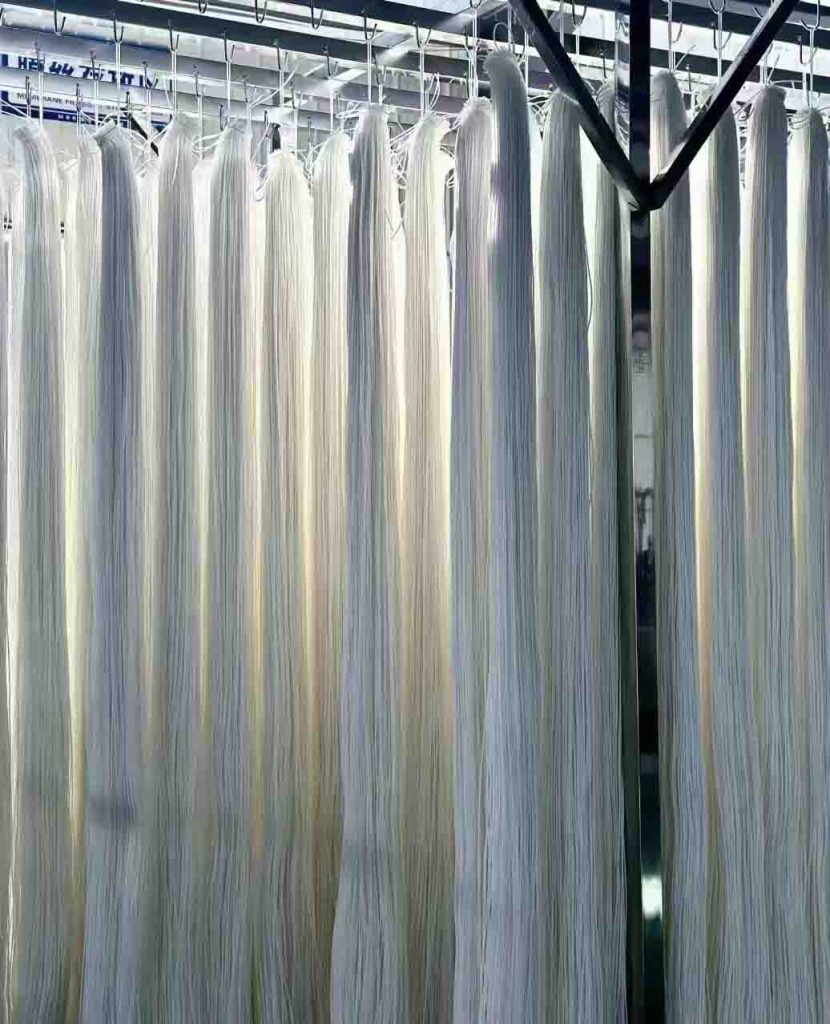
Hollow fiber membranes contain many small membrane tubes.
The large membrane area allows the system to achieve high treatment capacity in a compact space.
Hollow fiber systems are widely used in municipal wastewater treatment.
Flat Sheet MBR
Flat sheet membranes use flat membrane panels installed inside the membrane tank.
They offer a strong structure and can work well in applications with higher sludge concentrations.
Submerged MBR
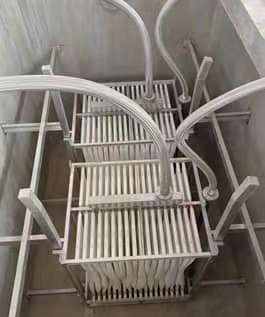
In a submerged MBR, the membrane modules sit directly inside the biological tank or a separate membrane tank.
A suction pump draws treated water through the membranes.
This design is common because it can reduce energy use compared with some external membrane systems.
External MBR
An external MBR places the membrane unit outside the biological tank.
A circulation pump sends mixed liquor through the membrane modules.
This layout can provide easier access to the membrane equipment. However, it may require more pumping energy.
Typical MBR Applications
Municipal Wastewater Treatment
MBR systems are widely used for municipal wastewater.
They can produce high-quality treated water for:
- River discharge
- Irrigation
- Landscape watering
- Industrial reuse
- Toilet flushing
The final application depends on local water quality requirements.
Industrial Wastewater Treatment
MBR technology can also treat wastewater from:
- Food processing
- Dairy plants
- Pharmaceutical factories
- Textile factories
- Electronics manufacturing
- Chemical industries
- Slaughterhouses
However, industrial wastewater may require additional pretreatment before entering the MBR.
Livestock Wastewater
MBR can form part of a treatment system for pig farm and other livestock wastewater.
A possible process is:
Solid-Liquid Separation → DAF → Biological Treatment → MBR → Disinfection
For wastewater with high organic loading, engineers may add anaerobic or other biological treatment before the MBR.
MBR vs Conventional Activated Sludge
| Parameter | MBR | Conventional Activated Sludge |
|---|---|---|
| Solid-Liquid Separation | Membrane | Secondary Clarifier |
| Effluent Suspended Solids | Very Low | Higher |
| Footprint | Compact | Larger |
| Sludge Concentration | High | Moderate |
| Effluent Quality | Excellent | Good |
| Automation | High | Moderate |
| Membrane Maintenance | Required | Not Required |
| Water Reuse | Excellent | Requires Further Treatment |
MBR provides better solid-liquid separation and a smaller footprint.
However, conventional activated sludge can have lower capital and maintenance costs in some applications.
Advantages of MBR Systems
High Effluent Quality
MBR membranes retain suspended solids and many microorganisms.
As a result, the treated water has very low turbidity and suspended solids.
Compact Footprint
MBR systems can operate at high sludge concentrations.
Therefore, the biological tanks can be smaller than those in many conventional systems.
Stable Operation
The membrane provides a physical barrier between treated water and activated sludge.
This helps maintain stable effluent quality even when sludge settling conditions change.
Excellent for Water Reuse
MBR permeate can provide a good feed water source for further treatment.
For example, the permeate can enter an RO system when high-quality reuse water is required.
High Automation
Modern MBR systems can use PLC and SCADA control.
Operators can monitor:
- Membrane pressure
- Permeate flow
- Tank levels
- Dissolved oxygen
- Pump status
- Cleaning cycles
- System alarms
Limitations of MBR Systems
Membrane Fouling
Membrane fouling is one of the main challenges in MBR operation.
Organic matter, suspended solids, and microorganisms can build up on the membrane surface.
As a result, membrane filtration becomes less efficient.
Proper pretreatment, aeration, cleaning, and operating control can reduce fouling.
Energy Consumption
MBR systems need air for biological treatment and membrane cleaning.
Therefore, aeration can represent a large part of the plant’s energy use.
Engineers should optimize the air supply to reduce unnecessary energy consumption.
Membrane Cleaning
Membranes require regular cleaning.
The plant may use:
- Air scouring
- Backwashing
- Chemical cleaning
The cleaning method depends on the membrane type and operating conditions.
What Causes Membrane Fouling?
Common causes include:
- High suspended solids
- Excessive organic matter
- Poor pretreatment
- High oil and grease
- Poor aeration
- Incorrect operating conditions
For industrial wastewater, oil and grease can create serious membrane problems.
Therefore, suitable pretreatment may include DAF or other solid-liquid separation equipment.
How to Reduce Membrane Fouling
Improve Pretreatment
Good pretreatment removes large particles, fibers, oil, and grease before wastewater reaches the membrane.
Control Sludge Concentration
Very high MLSS can increase membrane resistance.
Operators should maintain the sludge concentration within the recommended range.
Maintain Proper Aeration
Air bubbles help keep the membrane surface clean.
At the same time, proper aeration supplies oxygen for biological treatment.
Clean the Membrane Regularly
Regular cleaning helps restore membrane performance.
Operators should follow the membrane manufacturer’s recommended cleaning schedule.
MBR Design Considerations
Wastewater Characteristics
Engineers should evaluate:
- COD
- BOD
- TSS
- Ammonia
- TN
- TP
- pH
- Oil and grease
These values affect the biological process and membrane design.
Membrane Flux
Membrane flux shows how much water passes through a unit of membrane area.
A higher flux can reduce membrane area.
However, excessive flux may increase fouling.
Therefore, engineers should select a suitable operating range rather than simply choosing the highest possible flux.
Sludge Retention Time
MBR systems can operate at a long sludge retention time.
This can improve biological treatment and nitrification.
However, the actual design should match the wastewater and treatment goals.
Oxygen Supply
Aeration must provide enough oxygen for microorganisms and membrane cleaning.
Therefore, the blower system should be sized according to both biological and membrane requirements.
Common MBR Design Mistakes
Poor Pretreatment
Inadequate screening can allow fibers and large particles to enter the membrane system.
These materials may damage or block membrane modules.
Ignoring Oil and Grease
Oil can stick to membrane surfaces and increase fouling.
For wastewater with high FOG, engineers should consider DAF or another pretreatment process.
Using Excessive Membrane Flux
High flux may appear attractive because it reduces membrane area.
However, it can also increase fouling and cleaning frequency.
A balanced design provides better long-term performance.
Not Planning for Membrane Cleaning
The system should include suitable cleaning tanks, pumps, pipes, and chemical dosing equipment.
Maintenance access should also be considered during plant design.
MBR System Automation
A modern MBR system can automatically control many operating functions.
Typical functions include:
- Blower start/stop
- Permeate pump control
- Backwash control
- Membrane cleaning cycles
- Sludge return
- Excess sludge discharge
- Water level control
- DO control
- Alarm management
SCADA integration can provide real-time monitoring and data recording.
MBR Maintenance
Regular maintenance is important for stable membrane performance.
Routine Checks
Operators should monitor:
- Permeate flow
- Transmembrane pressure
- Dissolved oxygen
- MLSS
- Tank levels
- Blower operation
- Membrane condition
Periodic Maintenance
Maintenance teams should:
- Clean membrane modules
- Inspect pumps
- Check blowers
- Calibrate instruments
- Inspect valves
- Check chemical cleaning equipment
Early maintenance can help prevent major membrane problems.
MBR and RO for Water Reuse
MBR and RO can work together when a project requires high-quality reuse water.
A typical process may look like:
Pretreatment → Biological Treatment → MBR → RO → Disinfection → Reuse
The MBR removes suspended solids and most biological pollutants.
RO then removes dissolved salts and many small contaminants.
Therefore, the two technologies can provide different treatment functions within the same water reuse system.
Engineering Perspective
MBR technology offers an effective solution when a project requires high effluent quality and a compact treatment plant.
However, membrane performance depends strongly on upstream treatment and operating conditions.
For this reason, engineers should not select an MBR only by flow capacity.
A complete evaluation should include wastewater quality, pretreatment, membrane flux, sludge concentration, aeration, cleaning requirements, energy use, and final water reuse goals.
With the right process design, an MBR system can provide stable treatment performance and high-quality effluent for many years.
MBR System Selection Checklist
Process Evaluation
- Determine wastewater flow
- Analyze COD and BOD
- Measure TSS
- Check ammonia and nitrogen
- Review oil and grease
- Define final water quality
Equipment Selection
- Select membrane type
- Determine membrane area
- Size biological tanks
- Select blowers
- Select permeate pumps
- Design cleaning system
- Confirm PLC control
Procurement Review
- Compare membrane life
- Review energy consumption
- Check replacement costs
- Confirm spare parts
- Evaluate technical support
- Review warranty conditions
Frequently Asked Questions
What does MBR stand for?
MBR stands for Membrane Bioreactor.
It combines biological wastewater treatment with membrane filtration.
What does an MBR system remove?
An MBR system removes suspended solids and many microorganisms while biological treatment reduces organic pollutants and nutrients.
The exact removal performance depends on the process design and wastewater characteristics.
Is MBR better than conventional activated sludge?
MBR can provide higher effluent quality and a smaller footprint.
However, it also requires membrane cleaning and careful fouling control.
Therefore, the best choice depends on the project requirements.
Can MBR be used for industrial wastewater?
Yes.
MBR can treat many types of industrial wastewater.
However, some industrial wastewater requires pretreatment to remove oil, grease, toxic compounds, or high suspended solids before the MBR.
Can MBR water be reused?
Yes.
MBR permeate can be suitable for many reuse applications.
For higher water quality requirements, additional treatment such as RO and disinfection may be required.
Conclusion
MBR systems combine biological treatment and membrane filtration in one advanced wastewater treatment process.
They can produce high-quality treated water while using less space than many conventional treatment systems.
At the same time, MBR technology requires proper membrane cleaning, aeration, pretreatment, and fouling control.
For municipal wastewater, industrial wastewater, and water reuse projects, MBR can provide a reliable treatment solution when the process is designed around the actual wastewater characteristics.
A successful MBR project should therefore consider the complete treatment process, from pretreatment to final water reuse.
Need Help Selecting an MBR System?
Morvolous provides MBR systems, DAF systems, chemical dosing equipment, sludge dewatering equipment, UF and RO systems, and complete wastewater treatment solutions.
Our engineering team can evaluate your wastewater quality, flow rate, treatment target, and water reuse requirements.
Based on these conditions, we can recommend a suitable MBR process and supporting equipment.
About the Author
Morvolous Engineering Team
Morvolous specializes in wastewater treatment equipment, membrane filtration, sludge dewatering, chemical dosing, and complete wastewater treatment solutions.
Our engineering team provides customized process design and equipment solutions for municipal, industrial, and livestock wastewater treatment projects worldwide.