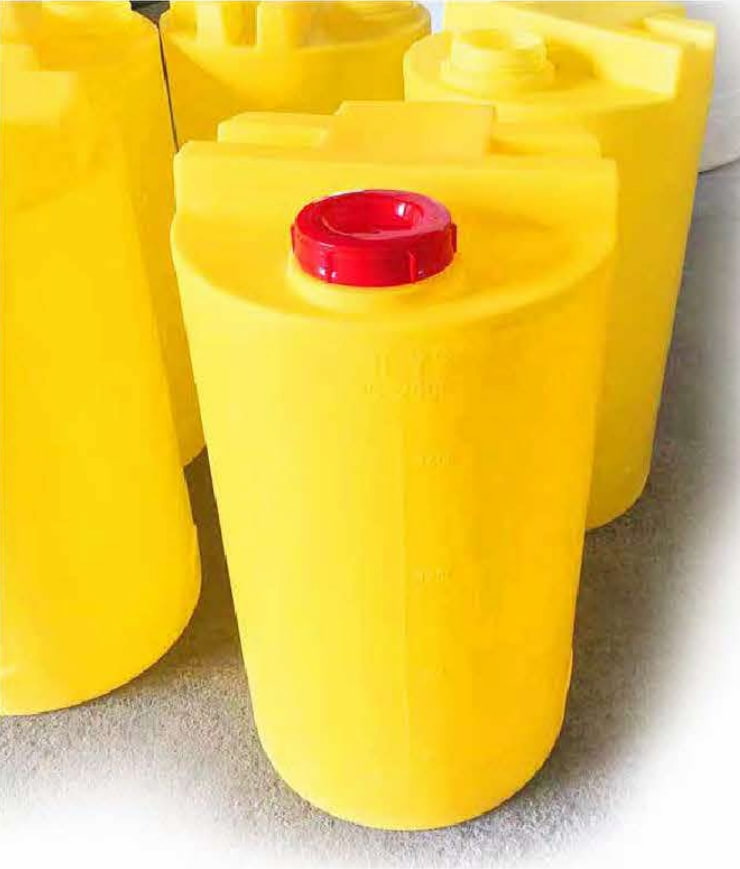
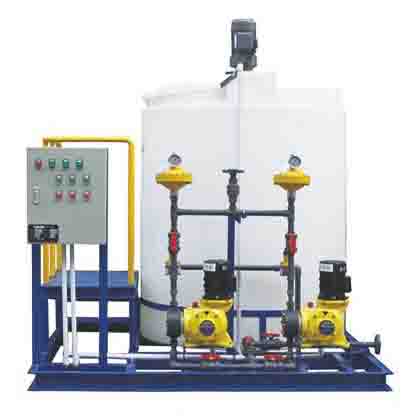
Learn how PE chemical dosing tanks store and prepare treatment chemicals for wastewater treatment systems, including DAF, MBR, sludge dewatering, and industrial water treatment.
Chemical dosing is an important part of many wastewater treatment systems. Chemicals such as PAC, PAM, ferric chloride, and pH adjustment chemicals help improve the treatment process.
A PE chemical dosing tank provides a safe and practical way to store, mix, and dose liquid chemicals. PE, or polyethylene, offers good corrosion resistance and works well with many common wastewater treatment chemicals.
These tanks are widely used in DAF systems, sludge dewatering systems, MBR plants, industrial wastewater treatment, and water treatment projects.
This guide explains what a PE chemical dosing tank is, how it works, where it is used, and what to consider when selecting one.
Quick Reference — PE Chemical Dosing Tank
| Parameter | Typical Value |
|---|---|
| Main Function | Chemical Storage / Preparation / Dosing |
| Tank Material | PE / HDPE |
| Typical Capacity | 500–3,000 L |
| Chemical Application | PAC / PAM / Ferric Chloride / pH Chemicals |
| Mixing Method | Mechanical Agitation |
| Dosing Method | Dosing Pump |
| Corrosion Resistance | Excellent |
| Installation | Indoor / Outdoor |
| Control | Manual / Automatic / PLC |
| Typical Application | Wastewater & Water Treatment |
The exact tank size, material, mixer, and dosing equipment should match the chemical and project requirements.
What Is a PE Chemical Dosing Tank?
A PE chemical dosing tank is a tank made from polyethylene.
The tank stores or prepares chemicals used in wastewater treatment. Depending on the system design, it can work together with a mixer, dosing pump, pipes, valves, and control equipment.
For example, a wastewater treatment plant may use a PE tank to prepare polymer solution.
The prepared solution then moves through a dosing pump and enters the treatment process.
A typical system can include:
PE Tank → Mixer → Dosing Pump → Treatment Equipment
This simple setup allows operators to control chemical addition more accurately.
Why Use PE for Chemical Dosing Tanks?
Polyethylene has good resistance to many chemicals.
It does not rust like carbon steel. Therefore, it can be a practical choice for chemical storage and dosing applications.
PE tanks also have a relatively simple structure and are easy to clean.
For many wastewater treatment projects, PE provides a good balance between chemical resistance, durability, and cost.
However, chemical compatibility should always be checked before selecting the tank material.
How Does a Chemical Dosing System Work?
Step 1 – Chemical Preparation
First, the operator adds the required chemical or chemical powder to the PE tank.
Water may also enter the tank when a chemical solution needs to be prepared.
For polymer systems, the tank can prepare a diluted polymer solution at a controlled concentration.
Step 2 – Mixing
A mixer keeps the solution moving inside the tank.
Good mixing helps the chemical dissolve evenly.
For polymer preparation, gentle mixing is especially important because excessive mixing can damage polymer flocs.
Step 3 – Chemical Storage
After preparation, the solution remains in the tank until the dosing system needs it.
The tank capacity should provide enough working volume for the expected dosing period.
Step 4 – Chemical Dosing
A dosing pump takes chemical solution from the tank.
The pump then sends the solution into the wastewater treatment process.
The dosing rate can be adjusted according to wastewater flow and treatment requirements.
Step 5 – Automatic Control
In an automatic system, the PLC can control the dosing pump based on preset operating conditions.
For example, the system can adjust dosing according to:
- Flow rate
- Tank level
- pH
- ORP
- Treatment process
- Operator settings
This helps reduce manual operation.
Main Components of a PE Chemical Dosing System
A complete dosing system may include:
- PE chemical dosing tank
- Mixer
- Dosing pump
- Chemical inlet
- Water inlet
- Liquid level sensor
- Drain valve
- Chemical outlet
- Pipework
- Valves
- PLC control cabinet
The exact configuration depends on the chemical and treatment process.
Common Chemicals Used in PE Dosing Tanks
PAC
PAC stands for Polyaluminium Chloride.
It is commonly used as a coagulant in wastewater treatment.
PAC helps suspended particles combine into larger flocs.
As a result, downstream equipment such as DAF systems can remove these particles more effectively.
PAM
PAM stands for Polyacrylamide.
It is commonly used as a flocculant.
PAM helps small particles form larger and stronger flocs.
This can improve both flotation and sludge dewatering performance.
Ferric Chloride
Ferric chloride can work as a coagulant.
It is used in some wastewater treatment systems to improve solid removal and, in certain applications, phosphorus removal.
pH Adjustment Chemicals
Wastewater treatment may require pH adjustment.
Depending on the process, the dosing system may use alkaline or acidic chemicals.
The tank and dosing equipment must be compatible with the selected chemical.
PE Dosing Tank Applications
DAF System
DAF systems often use chemical dosing to improve coagulation and flocculation.
A typical setup may include:
PAC Dosing → PAM Dosing → Flocculation → DAF
The PE dosing tanks provide chemical preparation and storage before the chemicals enter the DAF process.
Sludge Dewatering
Screw presses, belt filter presses, and other sludge dewatering machines often use polymer.
The polymer helps form larger sludge flocs.
This improves water separation and can increase sludge cake dryness.
A typical system is:
Polymer Preparation Tank → Dosing Pump → Flocculation → Screw Press
MBR Wastewater Treatment
Chemical dosing can also support MBR operation.
Cleaning chemicals may be used during membrane maintenance.
However, the chemical storage and dosing equipment must match the cleaning chemical and membrane manufacturer’s requirements.
Industrial Wastewater Treatment
Industrial wastewater treatment plants may use several chemical dosing systems.
For example, a plant may need separate tanks for:
- Coagulant
- Flocculant
- Acid
- Alkali
- Disinfectant
Each chemical requires suitable storage and dosing conditions.
PE Chemical Dosing Tank vs Stainless Steel Tank
| Parameter | PE Tank | Stainless Steel Tank |
|---|---|---|
| Corrosion Resistance | Excellent | Good to Excellent |
| Weight | Light | Heavy |
| Installation | Easy | More Complex |
| Chemical Compatibility | Good for Many Chemicals | Depends on Grade |
| Maintenance | Low | Low |
| Cost | Usually Lower | Usually Higher |
| Typical Application | Chemical Dosing | Special / Heavy-Duty Applications |
PE is often a practical choice for common chemical dosing applications.
However, stainless steel may be preferred for certain chemicals, temperatures, or special process conditions.
Advantages of PE Chemical Dosing Tanks
Excellent Corrosion Resistance
PE does not rust.
Therefore, it can work well with many common water and wastewater treatment chemicals.
Lightweight Construction
PE tanks are lighter than many metal tanks.
This makes transportation and installation easier.
Simple Maintenance
PE has a smooth internal surface.
As a result, cleaning can be relatively simple.
Flexible Capacity Options
PE dosing tanks are available in different capacities.
Common sizes include:
- 500 L
- 1,000 L
- 1,500 L
- 2,000 L
- 3,000 L
Larger tanks can also be designed for specific projects.
Suitable for Automatic Systems
PE tanks can integrate with mixers, dosing pumps, level sensors, and PLC systems.
Therefore, they can form part of a fully automatic chemical dosing system.
Limitations of PE Dosing Tanks
Chemical Compatibility Must Be Checked
Not every chemical is suitable for every PE tank.
Therefore, the chemical concentration, temperature, and operating conditions should be reviewed before selection.
Temperature Limits
PE tanks have operating temperature limits.
High-temperature chemicals or hot solutions may require another material.
Mechanical Strength
PE tanks should be installed on a suitable and level foundation.
The support structure must carry the tank weight when the tank is full.
How to Select a PE Chemical Dosing Tank
Determine Chemical Type
First, identify the chemical.
For example:
- PAC
- PAM
- Ferric chloride
- Acid
- Alkali
- Disinfectant
The chemical determines the required material compatibility.
Calculate Working Volume
The tank should provide enough volume for the required operating period.
For example, if the system consumes 100 L of chemical solution per hour, a larger working tank may be useful for longer operation between refills.
Consider Chemical Concentration
Concentrated chemicals and diluted solutions may have different material requirements.
Therefore, chemical concentration should be included in the equipment selection.
Select the Mixer
The mixer should match the tank volume and chemical type.
For polymer preparation, the mixer should provide enough mixing without excessive shear.
Select the Dosing Pump
The dosing pump should match:
- Flow rate
- Pressure
- Chemical type
- Chemical concentration
- Operating schedule
A diaphragm dosing pump is common in many chemical dosing systems.
PE Dosing Tank for Polymer Preparation
Polymer preparation requires special attention.
A typical polymer preparation system includes:
Water → Polymer Addition → Mixing → Maturation → Dosing
The operator first adds water to the preparation tank.
Then, polymer powder or concentrated polymer solution enters the tank.
The mixer helps create a uniform solution.
After the required maturation time, the polymer solution can enter the dosing system.
PE Dosing Tank for DAF
Chemical dosing is often an important part of DAF operation.
The process may use PAC to improve coagulation.
PAM can then help form larger flocs.
A typical chemical dosing process is:
Wastewater → PAC → Rapid Mixing → PAM → Flocculation → DAF
Good chemical dosing can improve flotation performance and reduce suspended solids.
PE Dosing Tank for Sludge Dewatering
Sludge dewatering machines often need polymer conditioning.
The polymer changes the sludge structure and helps release water.
A typical screw press system can use:
Polymer Preparation → Polymer Dosing → Sludge Mixing → Screw Press
The exact polymer type and dosage should be determined through testing.
Common Design Mistakes
Choosing the Tank Only by Nominal Volume
A 1,000 L tank does not always provide 1,000 L of useful working volume.
The system should consider minimum and maximum liquid levels.
Therefore, engineers should calculate the actual working volume.
Using an Incompatible Chemical
Chemical compatibility should be checked before purchasing the tank.
This is especially important for strong acids, strong alkalis, oxidizing chemicals, and concentrated solutions.
Selecting the Wrong Mixer
A mixer that is too weak may not provide uniform mixing.
On the other hand, excessive mixing can affect certain polymers.
Therefore, mixer selection should match the chemical and process.
Ignoring Tank Foundation
A full dosing tank can become very heavy.
For example, 1,000 L of water weighs about 1,000 kg.
Therefore, the foundation must support the full operating weight.
PE Dosing Tank Maintenance
PE tanks require relatively simple maintenance.
Operators should regularly check:
- Tank body
- Mixer
- Dosing pump
- Pipes
- Valves
- Level sensor
- Tank connections
The tank should also be cleaned when chemical deposits or solids build up.
Chemical Dosing System Automation
A modern dosing system can use PLC control.
The PLC can monitor:
- Tank level
- Dosing pump status
- Mixer status
- Chemical flow
- Alarm conditions
The system can also start or stop dosing pumps according to wastewater flow.
For larger plants, SCADA can provide remote monitoring and data recording.
Safety Considerations
Chemical dosing systems require proper safety measures.
The installation should consider:
- Chemical compatibility
- Ventilation
- Spill containment
- Emergency shower
- Eye wash station
- Chemical-resistant flooring
- Proper labeling
- Operator PPE
The exact safety requirements depend on the chemical used and local regulations.
Engineering Perspective
A PE chemical dosing tank may look simple, but it plays an important role in wastewater treatment.
The tank, mixer, dosing pump, chemical concentration, and control system must work together.
Therefore, engineers should design the complete dosing system rather than selecting the tank alone.
The tank size can reduce refill frequency.
The correct mixer can improve chemical preparation.
The correct dosing pump can provide stable chemical addition.
Together, these components help the wastewater treatment system operate more consistently.
PE Chemical Dosing Tank Selection Checklist
Chemical Information
- Chemical name
- Chemical concentration
- Chemical temperature
- Daily consumption
- Required storage time
Tank Design
- Tank capacity
- Working volume
- Material
- Foundation
- Inlet and outlet size
- Level control
Equipment
- Mixer
- Dosing pump
- Level sensor
- Valves
- Pipes
- PLC control
Safety
- Chemical compatibility
- Spill containment
- Ventilation
- PPE
- Emergency equipment
Frequently Asked Questions
What is a PE dosing tank?
A PE dosing tank is a polyethylene tank used to store or prepare chemicals for water and wastewater treatment systems.
What chemicals can be stored in a PE dosing tank?
PE tanks can handle many common wastewater treatment chemicals, including PAC, PAM, ferric chloride, and some pH adjustment chemicals.
However, chemical compatibility should always be confirmed before use.
What size PE dosing tank do I need?
The required size depends on chemical consumption, chemical concentration, operating hours, and refill frequency.
Common sizes include 500 L to 3,000 L, but larger systems can also be designed.
Can a PE dosing tank be used outdoors?
Yes.
PE tanks can be installed outdoors in many applications.
However, the installation should consider sunlight, temperature, weather conditions, tank support, and chemical safety.
Can a PE tank be used for PAM preparation?
Yes.
PE tanks can be used as polymer preparation tanks.
A suitable mixer and dosing system should be selected to match the polymer preparation process.
Conclusion
PE chemical dosing tanks provide a practical solution for chemical storage and preparation in wastewater treatment systems.
Their corrosion resistance, lightweight construction, simple maintenance, and flexible capacity make them suitable for many applications.
They can work with DAF systems, sludge dewatering machines, MBR plants, and industrial wastewater treatment systems.
However, successful chemical dosing depends on more than the tank itself.
Chemical compatibility, tank capacity, mixer selection, dosing pump performance, working volume, and safety should all be considered during system design.
With the right configuration, a PE chemical dosing tank can provide stable and reliable chemical preparation and dosing for wastewater treatment plants.
Need a PE Chemical Dosing Tank?
Morvolous provides PE chemical dosing tanks, polymer preparation systems, dosing pumps, DAF systems, sludge dewatering equipment, MBR systems, UF and RO systems, and complete wastewater treatment solutions.
Our engineering team can select the tank capacity, mixer, dosing pump, and control system according to your chemical type and wastewater treatment process.
For customized projects, we can also provide complete chemical dosing system solutions.
About the Author
Morvolous Engineering Team
Morvolous specializes in wastewater treatment equipment, chemical dosing, sludge dewatering, membrane filtration, and complete wastewater treatment solutions.
Our engineering team provides customized equipment and process solutions for municipal, industrial, food processing, and livestock wastewater treatment projects worldwide.