How to reduce sludge moisture, cut hauling volume, and select a practical drying technology for wastewater treatment plants.
1. Introduction
Dewatered sludge still contains substantial moisture. Even after mechanical dewatering, its weight and volume can create significant transportation, storage, and disposal costs. Thermal drying removes additional water and produces a drier material for handling or further treatment.
Selecting the right sludge drying equipment requires more than comparing final moisture content. Feed consistency, heat availability, energy prices, emissions control, operator capacity, and local disposal requirements all influence the final decision. A system that performs well at one plant may be uneconomical at another.
The U.S. Environmental Protection Agency provides background on biosolids management, treatment, and beneficial use through its Biosolids resources. These considerations are relevant when evaluating how drying fits into a wider sludge management strategy, although the permitted destination for dried material depends on local regulations and its final quality.
2. Quick Reference: Sludge Drying Equipment
| Item | Typical engineering consideration |
|---|---|
| Main purpose | Remove additional moisture after mechanical dewatering |
| Common feed material | Mechanically dewatered sludge cake |
| Typical feed moisture | Approximately 70–85%, depending on upstream treatment |
| Common final moisture | Approximately 10–40%, depending on technology and target |
| Main drying methods | Direct thermal, indirect thermal, solar, and low-temperature heat-pump drying |
| Common heat sources | Natural gas, steam, hot water, waste heat, or electricity |
| Key sizing parameters | Wet sludge throughput, inlet moisture, target moisture, and operating hours |
| Main energy demand | Evaporating water and overcoming system heat losses |
| Important auxiliaries | Feed conveyor, mixer, exhaust treatment, dust collection, and discharge conveyor |
| Key safety issues | Dust, hot surfaces, fire risk, odor, and combustible gas management where applicable |
| Downstream options | Transport, approved disposal, further processing, or beneficial use where permitted |
These values are indicative planning ranges, not guaranteed equipment specifications. Actual performance depends on sludge characteristics, test results, operating conditions, and the selected design.
3. What Is Sludge Drying?
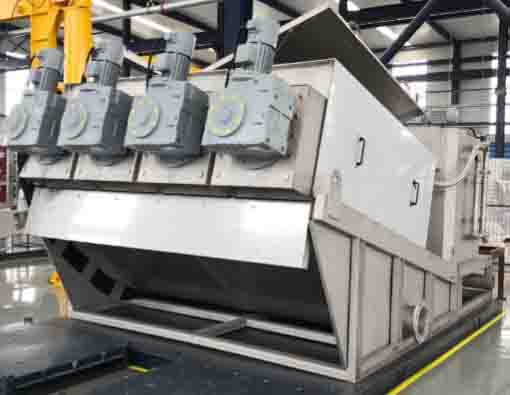
Sludge drying is a moisture-removal process that follows thickening and usually mechanical dewatering. Mechanical equipment removes free water through gravity, filtration, or centrifugal force. Drying then removes part of the remaining water by transferring heat to the sludge.
The difference matters because evaporating water generally requires much more energy than separating liquid water mechanically. Therefore, plants should normally evaluate dewatering performance before sizing a thermal dryer.
3.1 Where Drying Fits in the Treatment Process
A typical sludge treatment sequence follows these stages:
- Sludge collection from the wastewater treatment process.
- Sludge thickening to reduce the amount of water handled.
- Conditioning with polymer or other suitable chemicals, when required.
- Mechanical dewatering using a belt press, screw press, or centrifuge.
- Thermal or solar drying when a lower moisture content is needed.
- Storage, transport, and final management under applicable regulations.
Not every plant needs all six stages. For example, a facility with an economical outlet for dewatered cake may not justify installing a dryer. Thermal treatment becomes more attractive when disposal costs, transport distances, or downstream requirements make further moisture reduction worthwhile.
3.2 Why Drying Performance Matters
Lower moisture content can reduce the mass transported per unit of dry solids. It may also improve storage characteristics and provide a more consistent material for certain downstream processes.
However, drying does not automatically make sludge safe for unrestricted reuse. Pathogen reduction, contaminant concentrations, and product quality depend on the complete treatment process and applicable regulations.
4. Main Types of Sludge Drying Equipment
Different technologies use different heat-transfer methods and operating conditions. The most suitable option depends on plant scale, available energy, climate, sludge properties, and the required final product.
4.1 Direct Thermal Dryers
Direct dryers bring hot gas into contact with sludge. Heat transfers directly from the gas to the wet material, and the resulting moist exhaust gas is collected for treatment.
Common designs include rotary drum dryers and certain belt or fluidized-bed systems. Rotary drums are often considered for continuous processing, while other direct-contact designs may suit specific throughput or product requirements.
Advantages
- Suitable for continuous operation.
- Can handle substantial water evaporation loads.
- May accommodate different feed arrangements with proper conditioning.
Limitations
- Exhaust gas may require substantial treatment.
- High temperatures can increase odor and dust-control demands.
- Fire and combustible-dust hazards require engineered safeguards.
Direct drying should be evaluated as a complete system rather than as a standalone drum. Exhaust handling, heat recovery, feeding, discharge, and safety controls all affect plant performance.
4.2 Indirect Thermal Dryers
Indirect dryers transfer heat through a heated surface. Steam, thermal oil, or another heating medium warms the dryer wall or internal surfaces, while the sludge remains largely separated from the heating medium.
Paddle dryers and some disc dryers use this approach. Their enclosed construction can help control emissions and reduce the volume of process gas compared with some direct-contact designs.
Advantages
- Enclosed process arrangement.
- Potentially lower exhaust-gas volume.
- Suitable for plants with an appropriate steam or thermal-fluid supply.
Limitations
- Heat-transfer surfaces may foul or accumulate deposits.
- Sticky sludge can complicate feeding and discharge.
- Maintenance access and cleaning requirements must be considered.
An indirect dryer may be attractive when the site already has usable process steam. Nevertheless, the actual energy cost depends on steam conditions, heat losses, dryer efficiency, and the amount of water removed.
4.3 Solar Sludge Dryers
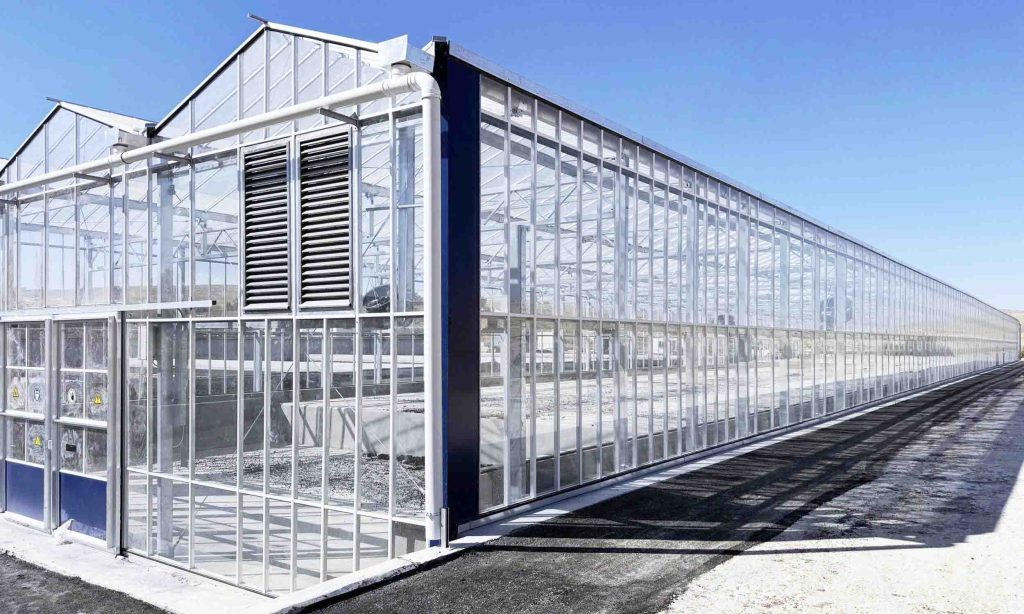
Solar drying uses solar radiation and ambient conditions to evaporate moisture. Many systems place sludge inside a covered greenhouse structure, where ventilation and mechanical turning help improve drying uniformity.
This option can reduce purchased thermal energy, particularly in regions with favorable solar conditions. However, performance varies with season, humidity, temperature, rainfall, and available land.
Advantages
- Lower dependence on conventional thermal energy.
- Relatively simple heat source.
- Potentially attractive operating economics in suitable climates.
Limitations
- Large land requirements may be necessary.
- Weather affects throughput and drying time.
- Odor management, ventilation, and leachate control still require attention.
Solar drying should be sized around realistic annual weather conditions rather than the best summer performance. Plants with strict year-round throughput requirements may need covered storage, backup treatment, or a hybrid arrangement.
4.4 Low-Temperature and Heat-Pump Dryers
Low-temperature systems remove moisture using heated air or dehumidified air at comparatively moderate temperatures. Heat-pump dryers recover energy from moist exhaust air and reuse it within the drying cycle.
These systems can be useful when electricity is available at a competitive price and the plant wants to avoid very high process temperatures. Their performance depends on inlet moisture, ambient conditions, heat-pump design, and the required evaporation rate.
Advantages
- Lower operating temperatures than many conventional thermal dryers.
- Potential for energy recovery within the system.
- Useful for sites prioritizing controlled drying conditions.
Limitations
- Electrical demand can be significant.
- Capital cost and maintenance needs vary by configuration.
- Low-temperature operation does not eliminate the need for odor and hygiene management.
A heat-pump dryer should be compared using measured energy consumption per unit of water evaporated, not electricity consumption alone.
4.5 Belt and Fluidized-Bed Dryers
Belt dryers move sludge through a drying chamber on a perforated conveyor. Heated air passes through or around the material as it travels along the belt. Multiple zones can provide different drying conditions.
Fluidized-bed dryers suspend suitably prepared particles in a stream of heated gas. This produces strong heat and mass transfer, but feed preparation and particle characteristics are important.
These systems may suit continuous industrial applications where stable feed and consistent product quality are priorities. Their suitability should be verified against the sludge’s stickiness, particle behavior, and tendency to form agglomerates.
5. Sludge Drying Equipment Comparison
| Technology | Heat transfer | Main strengths | Main limitations | Suitable conditions |
|---|---|---|---|---|
| Rotary drum dryer | Usually direct | Continuous operation and high evaporation capacity | Exhaust treatment and dust control can be demanding | Large, continuous drying duties |
| Paddle dryer | Indirect | Enclosed process and controlled heat transfer | Surface fouling and sticky feed may affect operation | Sites with suitable steam or thermal-fluid supply |
| Disc dryer | Indirect | Compact heat-transfer arrangement in suitable designs | Mechanical complexity and cleaning requirements | Industrial sludge applications |
| Belt dryer | Usually direct hot air | Continuous conveying and staged drying | Requires chamber space and airflow management | Consistent, continuous feed |
| Solar dryer | Solar heat and ventilation | Low purchased heat demand in favorable climates | Weather dependence and land requirements | Suitable climates and flexible drying schedules |
| Heat-pump dryer | Low-temperature air with heat recovery | Moderate-temperature operation and energy recovery potential | Electricity cost and equipment investment | Sites with suitable power supply and operating targets |
| Fluidized-bed dryer | Usually direct hot gas | Strong heat and mass transfer | Feed preparation and dust control are important | Applications with suitable particle characteristics |
The table is a screening guide. Final selection should be based on vendor guarantees, representative sludge testing, and a site-specific energy and lifecycle-cost assessment.
6. How to Calculate the Water Removal Requirement
The required evaporation load is one of the most important inputs for equipment sizing. It can be estimated from the wet sludge feed rate, initial solids content, and target solids content.
6.1 Basic Calculation
Assume a plant processes 1,000 kg/h of dewatered sludge at 25% dry solids. The target product contains 90% dry solids.
Step 1: Calculate dry solids flow.
Dry solids remain constant during drying if no material is lost.
Dry solids = 1,000 × 25% = 250 kg/h
Step 2: Calculate final product flow.
Final product flow = 250 ÷ 90% = 277.8 kg/h
Step 3: Calculate water removed.
Water removed = 1,000 − 277.8 = 722.2 kg/h
The dryer must therefore evaporate approximately 722 kg of water per hour under these assumptions.
This calculation does not include volatile solids loss, dust losses, or changes in material composition. Actual design should also consider peak feed rate, operating hours, downtime, and the required safety margin.
6.2 Why Upstream Dewatering Matters
Suppose the same dry-solids load enters a dryer at 20% solids instead of 25%. The wet feed rate rises to 1,250 kg/h for 250 kg/h of dry solids. Reaching the same final solids concentration then requires evaporating more water.
That difference can significantly affect heat demand and dryer size. Improving mechanical dewatering may therefore reduce both the required dryer capacity and long-term energy consumption.
7. Key Factors When Selecting a Dryer
7.1 Feed Sludge Characteristics
Sludge composition affects flowability, stickiness, heat transfer, odor, and final product properties. Municipal biological sludge may behave differently from food-processing sludge or industrial chemical sludge.
Before selecting equipment, establish the expected feed moisture range, dry solids content, organic fraction, ash content, chemical composition, and variability. Pilot testing may be needed when the material is sticky, abrasive, corrosive, or difficult to convey.
7.2 Required Final Moisture
A lower final moisture content usually requires additional energy and may increase operating costs. The target should come from a defined downstream need, such as reducing transport mass or meeting a specific process requirement.
Do not specify an unnecessarily low moisture target without evaluating its economic benefit. A slightly wetter product may offer a better total cost when the disposal route accepts it.
7.3 Energy Availability and Cost
Compare available heat sources before selecting the dryer type. Steam, waste heat, natural gas, and electricity have different costs and operating constraints.
The evaluation should include the full energy balance, auxiliary power, heat recovery, startup requirements, and expected annual operating hours. A technology with lower energy consumption per kilogram of evaporated water may still have higher total costs if its capital or maintenance requirements are substantially greater.
7.4 Environmental and Safety Controls
Drying can release odor, water vapor, dust, and volatile compounds. Depending on the sludge and process, the installation may need condensers, scrubbers, biofilters, dust collectors, or other exhaust treatment equipment.
Hot surfaces, combustible dust, fire, and confined spaces also require careful assessment. The system design should include appropriate temperature monitoring, interlocks, emergency shutdowns, housekeeping procedures, and maintenance access.
8. Illustrative Engineering Scenarios
The following scenarios illustrate selection logic. They are planning examples, not verified customer case studies or performance guarantees.
Scenario 1: Municipal Plant with High Transport Costs
A municipal plant handles approximately 20 tonnes per day of dewatered sludge. Long transport distances make wet-cake hauling expensive. The engineering team compares further dewatering with thermal drying before committing to a dryer.
The decision should be based on annual transport savings, evaporation energy, capital cost, and the accepted final disposal route. If a lower-cost local outlet accepts dewatered cake, drying may not provide enough additional value.
Scenario 2: Industrial Facility with Available Steam
An industrial wastewater plant produces a consistent sludge stream and has surplus process steam during normal operation. Engineers assess an indirect dryer because the available heat source may support an enclosed process.
Before purchase, the plant should confirm steam availability throughout the operating year. Testing should also determine whether the sludge fouls heated surfaces or creates difficult discharge conditions.
Scenario 3: Site with Favorable Solar Conditions
A facility in a warm, dry region has available land and flexible processing schedules. Solar drying is evaluated against a conventional thermal system.
The design team should model seasonal performance, ventilation, odor control, and storage capacity. If production must remain stable during cloudy or wet periods, a backup strategy may be necessary.
9. Operating Costs and Lifecycle Assessment
A sound comparison covers more than the purchase price. Drying systems can differ considerably in energy use, maintenance frequency, emissions treatment, staffing needs, and usable service life.
| Cost category | Questions to evaluate |
|---|---|
| Capital investment | Does the quotation include feeding, exhaust treatment, conveyors, and controls? |
| Energy | What is the guaranteed energy consumption per kilogram of water evaporated? |
| Maintenance | How often do belts, seals, bearings, scrapers, or heat-transfer surfaces require service? |
| Labor | How much daily inspection, cleaning, and process adjustment is needed? |
| Environmental controls | Are odor, dust, condensate, and exhaust treatment included? |
| Availability | What production capacity remains during planned maintenance? |
| Final disposal | Does the dried product qualify for the intended destination under local rules? |
A useful comparison metric is the total annual cost per tonne of dry solids processed. This makes it easier to compare options when the technologies have different moisture targets or wet-feed capacities.
10. Common Selection Mistakes
Sizing from wet tonnes alone. Two plants with the same wet sludge throughput may have very different dry-solids loads. Base the design on dry solids and required water evaporation.
Ignoring feed variability. Changes in polymer dosage, upstream dewatering, and sludge composition can affect dryer stability. Include realistic operating ranges in the specification.
Comparing energy figures without a common basis. Check whether quoted consumption includes auxiliary fans, pumps, conveyors, and exhaust treatment. Make sure all suppliers use the same inlet and outlet moisture assumptions.
Underestimating emissions control. The dryer and its exhaust system should be designed together. Retrofitting odor or dust treatment can add substantial cost.
Assuming dried sludge is automatically suitable for reuse. Final use depends on contaminant levels, treatment history, applicable standards, and regulatory approval.
11. Engineering Recommendations
The preferred approach is to optimize mechanical dewatering first, define the actual drying objective, and then compare suitable technologies using a common design basis.
For large, continuous duties, conventional thermal systems may offer the required capacity. Indirect dryers can be attractive when an appropriate heat source is available and an enclosed process is preferred. Solar drying may suit sites with favorable weather and sufficient land. Heat-pump systems deserve consideration when low-temperature operation and energy recovery align with local electricity costs.
Before requesting quotations, prepare a clear specification covering dry-solids throughput, feed moisture, target product moisture, operating schedule, available energy, emissions requirements, and downstream disposal conditions. Ask suppliers to state their assumptions and identify any exclusions from the quoted scope.
The Water Environment Federation provides industry resources through WEF, which can support broader professional research into wastewater and residuals management. For project decisions, combine general industry guidance with representative sludge testing, local regulatory requirements, and supplier performance guarantees.
12. Frequently Asked Questions
What is the difference between sludge dewatering and sludge drying?
Dewatering primarily separates liquid water through mechanical processes such as filtration or centrifugation. Drying removes additional moisture through evaporation, generally using heat. Mechanical dewatering is usually evaluated first because evaporating water often requires substantially more energy than separating it mechanically.
What moisture content can a sludge dryer achieve?
The achievable final moisture depends on the technology, feed characteristics, operating conditions, and product requirements. Some systems target approximately 10–40% moisture, while other applications require different endpoints. The target should be confirmed through testing and a supplier’s performance guarantee.
Is solar drying suitable for every wastewater plant?
No. Solar drying depends on climate, available land, seasonal weather, and acceptable processing time. Sites with high rainfall, limited space, or strict year-round capacity requirements may need another technology or a hybrid system.
Does sludge drying eliminate the need for further treatment?
Not necessarily. Drying reduces moisture but does not automatically remove heavy metals or all chemical contaminants. Pathogen reduction and suitability for reuse depend on the complete treatment process and applicable regulations.
How should a plant compare dryer quotations?
Use a common basis that includes dry-solids throughput, inlet and outlet moisture, water evaporation rate, energy consumption, emissions controls, maintenance requirements, and total lifecycle cost. Confirm which auxiliaries are included before comparing purchase prices.
13. Conclusion
Sludge drying can reduce the weight and volume of dewatered sludge, but its value depends on the site’s disposal costs, energy supply, and final product requirements. The best solution balances moisture reduction with capital investment, energy consumption, reliability, and environmental controls.
A practical selection process begins with accurate feed data and a defined drying objective. From there, compare technologies using consistent performance assumptions and realistic lifecycle costs. This approach helps wastewater plants choose a system that supports long-term sludge management rather than simply maximizing dryness.
Need help evaluating a sludge drying system? Prepare the sludge throughput, inlet moisture, target moisture, available heat source, and operating hours. These inputs provide a useful starting point for preliminary sizing and technology comparison.