Introduction
In modern Wastewater treatment systems, chemical dosing plays a key role.
A stable and precise dosing process improves efficiency. It also reduces operational cost.
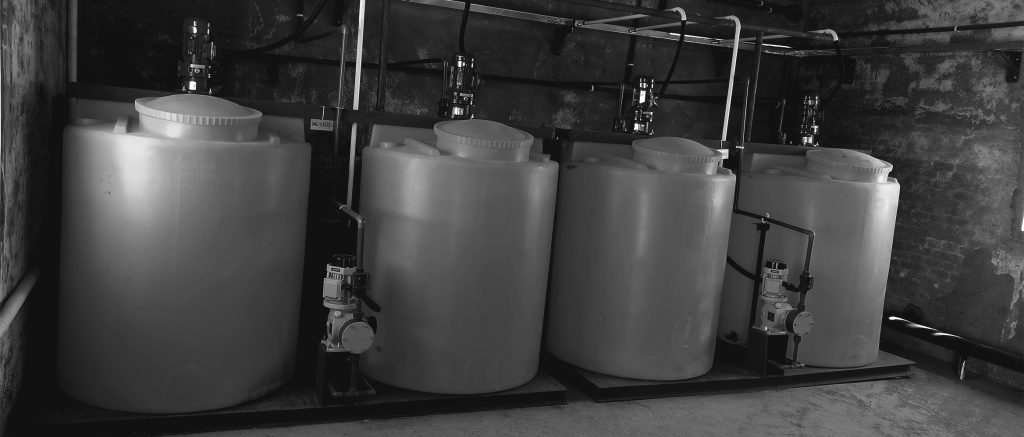
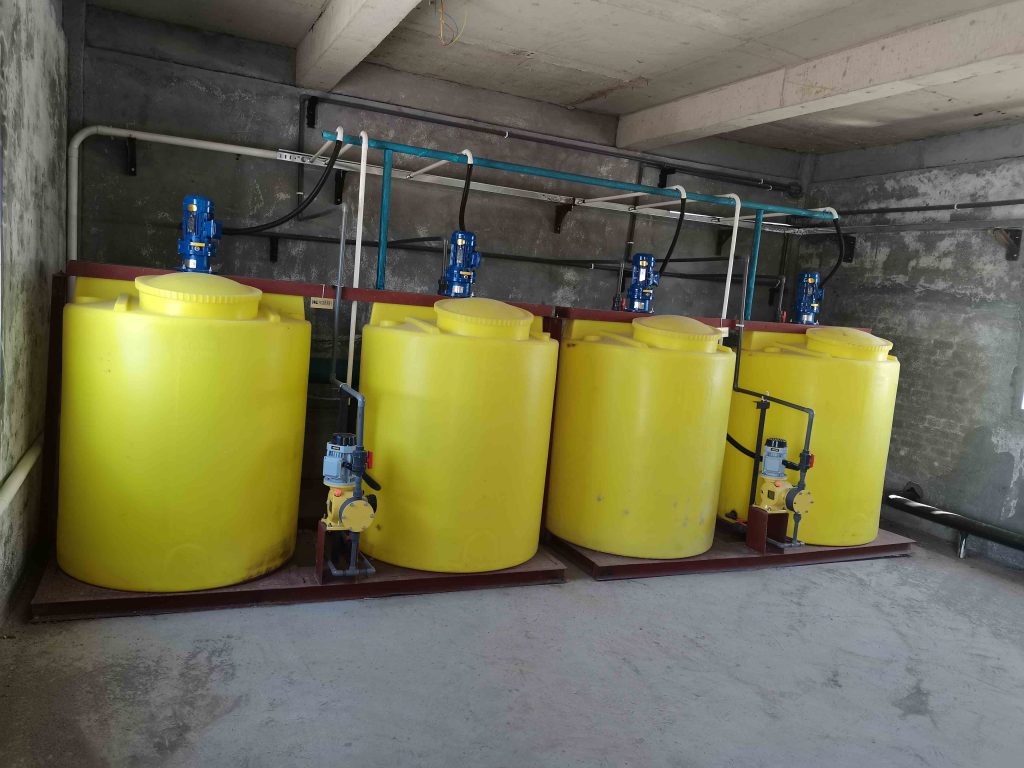
PE dosing tanks and automatic chemical dosing systems are widely used in WWPT plants.
They provide safe storage and accurate chemical injection.
These systems are simple in structure. But they are very important for stable operation.
What is a PE Dosing Tank?
A PE dosing tank is made from high-density polyethylene (HDPE).
It is corrosion resistant and lightweight.
It is used to store chemicals such as:
Coagulants
Flocculants
Acids or alkalis
Disinfection agents
Typical volume ranges from 100L to 5000L.
Some industrial systems can exceed 10,000L.
Wall thickness is usually between 5mm and 15mm.
This depends on tank size and pressure requirement.
PE material offers strong chemical resistance.
It performs well in harsh wastewater environments.
Key Features of PE Chemical Tanks
PE dosing tanks are widely used in WWPT projects.
They are designed for long service life.
Main features include:
Strong corrosion resistance
UV stability for outdoor use
Low maintenance requirement
Smooth inner surface
Easy installation
Most tanks operate under atmospheric pressure.
They are suitable for both industrial and municipal systems.
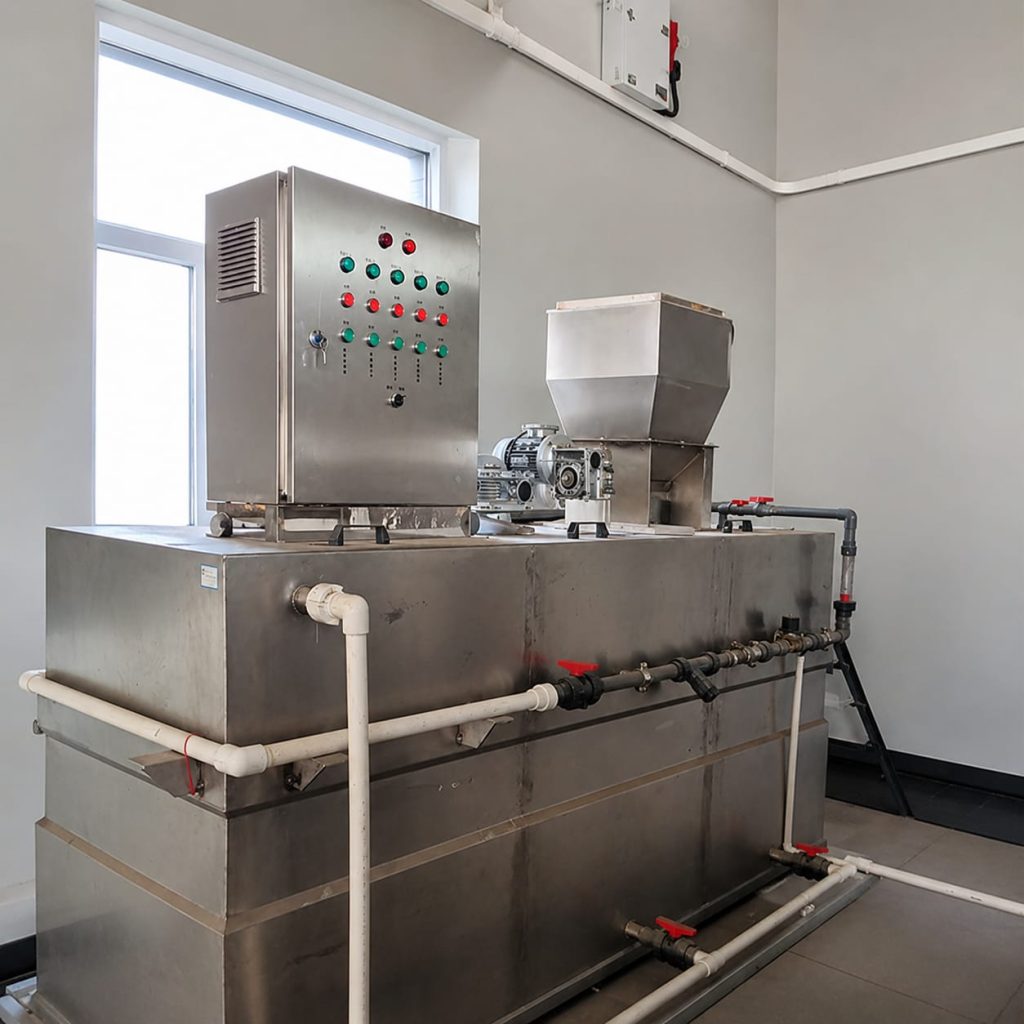
Automatic Dosing System Overview
An automatic dosing system improves chemical accuracy.
It reduces manual labor and human error.
A typical system includes:
PE storage tank
Dosing pump
Mixing agitator
Level sensor
Control panel
Dosing pumps usually support 0.1–1000 L/h flow range.
Pressure capacity can reach 6–12 bar in industrial models.
The system adjusts dosage based on real-time signals.
It can connect with PLC or SCADA systems.
Working Principle in WWPT Applications
In wastewater treatment (WWPT), dosing is often continuous.
The process is simple:
Chemicals are stored in PE tank
Mixing system prepares solution
Pump injects chemical into pipeline
Sensors monitor flow and level
This closed-loop system ensures stable water quality.
It is widely used in:
Municipal sewage plants
Industrial wastewater plants
Food processing wastewater
Chemical effluent treatment
Advantages in Wastewater Treatment
Using PE dosing tanks and automatic systems brings clear benefits.
- Higher accuracy
Chemical dosing is controlled precisely.
This improves treatment efficiency.
- Lower operational cost
Less chemical waste.
Reduced manpower requirement.
- Better safety
Closed system reduces chemical exposure.
- Long service life
PE material resists corrosion and aging.
- Easy integration
Compatible with WWPT automation systems.
Technical Notes (Typical Parameters)
Based on common industrial designs:
Tank volume: 200L – 10000L
Pump flow rate: 0.1 – 1000 L/h
Operating temperature: -10°C to 60°C
Mixing speed: 60 – 1450 rpm
Dosing accuracy: ±1–2%
These values may vary depending on project requirements.
Custom design is often available for WWPT systems.
Maintenance and Operation Tips
To ensure stable performance:
Check pump calibration regularly
Clean tank every 3–6 months
Inspect pipelines for blockage
Monitor chemical compatibility
Replace seals when aging appears
Proper maintenance extends system life significantly.
Application in Modern WWPT Projects
PE dosing systems are now standard equipment in wastewater treatment.
They are widely used in:
pH adjustment systems
Coagulation & flocculation
Chlorination systems
Sludge treatment processes
Automation is becoming more important.
Many plants now use fully integrated dosing control.