Learn about the most common sludge dewatering equipment, how different technologies work, and how to select the right solution for municipal and industrial wastewater treatment.
Sludge management is one of the most important—and often most expensive—parts of a wastewater treatment plant. While sludge may account for only a small percentage of the total wastewater volume, it can represent 30–60% of a plant’s operating costs due to transportation, disposal, and treatment expenses.
Sludge dewatering equipment reduces the water content of sludge, significantly decreasing its volume and weight before final disposal or reuse. Choosing the right dewatering technology improves operational efficiency, lowers disposal costs, and supports environmental compliance.
This guide introduces the major types of sludge dewatering equipment, compares their performance, and explains how to choose the most suitable system for different sludge characteristics.
For additional wastewater engineering resources, professionals can refer to the Water Environment Federation at https://www.wef.org.
Quick Reference — Sludge Dewatering Equipment
| Parameter | Typical Value |
|---|---|
| Sludge Type | Primary, Secondary, Mixed |
| Feed Solids | 0.5–5% DS |
| Dewatered Cake Solids | 15–35% DS |
| Polymer Consumption | 2–10 kg/t DS |
| Capacity | 1–200 m³/h |
| Operation | Continuous |
| Automation | Fully Automatic |
| Typical Materials | SS304 / SS316L |
| Power Consumption | Low to Moderate |
| Typical Service Life | 10–20 Years |
What Is Sludge Dewatering?
Sludge dewatering is the process of removing water from wastewater sludge to reduce its volume before transportation, disposal, composting, incineration, or further treatment.
Unlike sludge drying, dewatering removes free water, while bound water remains in the sludge.
The primary goals are to:
- Reduce transportation costs
- Lower disposal expenses
- Improve sludge handling
- Increase treatment efficiency
- Prepare sludge for final disposal or resource recovery
Why Sludge Dewatering Matters
Wastewater sludge typically contains 95–99% water.
Without dewatering:
- Transportation costs increase significantly.
- Disposal volumes become much larger.
- Storage requirements grow.
- Operating costs rise.
Reducing sludge volume by even a small percentage can produce substantial long-term savings.
Main Types of Sludge Dewatering Equipment
Screw Press
Screw presses have become one of the most popular sludge dewatering technologies due to their low energy consumption and continuous operation.
Advantages
- Low power consumption
- Fully automatic operation
- Quiet operation
- Minimal wash water
- Simple maintenance
Typical Applications
- Municipal wastewater
- Food processing
- Livestock farms
- Small and medium treatment plants
Belt Filter Press
Belt filter presses remove water by compressing sludge between two moving belts.
Advantages
- High throughput
- Continuous operation
- Mature technology
- Suitable for large plants
Limitations
- Higher wash water consumption
- Larger installation area
- More routine maintenance
Decanter Centrifuge
Decanter centrifuges use centrifugal force to separate solids from water.
Advantages
- Compact footprint
- High automation
- Excellent for variable sludge
- High processing capacity
Limitations
- Higher energy consumption
- More complex maintenance
- Higher investment cost
Plate and Frame Filter Press
Filter presses use hydraulic pressure to force water through filter cloths.
Advantages
- High cake solids
- Excellent dewatering performance
- Suitable for difficult industrial sludge
Limitations
- Batch operation
- Longer cycle time
- Higher labor requirements
Volute Screw Press
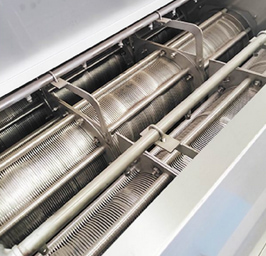
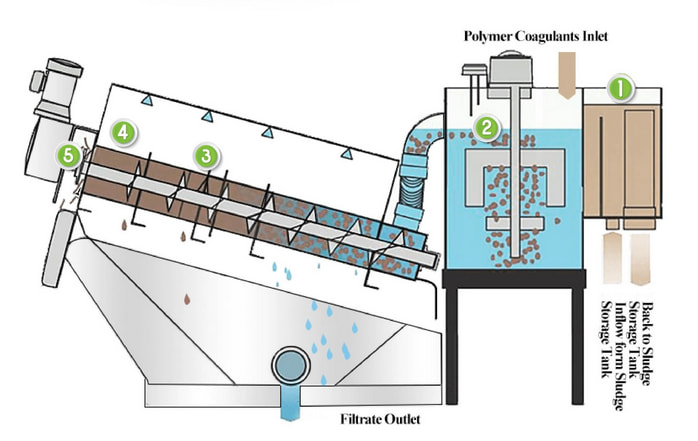
The multi-disc (volute) screw press has gained popularity because of its anti-clogging design.
Advantages include:
- Self-cleaning structure
- Low-speed operation
- Low noise
- Low maintenance
- Suitable for oily sludge
Technology Comparison
| Technology | Cake Solids | Energy Use | Water Consumption | Maintenance | Best Application |
|---|---|---|---|---|---|
| Screw Press | 18–25% | Low | Very Low | Low | Municipal |
| Volute Screw Press | 18–25% | Very Low | Very Low | Very Low | Municipal & Industrial |
| Belt Filter Press | 18–28% | Moderate | High | Moderate | Large Plants |
| Decanter Centrifuge | 20–30% | High | Low | Moderate | Industrial |
| Filter Press | 25–40% | Moderate | Low | Moderate | Industrial Sludge |
Municipal Wastewater Applications
Municipal wastewater plants typically produce:
- Primary sludge
- Waste activated sludge
- Mixed sludge
Screw presses and belt filter presses are commonly selected because they provide continuous operation and stable performance.
Project Example – Municipal WWTP
A municipal wastewater treatment plant replaced an aging belt filter press with a volute screw press.
The new system reduced wash water consumption by more than 90% while lowering daily maintenance requirements.
Industrial Wastewater Applications
Industrial sludge characteristics vary significantly depending on the manufacturing process.
Typical industries include:
- Food processing
- Chemical manufacturing
- Textile production
- Mining
- Pulp and paper
- Metal finishing
Different sludge types require different dewatering technologies.
Food Processing
Food industry sludge contains large amounts of organic matter.
Screw presses provide reliable performance while minimizing operating costs.
Chemical Industry
Chemical sludge often contains fine inorganic particles.
Plate filter presses frequently achieve higher cake solids.
Textile Industry
Textile sludge may contain fibers and dyes.
Centrifuges and screw presses are commonly used depending on sludge composition.
Project Example – Food Factory
A poultry processing facility upgraded its sludge handling system with a screw press.
The dewatered sludge volume decreased substantially, reducing transportation costs and improving daily plant operations.
Factors Affecting Dewatering Performance
Several variables influence sludge dewatering efficiency.
Sludge Characteristics
Performance depends on:
- Organic content
- Particle size
- Fiber content
- Oil and grease
- Biological activity
Laboratory testing is recommended before equipment selection.
Polymer Conditioning
Proper polymer dosing improves:
- Floc formation
- Water release
- Cake solids
- Filtrate quality
Incorrect polymer selection often causes poor dewatering performance.
Feed Solids Concentration
Thickened sludge generally dewaters more efficiently than dilute sludge.
Gravity thickeners or dissolved air flotation systems may be installed upstream.
Common Design Mistakes
Selecting Equipment Based Only on Cake Solids
Higher cake solids do not always mean lower operating costs.
Energy use, maintenance, and polymer consumption should also be considered.
Ignoring Sludge Variability
Industrial wastewater characteristics often change with production schedules.
Equipment should accommodate these fluctuations.
Underestimating Polymer Costs
Chemical costs represent a significant portion of long-term operating expenses.
Pilot testing helps optimize polymer selection.
Project Example – Textile Plant
A textile factory selected a centrifuge based solely on processing capacity.
After commissioning, energy consumption exceeded expectations.
A pilot study later showed that a screw press could have achieved similar performance with lower operating costs.
Engineering Perspective
Many buyers focus primarily on the final cake solids percentage.
While cake dryness is important, it should not be the only consideration.
A system with slightly lower cake solids but lower energy consumption, reduced maintenance, and lower polymer demand may provide a better lifecycle cost.
Successful sludge dewatering projects balance performance, reliability, automation, and operating expenses.
Sludge Dewatering Equipment Selection Checklist
Process Evaluation
- Determine sludge type
- Measure solids concentration
- Analyze sludge composition
- Estimate daily sludge production
- Define disposal method
Equipment Selection
- Compare dewatering technologies
- Review cake solids requirements
- Evaluate polymer demand
- Verify hydraulic capacity
- Assess automation features
Procurement Review
- Compare lifecycle costs
- Review spare parts availability
- Confirm technical support
- Verify warranty terms
- Evaluate maintenance requirements
Frequently Asked Questions
What is sludge dewatering?
Sludge dewatering removes water from wastewater sludge to reduce its volume before transportation, disposal, or further treatment.
Which sludge dewatering equipment is best?
The best equipment depends on sludge characteristics, plant capacity, operating costs, and disposal requirements.
What cake solids can a screw press achieve?
Most screw presses produce sludge cakes containing approximately 18–25% dry solids, depending on sludge type.
Why is polymer used?
Polymers improve floc formation, increasing water release and improving dewatering efficiency.
Conclusion
Sludge dewatering equipment plays a critical role in reducing wastewater treatment operating costs and improving sludge management.
From screw presses and belt filter presses to centrifuges and filter presses, each technology offers unique advantages depending on sludge characteristics and treatment objectives.
Careful evaluation of sludge properties, operating costs, and lifecycle performance ensures the most economical and reliable equipment selection.
Need Help Selecting Sludge Dewatering Equipment?
Morvolous supplies screw presses, sludge dewatering machines, polymer dosing systems, and complete sludge treatment solutions for municipal and industrial wastewater treatment plants.
Our engineering team can recommend the most suitable dewatering technology based on your sludge characteristics and project requirements.
About the Author
Morvolous Engineering Team
Morvolous specializes in sludge treatment, wastewater filtration, chemical dosing, and turnkey wastewater treatment systems. We provide engineering support and customized solutions for municipal and industrial wastewater treatment projects worldwide.