Sludge management is an important part of wastewater treatment. Whether the sludge comes from municipal sewage, food processing, livestock farming, or industrial production, its high water content can make transportation, storage, and disposal expensive. Effective mechanical dewatering reduces the amount of water carried with the solids, helping treatment plants manage residual sludge more efficiently.
Choosing suitable sludge dewatering equipment requires more than comparing machine prices. Sludge composition, feed solids concentration, required throughput, final cake dryness, operating costs, and available installation space all influence the result. This guide explains the main dewatering technologies, how they work, and which factors matter most when selecting a system.
Quick Reference: Sludge Dewatering Equipment
| Equipment Type | Working Principle | Main Advantages | Typical Applications |
|---|---|---|---|
| Multi-Disc Screw Press | Slow screw rotation and filtration through moving and fixed discs | Low wash-water demand, compact design, continuous operation | Municipal and industrial sludge, food processing, livestock wastewater |
| Belt Filter Press | Gravity drainage followed by progressive mechanical compression | Continuous operation, suitable for relatively high throughput | Municipal wastewater and large industrial plants |
| Decanter Centrifuge | Centrifugal force separates solids from liquid | Compact footprint, continuous processing, high processing capacity | Large plants and applications requiring rapid solids separation |
| Plate-and-Frame Filter Press | Pressure filtration through filter cloths in a batch cycle | Can achieve relatively high cake solids | Industrial sludge and applications prioritizing cake dryness |
| Screw Conveyor | Mechanical transport of dewatered solids | Enclosed conveying, flexible layout, continuous material transfer | Sludge cake handling after dewatering |
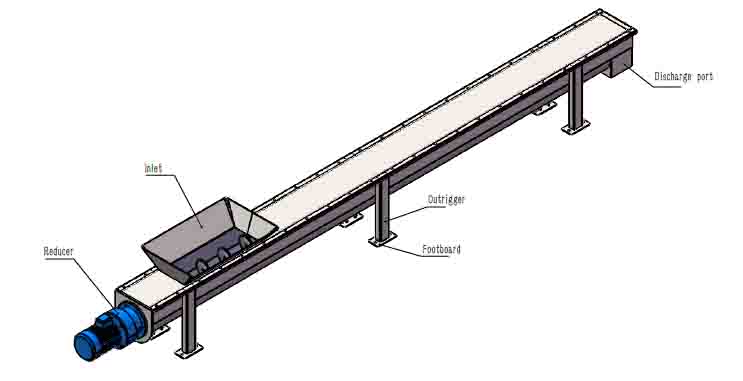
The first four technologies remove water from sludge. A screw conveyor serves a different purpose: it transports the dewatered cake to a storage bin, container, dryer, or subsequent treatment stage.
What Is Sludge Dewatering?
Sludge dewatering is a mechanical separation process that removes free and some bound water from concentrated sludge. It produces two main outputs: a solid-rich sludge cake and a liquid stream known as filtrate or centrate, depending on the equipment used.
The separated liquid may be returned to an appropriate point in the wastewater treatment process, subject to its quality and the plant’s operating requirements. Meanwhile, the cake can be transported for disposal, composting, thermal drying, or other approved treatment routes.
Dewatering does not usually produce completely dry solids. Instead, it reduces the sludge’s water content enough to make downstream handling more practical. The achievable result varies with the sludge’s physical and chemical characteristics, as well as the selected machine and operating conditions.
How Does Mechanical Sludge Dewatering Work?
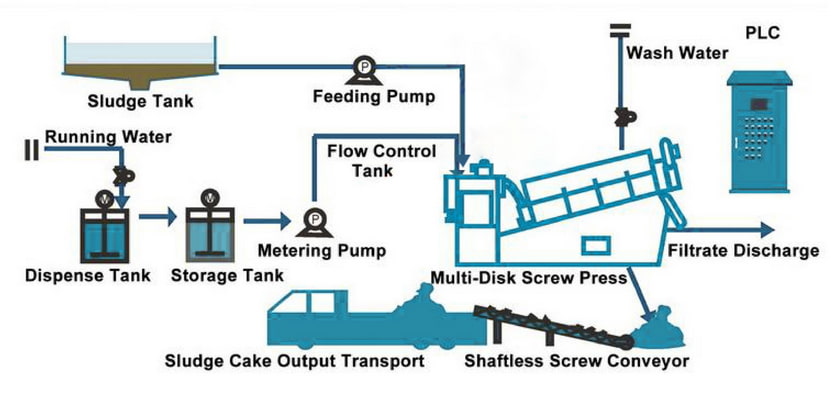
Although different machines use different mechanisms, a typical dewatering line follows several common stages.
1. Sludge Collection and Feed
Sludge is collected from an upstream process such as a clarifier, dissolved air flotation (DAF) unit, biological treatment system, or sludge thickener. A feed pump then delivers it to the dewatering equipment at a controlled flow rate.
Stable feeding is essential. Large variations in solids concentration or flow can reduce separation performance and make the final cake less consistent.
2. Polymer Conditioning
Many sludge types benefit from chemical conditioning before dewatering. A polymer dosing system helps fine particles form larger flocs, allowing water to separate more readily.
However, polymer demand is not the same for every sludge. Jar tests or controlled operating trials can help determine a suitable product and dosage. Excessive dosing increases chemical costs and may create handling problems, while insufficient conditioning can result in poor solids capture.
3. Mechanical Water Separation
The conditioned sludge enters the selected machine. A screw press uses a rotating screw and a filtration assembly; a belt press relies on gravity drainage and compression between filter belts; a centrifuge separates solids using centrifugal force. A filter press applies pressure through filter cloths during a batch cycle.
The best mechanism depends on the feed material, the required production rate, the target cake solids, and the plant’s maintenance capabilities.
4. Cake Discharge and Filtrate Management
After separation, the sludge cake is discharged for collection or further handling. Conveyors may move it to a storage container or another processing unit, while the separated liquid is collected through a dedicated drainage system.
A complete installation should also account for wash water, drainage, access for maintenance, and safe handling of residual sludge.
Main Types of Sludge Dewatering Equipment
Multi-Disc Screw Press
How a Multi-Disc Screw Press Works
A multi-disc screw press uses a slowly rotating screw inside a filtration assembly made of fixed and moving rings or discs. As sludge advances through the machine, free water drains through the filtration gaps. Toward the outlet, increasing resistance promotes further dewatering before the cake is discharged.
Key Benefits and Applications
One advantage of this design is its relatively low wash-water requirement. The arrangement of moving and fixed discs helps keep the filtration gaps clear during normal operation, reducing the risk of blockage when the machine is correctly selected and operated. Its compact configuration can also suit installations where floor space is limited.
Multi-disc screw presses are used in municipal wastewater treatment, food and beverage processing, slaughterhouses, livestock facilities, and other industrial applications. Actual performance depends on sludge characteristics, polymer conditioning, and machine configuration.
For more detail, see the Morvolous Multi-Disc Screw Press and Sludge Dewatering Guide.
Belt Filter Press
How a Belt Filter Press Works
A belt filter press removes water in stages. First, conditioned sludge spreads over a moving belt, allowing gravity drainage. Next, the material enters a wedge-shaped compression zone before passing between rollers that progressively squeeze out additional water.
Key Benefits and Operating Considerations
This technology is well suited to continuous operation. It can handle substantial sludge flows when correctly sized and may be attractive for plants that prioritize throughput and established mechanical dewatering methods.
Operators should consider belt washing, tracking, tension adjustment, polymer consumption, and the availability of wash water. These factors affect operating costs and the consistency of the discharged cake.
Morvolous provides a dedicated Belt Filter Press product page with equipment details and model information.
Decanter Centrifuge
How a Decanter Centrifuge Works
A decanter centrifuge separates solids and liquids through rapid rotation. Centrifugal force drives denser solids toward the bowl wall, while a conveyor transports the settled material toward the solids outlet.
Key Benefits and Limitations
The process operates continuously and can offer high throughput in a relatively compact installation. Nevertheless, power consumption, wear-part replacement, noise, vibration, and maintenance requirements need careful evaluation.
Centrifuges can be particularly suitable where processing capacity is a major priority and the plant has the resources to maintain high-speed rotating equipment.
Plate-and-Frame Filter Press
How a Filter Press Works
A plate-and-frame or recessed-plate filter press forces sludge through filter cloths under pressure. Solids accumulate inside the chambers, forming a cake, while filtrate passes through the cloth. Once the cycle is complete, the plates separate and the cake is discharged.
Key Benefits and Limitations
This batch process can achieve comparatively high cake solids for suitable sludge. It is often considered when reducing the mass of material sent for disposal is especially important.
However, cycle time, cake discharge, cloth cleaning, and the need for more operator attention may influence its suitability for continuous high-volume operation.
Sludge Dewatering Equipment: Comparison of Key Factors
| Selection Factor | Multi-Disc Screw Press | Belt Filter Press | Decanter Centrifuge | Filter Press |
|---|---|---|---|---|
| Operating Mode | Continuous | Continuous | Continuous | Usually batch |
| Water Consumption | Generally low | Higher due to belt washing | Generally low for process separation | Generally low for process separation |
| Energy Demand | Often low | Low to moderate | Often higher due to high-speed rotation | Depends on pumps and operating cycle |
| Cake Dryness | Sludge-dependent | Sludge-dependent | Sludge-dependent | Can be relatively high |
| Maintenance Focus | Screw, discs, drive, dosing | Belts, rollers, tracking, wash system | Bowl, conveyor, bearings, vibration | Filter cloths, plates, hydraulic system |
| Space Requirements | Often compact | Requires room for belt and service access | Compact machine footprint, with service clearance | Requires plate-opening and cake-discharge space |
| Typical Priority | Low water use and simple continuous operation | Continuous throughput | High-capacity continuous separation | Higher cake dryness |
These comparisons are general guidelines rather than guarantees. Results depend on the sludge source, feed concentration, conditioning, operating settings, and equipment design. A representative sludge sample and a performance test provide a stronger basis for selection than a technology comparison alone.
How to Select the Right Dewatering System
Selecting the right sludge dewatering equipment involves evaluating process requirements, operating conditions, and the intended destination of the separated solids. The following factors help narrow the options before requesting a quotation.
1. Start With Sludge Characteristics
Before comparing equipment models, identify the sludge source and its properties. Municipal biological sludge, DAF flotation sludge, dairy wastewater solids, and livestock manure sludge can behave very differently during dewatering.
A thorough assessment should include total solids concentration, organic content, particle size, oil and grease content, temperature, and any chemical characteristics that may affect floc formation. Where sludge production changes significantly over time, use representative operating data rather than a single measurement.
2. Calculate the Required Capacity
Equipment sizing should consider both the daily sludge load and the available operating hours. A plant producing a fixed dry-solids load may require a larger machine if dewatering is limited to a short daily window.
For example, a facility that generates 1,000 kg of dry solids per day and operates its dewatering line for five hours must process an average of 200 kg of dry solids per operating hour. This is a dry-solids loading calculation, not a hydraulic flow rate; the actual feed volume will depend on the incoming sludge concentration.
Peak production, planned downtime, and future expansion should also be included in the sizing review.
3. Define the Target Cake Solids
The final cake solids concentration affects disposal weight, transportation costs, and the design of downstream handling equipment. However, pushing for the highest possible cake dryness is not always the most economical choice.
A small increase in cake solids may require more energy, chemicals, or processing time, depending on the technology. The objective is to find a practical operating point that balances performance with total lifecycle cost.
4. Review Operating and Maintenance Costs
The purchase price is only one part of the overall investment. Polymer, electricity, wash water, replacement parts, labor, and sludge disposal can all contribute to operating expenses.
For example, a belt filter press may provide an attractive solution for a plant with high throughput and readily available wash water. A multi-disc screw press may be worth evaluating where low wash-water demand, compact installation, and simplified operation are priorities.
5. Check Installation and Downstream Handling
The available footprint, building height, drainage, power supply, maintenance access, and sludge discharge location can narrow the options considerably. It is also important to plan how the cake will leave the machine.
Morvolous offers a Shaftless Screw Conveyor for transporting dewatered sludge, screenings, and other difficult bulk materials. Integrating suitable conveying equipment can help create a more orderly and reliable solids-handling line.
Common Applications Across Industries
Different industries generate sludge with different physical and chemical characteristics. Matching the dewatering technology to the source material is essential for stable performance.
Municipal Wastewater Treatment
Municipal plants produce primary sludge, waste activated sludge, and mixed sludge. Dewatering reduces the volume of material that must be stored and transported, helping the plant manage routine residuals handling.
The appropriate equipment depends on plant size, sludge characteristics, staffing, and the local disposal route. Larger facilities may prioritize throughput, while smaller installations may place greater value on compact equipment and straightforward maintenance.
Food Processing and Slaughterhouses
Food processing wastewater may contain organic solids, fats, oils, and grease. Sludge from flotation and biological treatment can vary significantly with production schedules and cleaning operations.
A reliable dewatering system should account for these fluctuations. Polymer selection, upstream solids separation, and wash-down arrangements are important when designing equipment for industrial environments.
Livestock and Agricultural Wastewater
Livestock wastewater can contain manure fibers, organic solids, and variable concentrations of suspended material. Upstream screening and solid-liquid separation can reduce the load entering subsequent treatment stages.
Mechanical dewatering may then be used to reduce the volume of biological sludge or other residual solids. The most appropriate solution depends on the farm’s wastewater treatment process and its plans for handling the separated solids and liquid.
Industrial Wastewater
Paper mills, textile factories, chemical plants, and other industrial facilities produce sludges with widely varying characteristics. Some contain fine particles that require effective conditioning, while others may have abrasive or chemically challenging components.
For these applications, equipment materials, corrosion resistance, wear protection, and chemical compatibility should be reviewed alongside dewatering performance.
How Dewatering Connects With Sludge Drying
Mechanical dewatering and thermal drying serve different purposes. Dewatering removes water through filtration, compression, or centrifugal separation, whereas drying uses heat and mass transfer to evaporate additional moisture.
When a facility requires a dried product, mechanical dewatering may be installed upstream of a dryer to reduce the amount of water that must be evaporated. This can lower the thermal load compared with sending a more dilute sludge directly to the drying stage.
Nevertheless, a drying system is not automatically necessary after dewatering. The final decision depends on disposal regulations, transport distance, energy availability, and whether the sludge will be reused or processed further.
The U.S. Environmental Protection Agency provides background on thermal treatment and biosolids management in its Heat Drying Fact Sheet. This resource helps readers understand the role of drying within a broader solids-management strategy.
Common Dewatering Problems and Practical Solutions
Dewatering performance can change with sludge composition, chemical conditioning, and equipment settings. The following troubleshooting points help operators identify common causes of poor separation and improve day-to-day process stability.
1. Wet or Inconsistent Cake
A wet cake may result from unsuitable polymer dosage, changes in feed solids, excessive feed rate, or incorrect machine settings. Begin by checking the sludge feed and conditioning system before making major equipment adjustments.
2. Poor Solids Capture
If too many solids escape into the filtrate or centrate, review polymer mixing, floc quality, filtration condition, and the operating parameters of the machine. Persistent losses may indicate that the selected technology is not well matched to the sludge.
3. High Chemical Consumption
Excessive polymer use increases operating costs and may reduce process stability. Conduct dosage trials, verify polymer preparation, and ensure that mixing is sufficient to form stable flocs without breaking them apart.
4. Frequent Equipment Blockage
Fibrous material, foreign objects, or poorly conditioned sludge can interfere with operation. Effective upstream screening and appropriate equipment selection reduce these risks. For screw presses, routine inspection of the filtration assembly and drive components also supports stable performance.
5. Rising Maintenance Costs
Wear, improper alignment, insufficient cleaning, and operating beyond the intended capacity can shorten component life. A preventive maintenance schedule should cover drive systems, bearings, filtration elements, belts where applicable, pumps, and safety devices.
Questions to Ask Before Requesting a Quotation
A useful equipment inquiry should provide enough information for the supplier to assess both process performance and installation requirements.
- What is the sludge source and expected daily production?
- What are the feed solids concentration and required cake solids?
- How many hours per day will the machine operate?
- Is polymer conditioning required, and has it been tested?
- What utilities are available, including electricity and wash water?
- How will the cake and separated liquid be handled?
- Are there space, access, noise, or environmental restrictions?
- Is future capacity expansion expected?
With these details, suppliers can recommend a suitable configuration and clarify which performance figures need to be confirmed through testing.
Frequently Asked Questions
What Is the Best Sludge Dewatering Equipment?
There is no single best machine for every application. A multi-disc screw press may suit plants prioritizing low wash-water use and compact design, while a belt filter press may be attractive for continuous high-throughput operation. Centrifuges and filter presses have their own advantages when capacity, footprint, or cake dryness is the main consideration.
Does Sludge Dewatering Eliminate the Need for Drying?
Not necessarily. Dewatering removes a substantial portion of the water mechanically, but the cake still contains moisture. Drying is considered when a lower final moisture content is required for transport, disposal, or further processing.
How Can Operating Costs Be Reduced?
Review the complete process rather than the machine alone. Stable feed concentration, appropriate polymer dosage, correct sizing, preventive maintenance, and efficient cake handling can all improve operating economics. The most effective measures depend on the existing installation and sludge characteristics.
Can One Machine Treat Different Types of Sludge?
Some machines can handle multiple sludge types, but performance may change when the feed characteristics change. A new sludge source may require different conditioning, operating settings, or a different equipment configuration. Testing representative samples is advisable before confirming performance expectations.
What Information Is Needed to Size a Dewatering Machine?
The main inputs are sludge type, daily dry-solids load, feed solids concentration, available operating hours, required cake solids, and the intended downstream handling method. Site conditions and utility availability should also be considered during engineering.
Conclusion
Selecting suitable sludge dewatering equipment involves balancing process performance, throughput, cake dryness, operating expenses, and maintenance requirements. Screw presses, belt filter presses, centrifuges, and filter presses each address different operating priorities, so the final decision should be based on the sludge itself and the plant’s treatment objectives.
For wastewater facilities seeking a practical solids-handling solution, an integrated approach can be more effective than selecting a machine in isolation. Proper conditioning, reliable dewatering, and suitable cake conveying help create a system that is easier to operate and maintain over its service life.
Morvolous supplies mechanical wastewater treatment equipment, including multi-disc screw presses, belt filter presses, and shaftless screw conveyors. Contact the team with your sludge characteristics, processing requirements, and installation conditions to discuss an appropriate configuration.