
What happens after grit settles — and why the classifier and washer determine whether your grit is a manageable waste stream or a persistent operational problem
The grit classifier washer sits at the end of the grit removal process and receives the least attention of any headworks component. Grit chambers get sized carefully. Bar screens get specified in detail. That classifier, however, often appears as one line in the equipment schedule: “grit classifier, complete, to suit.” A poorly specified unit produces high organic content, disposal problems, and odour complaints that persist for the plant’s life. A well-specified classifier and washer produces a clean, dry, landfill-acceptable output that the operations team barely notices. This guide covers how grit classifiers and washers work, how to size them, and the specification details that determine which outcome you get.
The focus here is on screw classifiers and integrated washer-classifiers — the dominant technology for municipal headworks grit handling. Hydrocyclone pre-classification systems are noted where relevant.
For reference on disposal classification, the US EPA biosolids guidance covers criteria that apply to classified grit as well as biosolids. Many international regulatory frameworks use it as a baseline for landfill classification decisions.
What a Grit Classifier Actually Does
Raw grit from a grit chamber arrives as a dilute slurry. Vortex chambers typically produce 1–5% grit by volume. Aerated chambers often produce a more dilute stream — sometimes below 1%. This slurry contains grit particles, water, and a significant fraction of fine organic material that co-settled with the grit.
The Classification Function
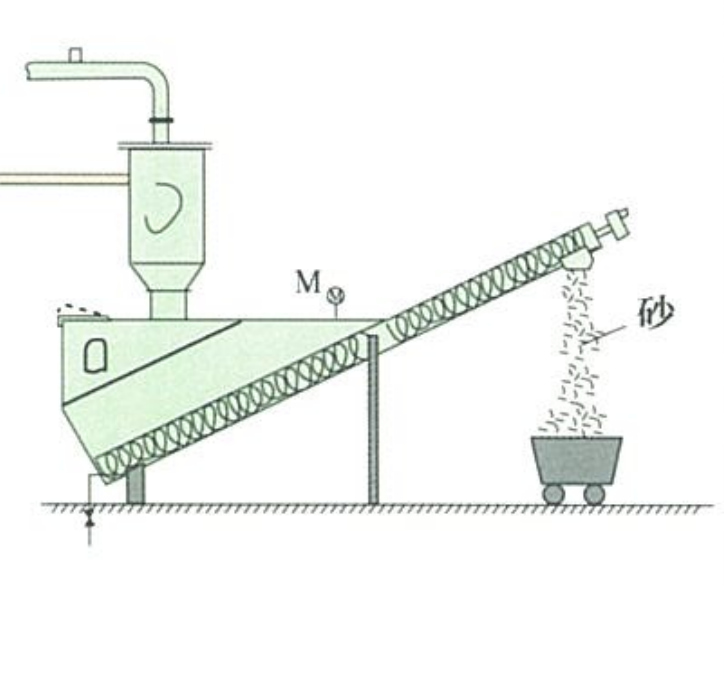
Classification separates grit particles from the slurry by particle size and density. A screw classifier uses a slow-rotating screw in an inclined trough. Grit particles — denser and larger than the target cut size — settle to the trough floor and travel up the screw to the discharge end. Fine particles and organics stay suspended in the water and overflow at the lower end, returning to the headworks channel or primary settler.
The cut size — the minimum particle size the classifier retains — is typically 0.15–0.20 mm for municipal applications. Particles above the cut size report to the classified grit output. A correctly sized and maintained classifier produces a relatively dry, concentrated grit output at 70–80% solids by mass — a significant reduction from the dilute slurry input.
Why Classification Alone Is Not Enough
Classified grit without washing typically contains 10–30% organic material by dry weight. This organic fraction generates hydrogen sulfide and other odorous compounds as it decomposes. In warm climates, a skip bin of unwashed classified grit starts generating measurable odour within hours. Disposal contractors frequently reject or surcharge unwashed grit as organic waste rather than inert mineral material.
Washing removes the organic fraction by agitation in clean water. A combined washer-classifier performs both functions in sequence. Organic content after washing typically drops below 5% by dry weight. This meets standard landfill classification in most regulatory regimes and eliminates the acute odour problem at the skip.
Screw Classifier: Mechanical Details
The screw classifier is the industry standard for municipal grit classification. Understanding its mechanical details helps with both specification and troubleshooting.
Screw and Trough Geometry
The screw is a helical flight on a central shaft, rotating inside a U-shaped trough inclined at 15–30° from horizontal. The lower end submerges in a settling pool — the inlet zone where grit slurry enters and grit particles settle. The upper end discharges classified grit at the elevated outlet.
Screw diameter and pitch determine throughput capacity. Larger diameter screws handle higher grit volumes but require more torque to rotate. Pitch — the distance between successive screw flights — affects how aggressively the screw conveys settled particles. Tighter pitch moves particles faster but increases the risk of organic carryover. Wider pitch is gentler but reduces conveying capacity. Most manufacturers offer 2–3 standard pitch options for a given diameter.
Settling Pool Design
The settling pool at the lower end is where the actual separation occurs. Slurry enters at one end. Grit particles settle to the floor under gravity. The screw picks them up and conveys them upward. Overflow carries fine organics and sub-cut-size particles back to drain.
Pool dimensions determine the surface overflow rate, which controls the cut size. A larger pool surface area gives a lower overflow rate and a finer cut size — more particles settle and are captured. Most manufacturers size the settling pool for the specified cut size at the design slurry flow rate. Confirm the pool is sized for peak slurry input, not average flow — because slurry arrives fastest when the grit chamber is under highest loading.
Screw Material and Wear
Screw flights contact grit particles continuously. Abrasive wear on the flight edges is the primary consumable maintenance item. Standard carbon steel flights wear rapidly in grit service. Hardened steel — typically 400–500 Brinell hardness — extends flight life significantly. Chromium carbide overlay on flight edges gives the longest wear life and is the preferred specification for high-grit-load applications.
Flight wear is gradual and reduces classification efficiency before causing obvious mechanical failure. Annual measurement of flight depth against the manufacturer’s minimum specification catches the problem before a classifier runs on worn flights for months unnoticed.
Integrated Washer-Classifier: How Washing Works
A washer-classifier integrates a washing stage — typically a separate agitation chamber — with the screw classifier. The washing stage sits upstream of the classification screw or in a dedicated section of the trough. Classified grit passes through the washing zone before discharge.
Countercurrent Washing
Countercurrent washing is the most effective configuration. Clean washwater enters at the discharge end of the screw and flows back toward the inlet, washing grit as it travels upward. Organic particles released by agitation travel with the washwater flow back toward the settling pool overflow. Grit contacts progressively cleaner water as it moves toward discharge, maximising organic removal with minimum washwater consumption.
Washwater consumption for a countercurrent washer-classifier is typically 1–4 m³ per tonne of dry grit processed. At a 20,000 m³/day municipal plant generating 2–4 tonnes of dry grit per week, this is modest. Plant effluent or process water supply handles it comfortably.
Washing Effectiveness by Organic Type
Washing effectiveness varies with the type of organic contamination. Water-soluble organics — dissolved fats, sugars, proteins — wash out readily in the agitation zone. Adherent organics — compacted faecal matter, clay-bound organic fines — require more aggressive agitation and longer contact time. Fibrous materials partially wash out but some fraction remains mechanically entangled with the grit particles.
In practice, a correctly sized washer-classifier reduces organic content to 3–8% by dry weight in typical municipal sewage conditions. Industrial catchments with high fat and food waste content may achieve 5–12%. Verify this against local disposal contractor requirements before commissioning.
35,000 m³/day plant serving a mixed residential and light-commercial catchment. The original headworks specification included a screw classifier without washing — a cost-reduction decision made during value engineering. Organic content of classified grit averaged 24% by dry weight in the first operational year. The local disposal contractor reclassified the grit as organic waste, tripling the disposal cost per tonne. Odour complaints from plant staff began within the first month of operation.
A washing stage was retrofitted to the existing classifier eighteen months after commissioning. Post-retrofit organic content dropped to an average of 6%. The disposal contractor returned to standard landfill rates. Retrofit capital cost of roughly $28,000 was recovered in disposal savings within approximately fourteen months. Notably, the washing stage had been available from the original vendor at a $19,000 premium — excluded during value engineering without calculating the disposal cost differential.
Sizing a Grit Classifier: The Key Parameters
Classifier sizing requires three inputs: peak slurry flow rate from the grit chamber, target cut size, and grit production rate. Each has a design decision embedded in it.
Peak Slurry Flow Rate
The classifier must handle the peak slurry flow from the grit chamber extraction system — not the average flow. Peak extraction rate occurs when the grit chamber is under maximum loading, typically during wet-weather events. For an air lift extraction system on a vortex chamber, peak slurry flow is typically 2–5× the continuous average rate.
Undersizing the classifier for average slurry flow creates a backlog during peak events. The settling pool fills above the design overflow level. Slurry bypasses the settling pool and exits with the overflow. Grit that should be captured goes to drain — precisely when grit removal is most critical.
Target Cut Size
Cut size selection involves a trade-off. A finer cut size — 0.15 mm — captures more of the fine grit fraction that causes downstream abrasion damage. However, it also captures more fine organic particles that co-settle with fine grit, increasing the organic content of the classified output and the demand on the washing stage.
A coarser cut size — 0.25 mm — produces cleaner classified grit with less organic contamination, but misses the fine sand fraction. For most municipal applications, 0.20 mm is the standard design target, balancing fine grit capture against organic carryover. When in doubt, 0.20 mm is the right default.
Grit Production Rate and Bin Sizing
Grit production rate — dry tonnes per day or per week — determines the discharge conveyor capacity and skip bin sizing. Municipal separate sewer systems typically generate 0.5–3 tonnes per week per 10,000 m³/day of average flow. Combined systems generate 2–8 tonnes per week per 10,000 m³/day. Use the upper end of the range for systems with significant industrial contribution or aged infrastructure.
Skip bin sizing should accommodate at least three days of peak-week grit production without overflowing. Overfull bins create spillage at the classifier discharge. Most mid-size municipal plants size for a 5–7 day bin capacity at average production, with planned weekly collection.
| Parameter | Typical Value | Design Notes |
|---|---|---|
| Cut size | 0.20 mm (standard) | 0.15 mm for high-abrasion protection; 0.25 mm for cleaner output |
| Slurry input concentration | 1–8% grit by volume | Confirm with grit chamber vendor; aerated chambers often lower |
| Classified output moisture | 20–30% | Higher moisture = heavier disposal weight |
| Organic content (no wash) | 10–30% dry weight | Disposal classification often fails above 10–15% |
| Organic content (with wash) | 3–8% dry weight | Acceptable for standard landfill in most regulatory frameworks |
| Washwater consumption | 1–4 m³/tonne dry grit | Use plant effluent; dedicated supply line with pressure alarm |
| Screw inclination | 15–30° from horizontal | Steeper = more drainage, shorter footprint |
Hydrocyclone Pre-Classification: When It Makes Sense
For plants with very high grit loads, a hydrocyclone can act as a pre-classifier upstream of the screw classifier. It concentrates the grit fraction from the dilute slurry using centrifugal force, reducing the volumetric load on the downstream screw classifier.
How Hydrocyclones Fit the Process
A hydrocyclone has no moving parts. Slurry enters tangentially under pressure, creating a centrifugal vortex. Dense grit particles migrate to the wall and exit as a concentrated underflow. Fine particles and organics exit as overflow, returning to the headworks channel. The concentrated underflow — typically 15–30% solids by volume — feeds the screw classifier at a much reduced volumetric flow rate.
This arrangement allows a smaller screw classifier to handle the same grit production rate, because it processes concentrated underflow rather than dilute chamber slurry. However, hydrocyclones require a feed pump to maintain inlet pressure — typically 50–150 kPa — adding a mechanical component and energy cost. For plants where slurry dilution is the primary sizing constraint, the combination works well. For plants with moderate grit loads, the added complexity rarely justifies the classifier size saving.
Discharge and Grit Handling Downstream
What happens after classified and washed grit discharges from the screw is as operationally important as the classification itself. Poorly designed discharge arrangements create spillage, odour, and maintenance headaches that fall on the operations team every day.
Discharge Chute and Skip Interface
Classified grit discharges at the elevated end of the screw into a chute or conveyor leading to a skip bin. Chute angle must exceed 55° from horizontal — classified grit with 20–30% moisture content does not self-drain reliably on shallower slopes. Smooth stainless steel or UHMW-PE lining prevents adhesion. Rough surfaces, weld seams, and fasteners in the flow path all create adhesion points where moist grit accumulates.
The skip bin should have a close-fitting lid to contain odour between collections. Even well-washed grit generates some odour over several days, particularly in warm climates. A covered bin with a rubber seal reduces odour release significantly at minimal cost.
Grit Conveyor Considerations
At larger plants where the classifier discharges into a conveyor rather than directly into a skip, abrasion resistance matters. Grit is among the most abrasive materials a conveyor handles. Belt wear, trough liner wear, and roller cover wear are all elevated compared to biosolids or screenings service. Specify abrasion-resistant belt covers and replaceable trough liners from the outset, rather than discovering their necessity at the first conveyor replacement.
Grit classifiers get specified last and budgeted least. On several projects I have reviewed, the classifier was the first item cut when the headworks budget ran over. The result is a plant that removes grit from the wastewater adequately but cannot handle the extracted material cleanly. The operations team manages that consequence every day for the next twenty years. Spending the additional $20,000–30,000 for a washer-classifier rather than a classifier alone is one of the highest-value decisions in a headworks equipment budget. It rarely gets made because it happens at the wrong stage, by people who will not operate the plant.
Common Classifier Failures and Causes
Grit classifier failures are usually gradual and go unnoticed until disposal costs rise or odour complaints begin. Knowing the failure modes helps design against them and diagnose them early.
High Organic Content in Classified Output
The most common operational complaint. Causes include blocked spray nozzles or failed washwater supply to the washing stage. Screw flight wear reduces effective settling pool retention time. Slurry feed rate may exceed classifier capacity during peak events. Grit chamber performance degradation also causes higher organic co-settlement in the classifier.
Diagnose by measuring organic content in the classified output — loss on ignition at 550°C is the standard method. If organic content has risen above the commissioning baseline, trace through each potential cause systematically. The grit chamber is often the upstream culprit.
Grit Bypassing to Overflow
Grit exits with the overflow instead of reporting to the classified output. Causes include slurry feed rate exceeding settling pool capacity, worn screw flights allowing particles to pass under the flight, and pool weir level set too low, reducing effective settling area.
Confirm by collecting the overflow in a bucket for five minutes during peak operation and measuring the grit content. Any visible grit in the overflow indicates bypass. Fine grit bypass is particularly problematic — fine particles cause the most downstream abrasion damage and are the hardest to recapture.
Screw Jamming
Jamming occurs when large objects — stones, metal fragments, dense plastic — wedge between the flight and the trough. Most screw classifiers have a torque-limiting coupling that stops the drive before damage occurs. Clearing a jam requires stopping the unit, partially dewatering the trough, and manually removing the obstruction.
Frequent jamming indicates the upstream grit chamber or extraction system is passing objects larger than the classifier’s design tolerance. A coarse debris screen on the slurry feed line — typically 20–25 mm openings — prevents most jamming events at minimal cost. This screen is not standard on most classifier packages; it requires explicit specification.
Cannery and food processing complex, 8,000 m³/day. The washer-classifier had been in service for approximately two years when the operations team noticed that classified grit output had become noticeably wetter and darker over a three-month period. Disposal weight per skip had increased by roughly 40% at similar grit volumes. Organic content measurement showed 19% — up from 6% at commissioning.
Investigation found two concurrent issues. First, spray nozzles in the washing stage were 60% blocked with mineral scale. Second, the slurry feed pump was delivering roughly 1.8× its design flow rate — a control valve had been left fully open after a maintenance event and never reset. Both issues were corrected within a day. Organic content returned to below 7% within a week. The maintenance checklist was updated to include monthly nozzle inspection and quarterly slurry feed rate verification — neither had been in the original vendor-supplied maintenance schedule.
Specification Checklist
Before issuing a grit classifier specification, confirm these parameters are explicitly stated rather than left to vendor defaults.
Classification and Washing Performance
Cut size in millimetres — stated explicitly, not implied by “standard municipal duty.” Settling pool surface area — calculated for peak slurry flow rate, not average. Screw diameter, pitch, and rotational speed — with vendor justification for the selection at the specified duty. Organic content target in classified output — typically ≤5% by dry weight. Washwater flow rate and supply pressure. Countercurrent washing arrangement confirmed. Spray nozzle type — individually removable without decommissioning the unit.
Materials, Wear and Integration
Screw flight material — hardened steel minimum, chromium carbide overlay for high-grit applications. Trough liner material — abrasion-resistant steel or UHMW-PE. Minimum flight depth specification from the manufacturer — the threshold below which replacement is required. Slurry feed connection size and maximum inlet velocity. Overflow return connection — to headworks channel or primary settler, not to stormwater drain. Discharge chute angle — minimum 55° from horizontal. Coarse debris screen on slurry feed line — 20–25 mm aperture, stainless steel, manually cleanable.
FAQ
Grit Classifier FAQ: Selection and Operation
Grit Classifier FAQ: Operation and Maintenance
Grit Classifier vs Washer: Key Distinctions
Grit Classifier FAQ: Retrofits and Monitoring
Specifying Grit Handling Equipment for Your Headworks?
Morvolous Engineering Team works through classifier sizing, washer performance requirements, discharge integration, and disposal classification before equipment procurement. Reach out for a technical review of your headworks grit handling specification.
Contact Morvolous →