
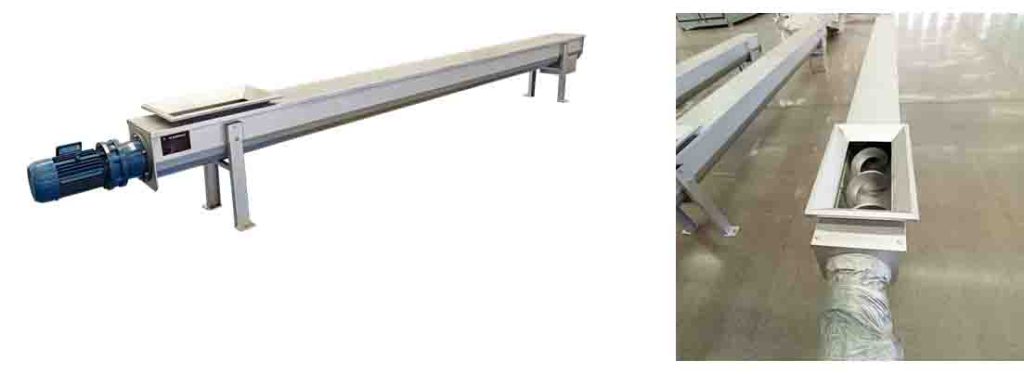
How to select a reliable conveyor for thickened sludge, dewatered cake, and dried biosolids.
Introduction
Sludge handling does not end when a dewatering machine separates water from solids. Plants must also transfer sludge between equipment, storage areas, drying systems, and disposal points. Poor material transfer can cause blockages, spills, unpleasant odors, and unplanned shutdowns.
Different sludge conditions require different conveying methods. Liquid sludge may move through pipelines, while sticky dewatered cake often requires a mechanical conveyor. Dried biosolids behave differently again, especially when the material becomes granular or dusty.
The right solution depends on moisture content, material consistency, transfer distance, elevation, and downstream requirements. Engineers should evaluate the complete process rather than select a conveyor by capacity alone. The Water Environment Federation provides wastewater professionals with technical resources and industry knowledge that can support broader solids-handling and treatment planning.
Quick Reference: Sludge Conveyor Selection
| Parameter | Preliminary design guidance |
|---|---|
| 1. Main function | Transfer sludge between treatment stages |
| 2. Common conveyor types | Screw, belt, chain, and pneumatic systems |
| 3. Liquid sludge transfer | Usually evaluated with pumps and pipelines |
| 4. Sticky sludge cake | Often suitable for a shaftless screw conveyor |
| 5. Dry granular biosolids | May suit shafted screws or belt conveyors |
| 6. Short, enclosed transfer | Screw conveyors are a common option |
| 7. Long horizontal transfer | Belt conveyors may be advantageous |
| 8. Inclined transfer | Requires checking angle, rollback, and capacity |
| 9. Corrosive conditions | May require stainless steel or protective coatings |
| 10. Abrasive material | May require wear-resistant liners and flights |
| 11. Variable feed | May benefit from a variable-frequency drive (VFD) |
| 12. Final sizing | Requires material tests, layout data, and duty calculations |
These are preliminary selection guidelines, not guaranteed performance specifications. Final design values depend on the actual sludge, conveyor geometry, and operating conditions.
1. What Is a Sludge Conveying System?
A sludge conveying system moves solids from one process location to another. It may connect a thickener to a dewatering machine, a press to a storage hopper, or a dryer to a packaging line.
The system can include conveyors, feed hoppers, chutes, drives, supports, covers, controls, and discharge equipment. Its design must match the upstream discharge pattern and downstream demand.
Common Applications
- Transfer thickened sludge to mechanical dewatering equipment.
- Move dewatered cake into a dryer or collection container.
- Transport dried biosolids to a silo, bagging station, or truck.
- Handle screenings and other solids removed during preliminary treatment.
- Reduce manual handling between equipment and storage areas.
Where It Fits in the Process
A typical sludge treatment line may follow this sequence:
Thickening → Dewatering → Mechanical conveying → Drying, storage, or disposal
Not every plant needs every stage. Some facilities convey wet sludge directly to a disposal container. Others integrate conveyors with thermal drying and automated packaging.
The conveying equipment must accommodate the actual material at each transfer point. A design suitable for dry granules may struggle with sticky cake, even when both materials have similar bulk densities.
2. Main Types of Sludge Conveyors
Several technologies can move sludge, but their suitability varies with consistency, distance, and process layout.
Screw Conveyors
A screw conveyor uses a rotating helical flight to move material through a trough or enclosed tube. It offers a compact arrangement and can limit spillage when properly enclosed.
Common applications include sludge cake transfer, dryer feeding, and movement between nearby process units. Engineers must consider torque, wear, buildup, and access for cleaning.
Shaftless Screw Conveyors
A shaftless design removes the central shaft found in conventional screw conveyors. This can reduce wrapping problems when handling sticky or fibrous materials.
It is often considered for dewatered sludge cake and wastewater screenings. However, the spiral, liner, and drive still require application-specific sizing. Abrasive sludge can accelerate liner wear, so maintenance access remains essential.
Belt Conveyors
Belt conveyors carry material on a continuous moving belt. They can suit larger throughputs and longer horizontal routes, depending on the material and layout.
Their main limitations include spillage, odor containment, belt cleaning, and handling very sticky cake. Covers and suitable transfer chutes can improve containment, but they do not remove the need for proper belt tracking and maintenance.
Chain and Drag Conveyors
Chain conveyors move material using flights or scrapers attached to a moving chain. Enclosed drag conveyors can handle certain dry or semi-dry bulk solids.
Their suitability depends on material abrasiveness, moisture, and the required conveying route. Designers should assess chain wear, drive loads, and cleaning requirements before specifying them for sludge duty.
Pneumatic Conveying Systems
Pneumatic systems move suitable dry particles through pipelines using air. They may be considered for dried biosolids or powder-like products where enclosed transfer is important.
Wet or sticky sludge is generally unsuitable for conventional pneumatic conveying. Dust control, abrasion, energy consumption, and product characteristics also influence system selection.
3. Comparison of Conveyor Types
| Type | Suitable material | Main advantages | Key limitations |
|---|---|---|---|
| Shafted screw | Free-flowing solids and suitable granular material | Established design; compact layout | Fibrous material may wrap around the shaft |
| Shaftless screw | Sticky cake, screenings, and some fibrous solids | Reduced central-shaft wrapping risk | Liner wear and cleaning still require attention |
| Belt conveyor | Suitable cake, granules, and larger bulk loads | Flexible layouts; good for longer routes | Spillage and odor control can be challenging |
| Chain or drag conveyor | Selected dry or semi-dry bulk solids | Enclosed transfer options | Chain wear and drive loads need evaluation |
| Pneumatic conveyor | Suitable dry particles and powders | Enclosed pipeline transport | Not generally suitable for wet, sticky cake |
| Pump and pipeline | Pumpable liquid sludge | Closed transfer over suitable distances | Requires sludge-compatible pumps and piping |
Engineering judgment: No conveyor type is universally best. Select according to sludge behavior, operating duty, layout, maintenance resources, and the required level of containment.
4. Key Design Factors
Moisture Content and Material Consistency
Moisture content affects stickiness, flow behavior, and the force required for conveying. Two sludges with the same moisture percentage may still behave differently because of fiber content, organic matter, ash, and polymer conditioning.
Obtain representative samples where possible. Bench tests or supplier trials can help confirm whether the material bridges, smears, wraps, or flows consistently.
Capacity and Feed Pattern
Conveyor capacity must match both the incoming material and the receiving process. A batch filter press may discharge sludge in intermittent loads, while a centrifuge may produce a more continuous stream.
For preliminary mass-balance calculations:
\[ \text{Wet sludge flow}=\frac{\text{Dry solids flow}}{\text{Dry solids mass fraction}} \]
For example, a process producing 200 kg/h of dry solids at 25% dry solids requires approximately 800 kg/h of wet cake transfer, assuming the stated solids fraction applies to the conveyed cake.
This is a mass-flow estimate, not a final conveyor capacity. Bulk density, fill level, screw speed, and operating margin are also needed for equipment sizing.
Distance, Inclination, and Layout
Longer routes increase support, drive, and maintenance requirements. Inclined conveying can reduce effective capacity and introduce rollback or material buildup.
Confirm the horizontal distance, vertical lift, inclination, inlet position, and discharge height before requesting a quotation. A layout drawing helps identify transfer chutes, access platforms, and potential interference with nearby equipment.
Materials of Construction
Carbon steel with a suitable protective coating may work for many general applications. Stainless steel, including grades such as SS304 or SS316, may be considered where corrosion or hygiene requirements justify it.
The correct material depends on sludge chemistry, chloride exposure, temperature, cleaning chemicals, and abrasion. Material selection should follow actual site conditions rather than a default specification.
Sealing, Odor, and Safety
Covered or enclosed conveyors can help reduce odor release and material spillage. They also require safe inspection access and suitable cleaning arrangements.
Guards, emergency stops, isolation procedures, and safe maintenance access must be addressed during design. Applicable local regulations and recognized conveyor safety practices should guide the final installation.
5. Conveyor Selection Matrix
Use the following matrix as a first-stage screening tool.
| Operating condition | Option to evaluate first | Additional checks |
|---|---|---|
| Sticky dewatered cake | Shaftless screw conveyor | Torque, liner wear, cleanout access |
| Fibrous screenings | Shaftless screw or suitable drag conveyor | Wrapping, blockage, and rag buildup |
| Dry, free-flowing granules | Shafted screw or belt conveyor | Dust, throughput, and transfer height |
| Long horizontal route | Belt conveyor | Containment, belt tracking, and spillage |
| Enclosed transfer requirement | Covered screw or enclosed drag conveyor | Inspection, sealing, and cleaning |
| Pumpable liquid sludge | Sludge pump and pipeline | Pumpability, pressure loss, and blockage risk |
| Dried powder | Enclosed screw or pneumatic system | Dust control, abrasion, and product behavior |
The table narrows the options; it does not replace detailed engineering. A supplier should confirm the selection against the material data and operating duty.
6. Integration with Dewatering and Drying Equipment
Conveyors operate as part of a wider process line. Their performance can affect equipment before and after the transfer point.
Upstream Integration
Dewatering machines can discharge material at different rates and consistencies. Filter presses often release cake in batches, while some continuous machines provide a steadier discharge.
A receiving hopper or buffer arrangement may help manage intermittent feed. Its size should reflect the batch volume, available space, and downstream operating schedule.
Downstream Integration
Dryers often require stable feed to maintain consistent operating conditions. Irregular loading may affect residence time, thermal demand, and final product moisture.
Conveyors serving a dryer should therefore be evaluated alongside the feed hopper, dryer inlet, discharge arrangement, and control system. A coordinated design reduces the risk of mismatched capacities.
Project Anchor 1: Municipal Sludge Transfer
Illustrative engineering scenario, not a verified customer case.
A medium-sized municipal plant needs to move dewatered cake from a press room to a covered collection point. The layout has limited floor space and requires odor control. An enclosed screw conveyor may be worth evaluating, subject to cake consistency, route geometry, and cleaning access.
Project Anchor 2: Industrial Sludge Feeding
Illustrative engineering scenario, not a verified customer case.
An industrial wastewater facility plans to add a thermal dryer after dewatering. The current discharge varies between batches, creating inconsistent dryer loading. A buffer hopper and controlled screw feeder could improve feed stability if testing confirms that the cake can be conveyed reliably.
Project Anchor 3: Dried Biosolids Handling
Illustrative engineering scenario, not a verified customer case.
A treatment plant needs to transfer dried biosolids from a dryer to a storage silo. Dust containment and product flow become key design considerations. An enclosed screw or suitable pneumatic system may be evaluated after checking particle size, moisture, abrasiveness, and required throughput.
7. Maintenance and Troubleshooting
A practical maintenance plan should reflect the material and operating schedule. Sticky cake and abrasive sludge can create very different wear patterns.
| Symptom | Possible cause | Recommended check |
|---|---|---|
| Conveyor blockage | Sticky sludge, bridging, or foreign material | Inspect inlet geometry and sludge consistency |
| High motor load | Excessive loading, buildup, or mechanical resistance | Check torque, buildup, and drive condition |
| Uneven discharge | Irregular upstream feed or poor hopper flow | Review buffer capacity and feed control |
| Excessive wear | Abrasive solids or unsuitable liner material | Inspect flights, liners, and material properties |
| Odor or leakage | Failed seals, uncovered transfer points, or buildup | Check covers, seals, and cleaning procedures |
| Frequent shutdowns | Poor integration or inadequate maintenance access | Review interlocks, duty cycle, and service plan |
Routine inspections should cover the drive, gearbox, bearings, flights, liners, seals, supports, and safety devices. Follow the manufacturer’s maintenance schedule and isolate equipment before performing service.
8. RFQ Checklist for Sludge Conveying Equipment
A complete request for quotation helps suppliers assess the application accurately.
| Required information | Details to provide |
|---|---|
| Sludge source | Municipal, industrial, chemical, food, paper, or other |
| Material condition | Liquid, thickened, dewatered cake, or dried solids |
| Moisture or dry solids | Measured value and expected variation |
| Throughput | kg/h, t/h, or batch quantity |
| Bulk density | Measured or estimated value |
| Route | Horizontal length, elevation, inclination, and layout |
| Feed arrangement | Hopper, press discharge, centrifuge, or dryer outlet |
| Discharge destination | Dryer, silo, container, truck, or packaging line |
| Operating schedule | Continuous, batch, shifts, and daily operating hours |
| Construction material | Coated carbon steel, stainless steel, or specified alternatives |
| Environmental requirements | Covers, odor containment, dust control, or washdown |
| Controls | Fixed speed, VFD, overload protection, and process interlocks |
| Maintenance needs | Access covers, cleanout points, and spare parts |
| Site conditions | Indoor or outdoor installation, temperature, and available space |
Where information is unavailable, identify the uncertainty rather than inventing a value. Suppliers can then state their assumptions clearly in the proposal.
9. Common Selection Mistakes
Several avoidable errors can reduce reliability after installation.
- Sizing from wet flow alone. Dry solids, moisture, and bulk density also influence the duty.
- Ignoring batch discharge. A conveyor may be overloaded if it receives a press cake batch too quickly.
- Choosing materials without chemistry data. Corrosion and wear can shorten service life.
- Overlooking cleaning access. Sticky sludge can accumulate in difficult-to-reach areas.
- Treating all screws as equivalent. Shafted and shaftless designs behave differently with fibrous materials.
- Selecting a conveyor in isolation. Upstream discharge and downstream feed requirements must be compatible.
Engineering Recommendation
For many sludge cake applications, a shaftless screw conveyor is a sensible option to assess first, particularly when the material is sticky or fibrous. However, it should not be specified automatically. The final choice must reflect actual material behavior, route geometry, wear risk, maintenance capability, and containment requirements.
For long routes or higher throughputs, a belt conveyor may be more suitable. Pumpable sludge often calls for a pump and pipeline instead. Confirming these conditions early is usually more valuable than comparing motor power or purchase price alone.
Frequently Asked Questions
What is the main purpose of a sludge conveyor?
It transfers sludge or biosolids between treatment, drying, storage, and disposal stages. The appropriate design depends on material consistency and the required conveying route.
Is a shaftless screw conveyor suitable for wet sludge?
It can handle many sticky and fibrous sludge cakes. Highly liquid sludge may be better suited to pumping, while the suitability of a screw conveyor should be verified against the actual material.
How is conveyor capacity calculated?
Start with the required mass flow and material bulk density. Then evaluate conveyor geometry, fill level, speed, inclination, and operating schedule. The final capacity should be confirmed by the supplier.
Can one conveyor handle both wet cake and dried sludge?
Some applications may permit this, but the material properties can differ substantially. Separate conveyors or different configurations may be necessary to manage buildup, dust, wear, and cleaning.
What information should be included in a quotation request?
Provide sludge type, moisture content, bulk density, throughput, route dimensions, operating hours, construction material, and discharge destination. Include a layout drawing and any odor, dust, or washdown requirements.
Conclusion
Reliable sludge transfer depends on matching the conveyor to the material and the process. Screw, belt, chain, pneumatic, and pumping systems each serve different duties. The best selection considers moisture, consistency, capacity, distance, elevation, wear, safety, and maintenance access together.
For an integrated sludge treatment line, assess the conveyor alongside the dewatering machine, dryer, hopper, and final storage or disposal system. This approach supports more predictable operation and reduces avoidable handling problems.
Call to Action
Planning a sludge handling or drying line? Prepare your sludge characteristics, throughput, route dimensions, and destination equipment before selecting a conveyor. The Morvolous Engineering Team can use these inputs to help define a suitable equipment configuration for your wastewater treatment application.
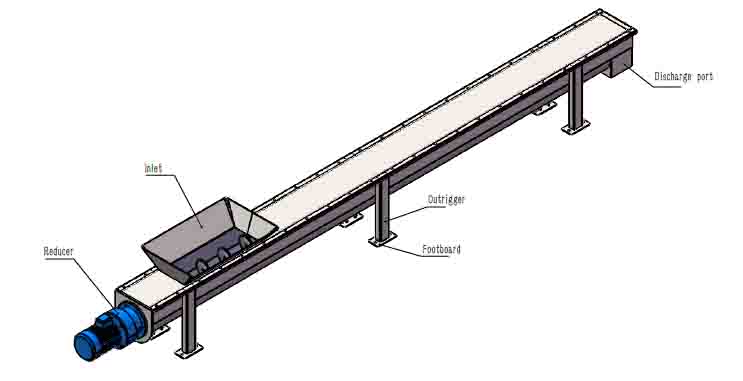
Screw Conveyor