How polymer preparation systems work, how to size them correctly, and how to avoid common sludge dewatering problems.
Polymer preparation systems are essential components in modern wastewater treatment plants. They prepare dilute polymer solutions used in sludge dewatering, dissolved air flotation (DAF), sedimentation, and thickening processes.
Many treatment facilities focus on selecting the correct polymer. However, preparation quality often has a greater impact on performance than polymer type.
A poorly prepared polymer solution can increase chemical consumption, reduce sludge cake solids, and create operational instability.
A properly designed polymer preparation system improves floc formation, reduces operating costs, and enhances dewatering efficiency.
Quick Reference — Polymer Preparation Systems
- Typical polymer concentration: 0.1–0.5%
- Aging time: 30–60 minutes
- Powder polymer make-down: 0.1–0.3%
- Emulsion polymer make-down: 0.2–0.5%
- Recommended mixer speed: 30–80 rpm
- Polymer solution temperature: 10–35°C
- Water pressure requirement: 2–5 bar
- Typical preparation tank retention time: 45–60 minutes
- Common system capacity: 500–6000 L/h
- Automatic operation: PLC controlled
- Typical dilution water quality: potable or filtered water
- Polymer shelf life after preparation: 24–72 hours
What Is a Polymer Preparation System?
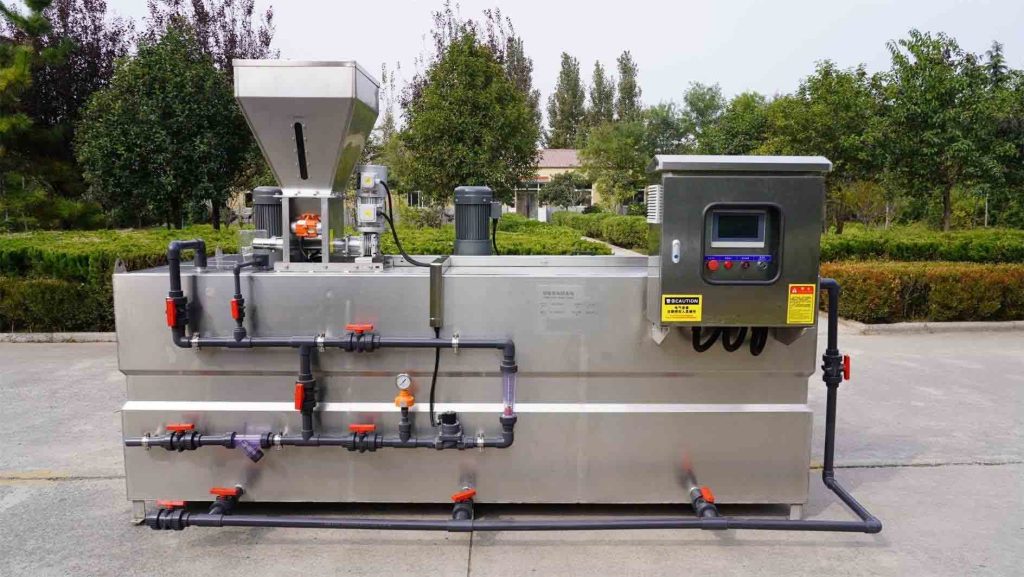
A polymer preparation system automatically dilutes concentrated polymer and prepares a uniform solution suitable for wastewater treatment processes.
The system typically includes:
- Dry powder or emulsion feeding unit
- Wetting device
- Mixing tanks
- Aging chambers
- Dosing pumps
- Control panel
The objective is simple.
Transform concentrated polymer into a fully activated solution that can efficiently bind suspended solids and improve separation performance.
Without proper preparation, polymer molecules cannot fully hydrate.
As a result, treatment efficiency declines significantly.
Why Proper Polymer Preparation Matters
Polymer performance depends heavily on solution quality.
Even high-quality polymers can perform poorly if hydration is incomplete.
Floc Formation Depends on Hydration
Polymer molecules require time to absorb water and fully expand.
Insufficient aging time prevents complete activation.
Partially hydrated polymer often creates weak flocs that break apart during treatment.
Chemical Costs Increase Quickly
Operators often respond to poor dewatering performance by increasing polymer dosage.
The root cause may not be the polymer itself.
Improper preparation frequently causes excessive chemical consumption.
In many cases, correcting preparation conditions reduces polymer usage without changing the polymer grade.
Types of Polymer Preparation Systems
Manual Polymer Preparation
Small wastewater facilities sometimes prepare polymer manually.
Operators mix polymer in a tank and allow it to age before dosing.
Advantages include:
- Low capital cost
- Simple installation
Limitations include:
- Inconsistent concentration
- Higher labor requirements
- Greater risk of operator error
Manual preparation becomes difficult as treatment capacity increases.
Automatic Three-Chamber Systems
Automatic systems are the most common option for municipal and industrial wastewater treatment.
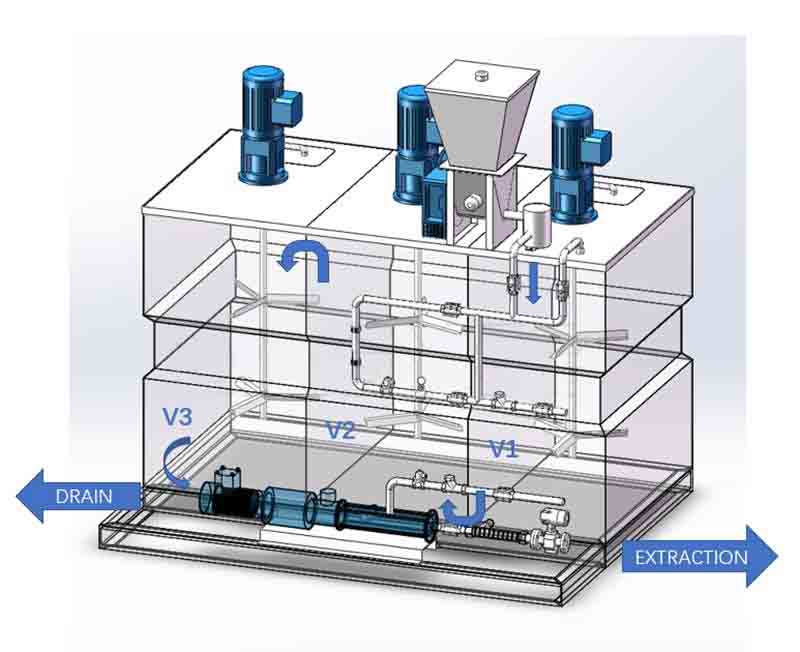
A typical system contains:
- Mixing chamber
- Aging chamber
- Storage chamber
Each chamber serves a specific function.
The design ensures continuous preparation and stable solution quality.
Continuous Polymer Preparation Systems
Large facilities often require continuous operation.
These systems automatically prepare and deliver polymer solution according to process demand.
Automation improves consistency and reduces labor requirements.
How a Three-Chamber Polymer Unit Works
Chamber One – Mixing
Water enters the first chamber.
The polymer feed system introduces dry powder or emulsion polymer.
Gentle mixing begins immediately.
The objective is complete wetting without damaging polymer chains.
Chamber Two – Aging
The partially hydrated solution flows into the aging chamber.
Polymer molecules continue absorbing water.
Hydration progresses toward completion.
This stage often determines final solution quality.
Chamber Three – Storage
The fully activated polymer enters the storage chamber.
Dosing pumps withdraw polymer solution from this section.
The storage volume provides a buffer against changing process demand.
Project Example – Southeast Asia
A food processing wastewater plant struggled with inconsistent sludge dewatering.
Operators increased polymer dosage by nearly 20%.
Performance remained unstable.
An engineering review revealed that the aging chamber retention time was less than 15 minutes.
After upgrading the polymer preparation unit and increasing aging time to 45 minutes, polymer consumption decreased and sludge cake solids improved noticeably.
Polymer Preparation System Sizing
Determine Polymer Demand
Sizing begins with daily polymer consumption.
The preparation system must supply sufficient solution during peak operation.
Engineers should calculate:
- Average polymer consumption
- Peak polymer demand
- Future expansion requirements
Determine Solution Concentration
Most wastewater facilities prepare polymer solutions between 0.1% and 0.5%.
Higher concentrations may create mixing challenges.
Lower concentrations increase tank volume requirements.
Calculate Required Capacity
A simplified sizing approach is:
Required Capacity = Peak Polymer Solution Demand × Safety Factor
A safety factor of 1.2 to 1.3 is common.
This provides operational flexibility without excessive oversizing.
Water Quality Requirements
Clean Water Improves Hydration
Water quality significantly affects polymer activation.
Suspended solids interfere with hydration.
High hardness can also reduce effectiveness.
Most manufacturers recommend:
- Potable water
- Filtered process water
- Low suspended solids content
Water Temperature Matters
Cold water slows hydration.
Very warm water can damage certain polymer products.
Most systems operate best between 10°C and 35°C.
Project Example – Eastern Europe
A municipal wastewater facility experienced seasonal polymer performance issues.
Winter water temperatures dropped below 5°C.
Hydration slowed significantly.
Engineers installed a water tempering system to stabilize preparation conditions.
Polymer consumption decreased during cold-weather operation.
Common Design Mistakes
Excessive Mixing Speed
Many operators believe stronger mixing improves hydration.
The opposite is often true.
High shear forces can damage polymer chains.
Once damaged, polymers lose effectiveness.
Insufficient Aging Time
Hydration requires time.
Rushing the process reduces performance.
Most applications require at least 30–60 minutes of aging.
Oversized Systems
Larger systems are not always better.
Polymer solutions gradually lose effectiveness during prolonged storage.
Excessive storage time can reduce treatment efficiency.
Poor Powder Feeding Accuracy
Inaccurate powder dosing creates inconsistent solution concentration.
Modern automatic feeding systems greatly improve reliability.
Polymer Preparation for Sludge Dewatering
Belt Filter Press Applications
Belt filter presses require strong floc formation.
Polymer quality directly affects sludge capture efficiency.
Proper hydration reduces polymer demand and improves cake dryness.
Screw Press Applications
Screw presses generally operate with lower shear forces.
Consistent polymer concentration remains critical.
Stable polymer quality improves dewatering performance and reduces operating costs.
Centrifuge Applications
Centrifuges place significant stress on flocs.
Polymer preparation quality becomes especially important.
Weak flocs often break apart during centrifuge operation.
Project Example – Middle East
A municipal sludge treatment facility replaced its aging manual polymer preparation process with an automatic three-chamber unit.
Polymer consumption decreased by approximately 15%.
Sludge cake solids increased.
Operator workload also declined significantly.
Engineering Perspective
Many wastewater facilities spend months testing different polymer products.
Very few spend the same effort evaluating preparation quality.
In practice, hydration quality often determines success.
I have seen facilities reduce polymer consumption without changing suppliers, formulations, or dosing pumps.
The only modification involved improving preparation conditions.
When troubleshooting polymer performance, I generally investigate preparation quality before evaluating polymer chemistry.
That approach frequently identifies the real problem faster.
Polymer Preparation System Selection Checklist
Process Requirements
- Determine polymer type
- Calculate polymer demand
- Define solution concentration
- Establish aging requirements
- Evaluate future expansion
Mechanical Requirements
- Select preparation capacity
- Confirm mixer specifications
- Review tank materials
- Verify dosing pump compatibility
- Confirm powder feeding accuracy
Operational Requirements
- Evaluate automation level
- Review maintenance access
- Verify spare parts availability
- Confirm alarm functions
- Check water supply quality
Frequently Asked Questions
Design Questions
What is the ideal polymer solution concentration?
Most wastewater treatment applications use concentrations between 0.1% and 0.5%.
How long should polymer age before dosing?
Most systems require 30–60 minutes of aging time for proper hydration.
Can process water be used for polymer preparation?
Yes, if water quality meets manufacturer recommendations and suspended solids remain low.
Operational Questions
Why is polymer consumption increasing?
Possible causes include incomplete hydration, poor mixing, incorrect concentration, or changing sludge characteristics.
How long can prepared polymer be stored?
Most prepared polymer solutions remain effective for approximately 24–72 hours, depending on product type and operating conditions.
Conclusion
Polymer preparation systems play a critical role in wastewater treatment performance.
Proper hydration improves floc formation, reduces chemical consumption, and enhances sludge dewatering efficiency.
Successful system design requires attention to concentration, aging time, mixing intensity, water quality, and automation.
A well-designed polymer preparation system often delivers greater operational benefits than simply changing polymer products.
Need Help Selecting a Polymer Preparation System?
Morvolous provides automatic polymer preparation units, dosing systems, sludge dewatering equipment, and complete wastewater treatment solutions for municipal and industrial facilities worldwide.
Contact our engineering team to discuss your project requirements.
About the Author
Morvolous Engineering Team
Morvolous specializes in wastewater treatment equipment and process solutions. Our engineers support customers worldwide with sludge treatment, chemical dosing, and wastewater process optimization.