PAM Polymer Preparation System: Complete Guide for Wastewater Treatment
PAM stands for Polyacrylamide. It is commonly used as a flocculant in wastewater treatment.
PAM helps small suspended particles join together and form larger flocs. Larger flocs are easier to remove through DAF, sedimentation, filtration, or sludge dewatering.
However, PAM performance depends strongly on how the polymer solution is prepared.
If the polymer does not dissolve properly, the treatment system may use more chemicals without achieving better results. Therefore, a suitable polymer preparation system is important for stable operation.
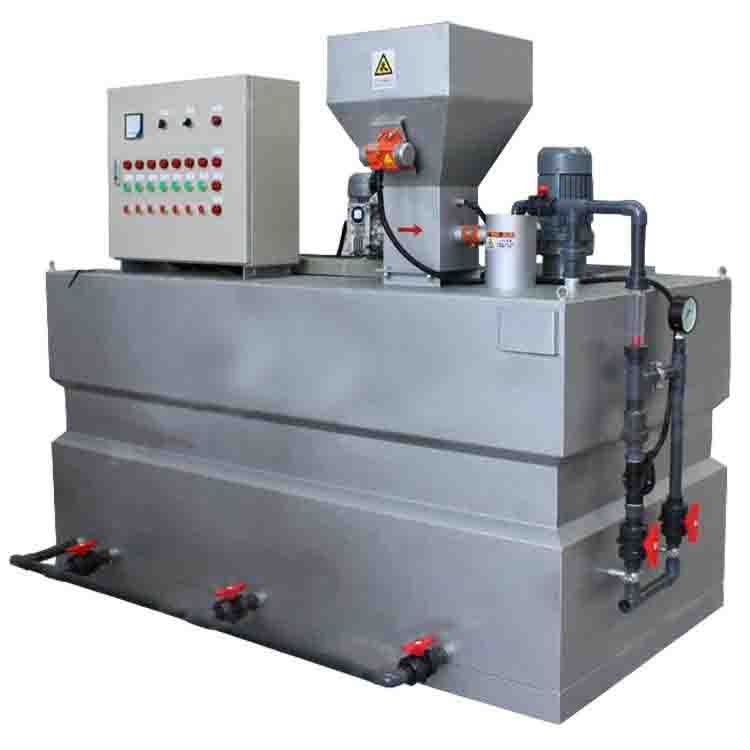
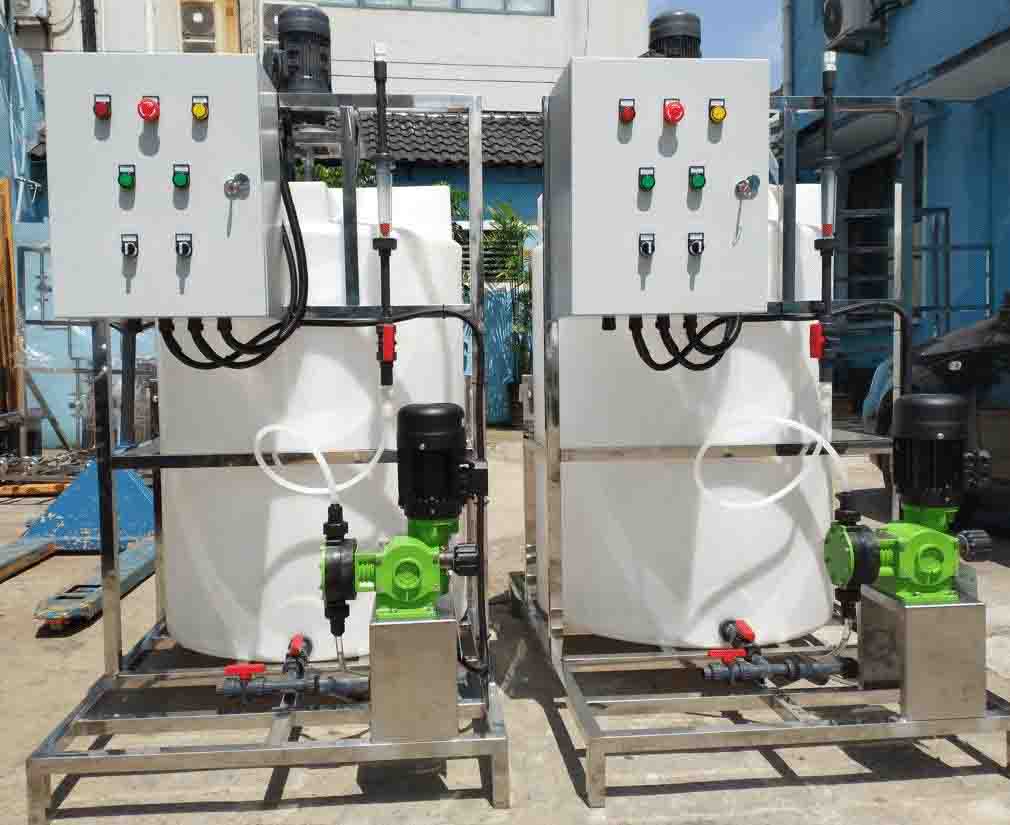
A typical automatic PAM preparation system includes a preparation tank, mixer, dosing system, level sensors, and control cabinet.
Quick Reference — PAM Polymer Preparation System
| Parameter | Typical Value |
|---|---|
| Main Function | PAM Solution Preparation |
| Chemical | Polyacrylamide |
| Polymer Type | Powder / Liquid |
| Preparation Method | Automatic / Manual |
| Mixing Method | Mechanical Agitation |
| Typical Application | DAF & Sludge Dewatering |
| Control | PLC / Automatic |
| Tank Material | PE / SS304 / SS316L |
| Installation | Indoor / Outdoor |
| Dosing Method | Dosing Pump |
Actual preparation concentration and equipment configuration depend on the PAM type and wastewater treatment process.
What Is a PAM Polymer Preparation System?
A PAM polymer preparation system prepares polyacrylamide into a usable polymer solution.
The system normally performs several steps:
- Water filling
- Polymer feeding
- Mixing
- Polymer maturation
- Solution storage
- Chemical dosing
After preparation, a dosing pump sends the polymer solution to the treatment equipment.
For example, a DAF system may receive PAM before the flocculation stage.
A screw press may also use the prepared polymer solution to condition sludge before dewatering.
How Does a PAM Preparation System Work?
Step 1 – Water Filling
First, clean water enters the preparation tank.
The system fills the tank to the required level.
A level sensor can automatically stop the water supply when the correct volume is reached.
Step 2 – PAM Addition
Next, PAM powder or liquid polymer enters the preparation tank.
For powder PAM, an automatic powder feeder can control the feeding rate.
The feeding system should avoid adding too much polymer at one time.
This helps reduce lumps and improves dissolution.
Step 3 – Mixing
The mixer creates movement inside the tank.
This allows the polymer to contact the water and dissolve more evenly.
However, polymer solutions should not receive excessive shear.
Therefore, the mixer speed should match the polymer type and preparation process.
Step 4 – Maturation
After mixing, the polymer solution may need a maturation period.
During this period, the polymer continues to hydrate and develop its working properties.
The required time depends on the polymer type and manufacturer’s recommendations.
Step 5 – Solution Storage
The prepared polymer solution remains in the storage section until the dosing pump needs it.
A multi-tank system can separate preparation, maturation, and dosing.
This design can support continuous operation.
Step 6 – Polymer Dosing
Finally, a dosing pump sends the polymer solution into the wastewater treatment process.
The dosing point may be located before:
- DAF
- Flocculation tank
- Sedimentation tank
- Screw press
- Belt filter press
Main Components of a PAM Preparation System
A complete system may include:
- Water inlet
- Polymer powder hopper
- Automatic polymer feeder
- Preparation tank
- Mixing motor
- Agitator
- Maturation tank
- Dosing tank
- Dosing pump
- Level sensor
- Control cabinet
- Pipes and valves
The actual configuration depends on the required polymer capacity.
Automatic PAM Preparation System
An automatic system can control most preparation steps without continuous manual operation.
The PLC can manage:
- Water filling
- Polymer feeding
- Mixing
- Maturation
- Dosing
- Tank levels
- Pump operation
- Alarm functions
As a result, operators can reduce manual chemical handling.
The system can also maintain a more stable polymer concentration.
Manual vs Automatic Polymer Preparation
| Parameter | Manual Preparation | Automatic Preparation |
|---|---|---|
| Operator Work | High | Low |
| Polymer Feeding | Manual | Automatic |
| Solution Concentration | More Variable | More Stable |
| Labor Requirement | Higher | Lower |
| Continuous Operation | Limited | Excellent |
| Control | Manual | PLC |
| Suitable Capacity | Small | Medium & Large |
Manual preparation can work for small plants.
However, automatic preparation is usually more suitable when the plant requires continuous and stable polymer dosing.
PAM Polymer Preparation for DAF
DAF systems often use PAM to improve floc formation.
A typical process is:
Wastewater → Coagulant → Rapid Mixing → PAM → Flocculation → DAF
The coagulant destabilizes suspended particles.
PAM then helps these particles form larger flocs.
The air bubbles in the DAF system attach to the flocs and lift them to the water surface.
Therefore, stable polymer preparation can directly affect DAF performance.
PAM Polymer Preparation for Sludge Dewatering
PAM is also widely used before sludge dewatering.
A typical process is:
Sludge → PAM Dosing → Flocculation → Screw Press → Sludge Cake
The polymer helps release water from the sludge structure.
As a result, the screw press can separate water more effectively.
Good floc formation may also improve sludge cake dryness and reduce filtrate solids.
PAM Preparation for Belt Filter Press
Belt filter presses also use polymer conditioning.
The prepared PAM solution mixes with sludge before the sludge reaches the filter belts.
Large flocs form during this stage.
The belt press then removes water through gravity drainage and mechanical pressure.
PAM Preparation for Sedimentation
PAM can improve the settling performance of some wastewater treatment processes.
The polymer forms larger flocs that settle more easily.
Therefore, a polymer preparation system can support clarification and sedimentation processes.
The actual chemical dosage should be determined through testing.
Why Is Proper PAM Preparation Important?
Better Dissolution
Correct mixing helps prevent undissolved polymer particles.
This produces a more uniform solution.
Stable Polymer Concentration
Automatic preparation provides better control of polymer concentration.
Therefore, the dosing system can operate more consistently.
Lower Chemical Waste
Proper preparation can help avoid excessive polymer consumption.
As a result, the plant may reduce chemical operating costs.
Better Floc Formation
A properly prepared polymer solution can improve floc formation.
This can support better DAF, clarification, and sludge dewatering performance.
Common PAM Preparation Problems
Polymer Lumps
Powder polymer can form lumps if too much powder enters the water too quickly.
These lumps are difficult to dissolve.
A controlled powder feeding system can reduce this problem.
Excessive Mixing
High-speed mixing can damage polymer chains.
Therefore, the mixer should provide enough movement without excessive shear.
Incorrect Concentration
A polymer solution that is too concentrated may not dissolve properly.
A solution that is too dilute may require a larger storage volume and more pumping.
The correct concentration depends on the polymer manufacturer’s recommendations.
Insufficient Maturation
Some polymers need time to hydrate before dosing.
If the solution enters the process too soon, the polymer may not achieve its expected performance.
How to Select a PAM Preparation System
Determine Polymer Type
First, identify whether the polymer is:
- Powder PAM
- Liquid PAM
- Cationic PAM
- Anionic PAM
- Non-ionic PAM
Different polymers may require different preparation conditions.
Determine Chemical Consumption
Estimate the daily polymer requirement.
The calculation should consider:
- Wastewater flow
- Sludge flow
- Dry solids loading
- Polymer dosage
- Operating hours
Select Tank Capacity
Tank capacity should match the polymer consumption and required preparation cycle.
A larger system may use separate preparation and maturation tanks.
This design supports continuous dosing.
Select the Mixer
The mixer should provide suitable agitation.
For PAM, excessive shear should be avoided.
Therefore, the mixer speed and impeller design should match the polymer preparation process.
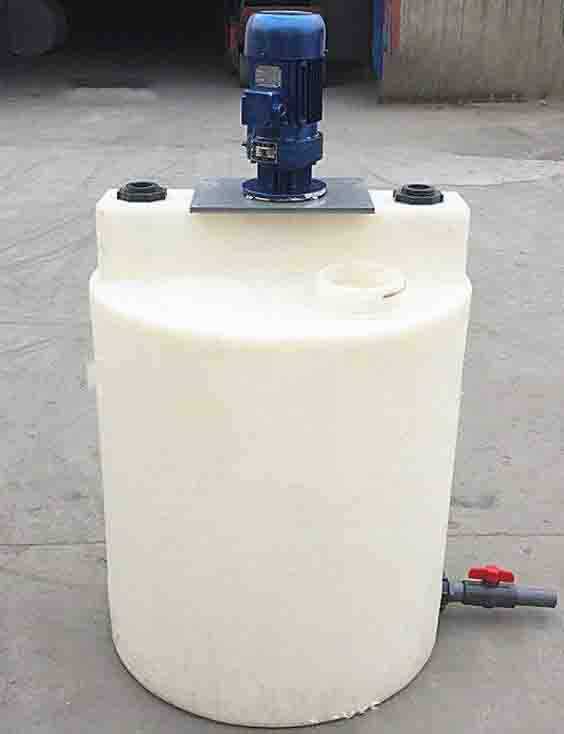
PE Tank for PAM Preparation
PE tanks are commonly used for polymer preparation.
They provide good corrosion resistance and are relatively lightweight.
A typical PE polymer preparation system may include:
PE Tank + Mixer + Polymer Feeder + Level Sensor + Dosing Pump
For larger systems, multiple tanks can provide preparation, maturation, and storage functions.
PAM Powder Feeder
A powder feeder controls the amount of PAM entering the preparation tank.
This component is important for automatic systems.
The feeder can help maintain a stable polymer concentration by controlling the powder feed rate.
It can also reduce manual handling.
Polymer Dosing Pump
The dosing pump transfers prepared polymer solution to the treatment process.
The pump should match:
- Polymer flow rate
- Dosing pressure
- Polymer concentration
- Chemical compatibility
- Operating schedule
A variable-speed dosing pump can provide flexible control.
Control System
A PLC control cabinet can coordinate the complete preparation process.
Typical functions include:
- Automatic water filling
- Powder feeding
- Mixer control
- Maturation timing
- Dosing pump control
- Low-level alarm
- High-level alarm
- Pump fault alarm
For larger projects, the PLC can connect to a SCADA system.
Maintenance
Regular maintenance helps keep the polymer preparation system stable.
Operators should check:
- Polymer feeder
- Mixer
- Tank
- Dosing pump
- Pipes
- Valves
- Level sensors
The tank should also be cleaned regularly.
Polymer residue can build up on tank walls, mixers, and pipes.
Safety Considerations
PAM powder can make floors very slippery when it comes into contact with water.
Therefore, the chemical preparation area should have good housekeeping and drainage.
Operators should also use suitable PPE when handling polymer powder or concentrated polymer products.
The exact safety requirements depend on the chemical supplier and local regulations.
Common Design Mistakes
Feeding Too Much Polymer
Adding too much powder at once can create lumps.
Therefore, controlled feeding is important.
Using Excessive Mixer Speed
High shear can reduce polymer performance.
The mixer should operate at a suitable speed.
No Maturation Time
Some polymers require hydration before dosing.
Therefore, the system should provide enough maturation time when required.
Using One Tank for Everything
A single tank may work for small applications.
However, larger plants often benefit from separate preparation, maturation, and dosing tanks.
This allows the system to prepare new polymer while another tank continues dosing.
Engineering Perspective
A PAM preparation system is a relatively small part of a wastewater treatment plant, but it can strongly affect the performance of DAF and sludge dewatering equipment.
The polymer type, concentration, mixing method, maturation time, and dosing rate should all work together.
Therefore, engineers should design the polymer system based on actual wastewater and sludge conditions.
Laboratory jar tests and field trials can help determine the suitable polymer and dosage before final equipment selection.
PAM Preparation System Selection Checklist
Process Information
- Wastewater flow
- Sludge flow
- Dry solids loading
- Polymer type
- Polymer dosage
- Required operating hours
Equipment Selection
- Tank capacity
- Polymer feeder
- Mixer
- Dosing pump
- Level sensors
- PLC control
- Pipework and valves
Operation
- Preparation concentration
- Mixing speed
- Maturation time
- Dosing rate
- Cleaning frequency
Frequently Asked Questions
What is a PAM preparation system?
A PAM preparation system dissolves and prepares polyacrylamide into a usable polymer solution for wastewater treatment.
Why is PAM used in wastewater treatment?
PAM helps small suspended particles form larger flocs.
These flocs are easier to remove through DAF, sedimentation, filtration, and sludge dewatering.
Can PAM be used in a DAF system?
Yes.
PAM is commonly used before the flocculation and flotation stages of a DAF system.
Can PAM improve screw press performance?
Yes.
PAM can improve sludge floc formation and help release water from sludge.
As a result, a screw press may achieve better dewatering performance.
Does PAM need to mature after preparation?
Some PAM products require a maturation period.
The required time depends on the polymer type and manufacturer’s instructions.
Conclusion
A PAM polymer preparation system provides a reliable way to prepare and dose polyacrylamide for wastewater treatment.
The system can improve chemical preparation, reduce manual work, and provide more stable polymer dosing.
It can support DAF systems, sedimentation processes, screw presses, belt filter presses, and other wastewater treatment equipment.
However, proper equipment selection is important.
Tank capacity, polymer type, concentration, mixer speed, maturation time, dosing rate, and automation should all match the actual treatment process.
With the right design, an automatic PAM preparation system can improve treatment stability while reducing unnecessary chemical use and operator workload.
Need a PAM Polymer Preparation System?
Morvolous provides PAM polymer preparation systems, PE dosing tanks, chemical dosing equipment, DAF systems, screw press sludge dewatering machines, MBR systems, UF and RO systems, and complete wastewater treatment solutions.
Our engineering team can select the preparation tank, polymer feeder, mixer, dosing pump, and control system according to your wastewater and sludge treatment requirements.
For customized projects, we can also provide a complete chemical preparation and dosing solution.
About the Author
Morvolous Engineering Team
Morvolous specializes in wastewater treatment equipment, chemical dosing, sludge dewatering, membrane filtration, and complete wastewater treatment solutions.
Our engineering team provides customized equipment and process solutions for municipal, industrial, food processing, and livestock wastewater treatment projects worldwide.